

Susan Watkins in The New Left Review:
Of all the opposition movements to have erupted since 2008, the rebirth of a militant feminism is perhaps the most surprising—not least because feminism as such had never gone away; women’s empowerment has long been a mantra of the global establishment. Yet there were already signs that something new was stirring in the US and UK student protests of 2010, the 2011 Occupy encampments at Puerta del Sol and Zuccotti Park. In India, mass rallies condemned the gang rape of Jyoti Pandey in 2012 and feminist flash-mobs have disrupted the moral-policing operations of Hindutva fundamentalists. The protests against sexual assault on US campuses blazed across the New York media in 2014. In Brazil, 30,000 black women descended on the capital in 2015 to demonstrate against sexual violence and racism, calling for the ouster of the corrupt head of the National Congress, Eduardo Cunha; earlier that year, the March of Margaridas brought over 50,000 rural women to Brasília. In Argentina, feminist campaigners against domestic violence were at the forefront of protests against Macri’s shock therapy. In China, the arrest in 2015 of five young women preparing to sticker Beijing’s public transport against sexual violence—members of Young Feminist Activism, an online coalition that’s played cat-and-mouse with the authorities—was met with web petitions signed by over 2 million people.
In January 2017, a ‘feminism of the 99 per cent’ declared itself with the million-strong march against the Trump Administration in the US. In Poland, mass women’s protests forced the Law and Justice government to retreat from tightening the already restrictive abortion law. Italy, Spain and Portugal saw huge marches against domestic violence and economic precarity. On 8 March 2017, these movements came together to put International Women’s Day back on the radical calendar, with demonstrations and strikes on three continents. The eruption of #MeToo in October 2017 and the convulsions that have followed are only the latest in a string of mass events around the world.
Yet any attempt to renew feminist strategy today confronts a series of dilemmas. First, we lack convincing assessments of the progress already made. What results have the old feminisms produced and how adequate have these been in meeting women’s needs? How, exactly—by what processes, to what extent—have conditions improved? What changes have been brought about, globally, in gender relations, and where do these now stand?
More here.
 Neuroscientist Michael Heneka knows that radical ideas require convincing data. In 2010, very few colleagues shared his belief that the brain’s immune system has a crucial role in dementia. So in May of that year, when a batch of new results provided the strongest evidence he had yet seen for his theory, he wanted to be excited, but instead felt nervous. He and his team had eliminated a key inflammation gene from a strain of mouse that usually develops symptoms of Alzheimer’s disease. The modified mice seemed perfectly healthy. They sailed through memory tests and showed barely a sign of the sticky protein plaques that are a hallmark of the disease. Yet Heneka knew that his colleagues would consider the results too good to be true.

 Again, the point is not to highlight the discrepancy between the egalitarian ideals of these students and their class position since, if the equality you’re committed to is between groups, there is no discrepancy. And just as no hypocrisy is required at the elite college where you fight hard against racism, none will be required at the NGO or the job as a consultant or in finance (“Why Goldman Sachs? Diversity!”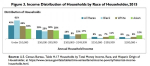
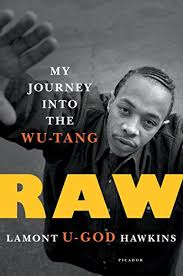 Hawkins grew up in a single parent family in Brooklyn and Park Hill on Staten Island. Whenever he inquired about the family patriarch, his mother would reply, “God is your father!” Unlike Mane, who describes being orbited by grandparents, aunts and uncles, Hawkins’s childhood was blighted by black-on-black crime and drugs-related violence. He describes witnessing his first death when he was four years old and watched a woman leap or fall from the roof of an apartment building. “Lovin’ You” by Minnie Riperton was playing on a radio in the street. Hawkins was a member of gangs called Baby Cash Crew, Dick ’Em Down and Wreck Posse. He carried a gun from the ages of 14 to 21 and recalls watching one of his babysitters shooting up heroin on the couch. Years later, Staten Island’s rappers would describe Park Hill as “Killa Hill” in their music. “Dudes would shoot dogs and leave their carcasses behind our building all the time,” writes Hawkins. “It was like a concentration camp for poor black people.”







 Outside the kitchen door at the Kuala Belalong Field Studies Center in Brunei, on a number of trees near the balcony, there is a nest of very special ants. They explode.