
“If one is a woman writer there are certain things one must do,” the British writer and journalist Rebecca West wrote to a friend in 1952. “First, not be too good; second, die young, what an edge Katherine Mansfield has on all of us; third, commit suicide like Virginia Woolf. To go on writing and writing well just can’t be forgiven.” West, ignoring her own advice, neither died prematurely nor blunted the fineness of her writing. As a young woman, she made her name with witty, digressive book reviews that were often wonderfully cutting. (On Henry James: “He splits hairs until there are no longer any hairs to split, and the mental gesture becomes merely the making of agitated passes over a complete and disconcerting baldness.”) She also wrote several novels and covered world events for prestigious magazines, including the trial of the English fascist William Joyce and the 1947 lynching of Willie Earle. Her final book, an idiosyncratic history of the year 1900, was published just before her death at the age of ninety. It was the capstone to a career that spanned almost seven decades. West’s true audacity was not merely “to go on writing,” as she put it, but to flourish in an insular, nepotistic intellectual culture that was largely hostile to women. She was ambitious, unafraid, and prodigiously gifted—in a word, sharp.
The literary critic Michelle Dean’s new book of the same name, a cultural-history-cum-group-biography, examines the lives and careers of ten sharp women, among them Susan Sontag, Joan Didion, Dorothy Parker, Renata Adler, Hannah Arendt, and Zora Neale Hurston. What unites this disparate group, Dean claims, is the ability “to write unforgettably.”
more here.


 Outside the kitchen door at the Kuala Belalong Field Studies Center in Brunei, on a number of trees near the balcony, there is a nest of very special ants. They explode.
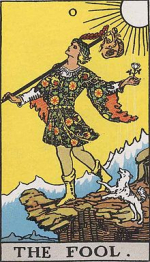




 The marriage of sated appetites and adventurous conversation has a long history. In Ancient Greece, philosophical discourses were washed down with jugs of wine at banquets known as symposia. There was always a risk that some people would over-indulge. In the most famous description of a symposium, Plato describes how the guests, who included Socrates and Aristophanes, were expounding on the nature of love when they were interrupted by the arrival of a boozed-up general, Alcibiades. Table talk was considered an art to be mastered. Athenaeus, a Greek grammarian of the third century AD, wrote a 15-volume work entitled Deipnosophistae (“The Learned Banqueters”) about a series of dinners in which conversation ranged from philology to homosexuality.