
Love after Love
The time will come
when, with elation,
you will greet yourself arriving
at your own door, in your own mirror,
and each will smile at the other’s welcome,
and say, sit here. Eat.
You will love again the stranger who was your self.
Give win. Give bread. Give back your heart
to itself, to the stranger who has loved you
all your life, whom you ignored
for another, who knows you by heart.
Take down the love letters from the bookshelf,
the photographs, the desperate notes,
peel your own image from the mirror.
Sit. Feast on your life.
by Derek Walcott
from Sea Grapes
Farrar, Straus and Giroux
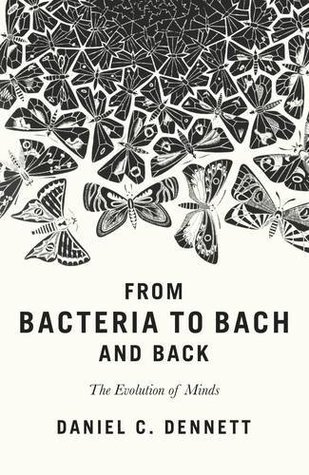 In an essay
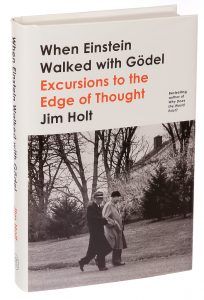 Jim Holt has a new book out, a collection of essays entitled
 The photographer Arthur Fellig, better known as Weegee, lugged his enormous Speed Graphic camera around the nighttime streets of New York City in the 1930s and ’40s, cultivating a persona as stark and as memorable as his tabloid pictures. He was the wisecracking tummler in the rumpled suit, always on the lookout for a car crash or a dead gangster.
 A
A Country fans no longer resemble the characters in country songs; they are salaried accountants chewing Nicorette in Chevy Tahoes, not railroad linemen spitting Copenhagen through the shot-out windows of a Ford F-150. Their assimilation worries them, and they sometimes overcompensate. “If any of you tuned in to ABC tonight expecting to see the new show Black-ish,” said host Brad Paisley at the 2014 Country Music Association Awards, referring to the sitcom about assimilation anxiety in the suburbs, “this ain’t it. In the meantime, I hope y’all are enjoying white-ish.” The joke had another meaning, too, which Paisley probably didn’t intend: Despite the perception that country is white America’s music, it’s only ever been white-ish. “Country” descended from British and Celtic ballads that crossed the ocean into Appalachia and the South, where singers Americanized the names of the women and the rivers. It was stirred with Baptist hymns, black American folk songs, New Orleans jazz, and—crucially—the twelve-bar blues. Was the sound white? Was it native? The banjo derived from the African gourd-based banjar.
 Few have inspired the Movement for Black Lives as much as James Baldwin. His books that plumb the psychological depths of U.S. racism, notably Notes of a Native Son (1955) and The Fire Next Time (1963), speak to the present in ways that seem not only relevant but prophetic. However, Baldwin’s renewed status as a household name, cemented by the critical success of Raoul Peck’s 2016 film I Am Not Your Negro, makes it easy to forget that for several decades Baldwin fell from public favor.
 A boy speaks one language at home and another at school. The white kids want to know where he is from. The answer is “here”, same as them, but that’s not what they’re asking. After
  Many warn that Standard Arabic, or Modern Standard Arabic (MSA), is on the
  Would you advise someone to flap towels in a burning house? To bring a flyswatter to a gunfight? Yet the counsel we hear on climate change could scarcely be more out of sync with the nature of the crisis.
 What’s in a name? Franklin Delano Roosevelt called himself a Christian, a Democrat, and a liberal. He did not call himself a democratic socialist, or any other kind of socialist. He was, in fact, no socialist at all. Nor was he a conservative or a reactionary, although many on the socialist and communist left charged that he was—including the Communist Party USA, which attacked his New Deal for a time (until Moscow’s political line changed) as American “masked fascization.”
 Artificial intelligence (AI) is being embraced by hospitals and other healthcare organizations, which are using the technology to do everything from interpreting CT scans to predicting which patients are most likely to suffer debilitating falls while being treated. Electronic medical records are scoured and run through algorithms designed to help doctors pick the best cancer treatments based on the mutations in patients’ tumors, for example, or to predict their likelihood to respond well to a treatment regimen based on past experiences of similar patients. But do algorithms, robots and machine learning cross ethical boundaries in healthcare? A group of physicians out of Stanford University contend that
  Artificial Intelligence (AI) is nothing if not controversial. Whether the subject of scrutiny behind hair-raising advances in sex robots which was heavily
 D
D BLVR: Yeah, and it made me wonder about your dreams—do you have any recurring dreams?
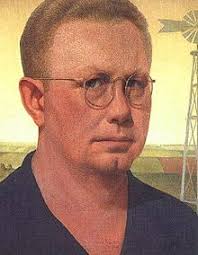 Grant Wood wanted to make art American. As with so many attempts to make things American, what this meant was distilling a particular region into the essence of the United States. New England and the Deep South are strong contenders, but the Midwest is perhaps the most plausibly all-American region. The visual and cultural tropes of the Midwest are the commonplaces of American kitsch—corn fields, barns, apple pie, churches, Main Street. By choosing to remain in his native Iowa, Wood was well positioned to do what he wanted, without having to forego success. The current Wood retrospective on view at the Whitney (closing June 10th) is hardly the first time his work has received sustained attention from the highest levels of the American art world. The Whitney itself held its last retrospective in 1983, and during Wood’s lifetime he was arguably the most famous artist in the United States. The current show acknowledges that one of Wood’s paintings dominates all other. The exhibition simply uses the name of American Gothic, adding, appropriately, “and other fables” after the obligatory colon.