
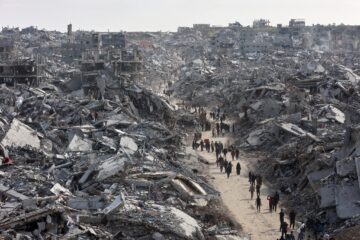
 In March 1988, the late Israeli historian Yehuda Elkana, an Auschwitz survivor, published an explosive op-ed in Haaretz on “the need to forget.” He wrote that although he often spoke of the Holocaust to his four children and freely shared his personal recollections of it with them, he had refused to accompany them on visits to Yad Vashem. He had been reluctant to follow the Eichmann trial and he opposed the trial of John Demjanjuk, who had been a guard at the Sobibor death camp and was awaiting sentencing then. Elkana was convinced that the memory of the Holocaust had been co-opted for destructive ends, that it had been maliciously harnessed to fuel hatred and violence against the Palestinian people.
He published his piece when he did—in the midst of the first intifada, not long after footage emerged of Israeli soldiers beating bound and blindfolded Palestinians—perhaps hoping there was still time to reverse course. He explicitly argued that “had the Holocaust not penetrated so deeply into the national consciousness,” the conflict between Jews and Palestinians would not have produced acts of terrorism and abject violence; he even conjectured that the peace process might not have stalled. For Elkana, the time had finally come for the Jewish people to abandon the belief “that the whole world is against us, and that we are the eternal victim.” While the wider world could very well continue to remember the Holocaust, Israelis now had to forget: “Today I see no more important political and educational task for the leaders of this nation than to take their stand on the side of life, to dedicate themselves to creating our future, and not to be preoccupied, morning to night, with symbols, ceremonies, and lessons of the Holocaust.” Democracy, Elkana warned, was at risk when “the memory of the dead participates actively in the democratic process”—when politics becomes a pathway for unending revenge.
The essay was an attempt to prevent his nation from continuing down a catastrophic path of inexcusable violence fueled by existential pain and panic.
More here.
Enjoying the content on 3QD? Help keep us going by donating now.
 At this week’s U.N. Oceans Conference in the south of France, delegates need only glance outside the conference hall at the glittering Mediterranean for a stark reminder of the problem they are trying to solve. Scientists estimate there are now
 The cellular biology of reproduction is often depicted as an epic journey, in which millions of intrepid sperm fight to be the first to claim the ultimate prize: the chance to fertilize the egg, which has been passively waiting for the sperm to arrive. But is this an accurate picture? In a
  T
T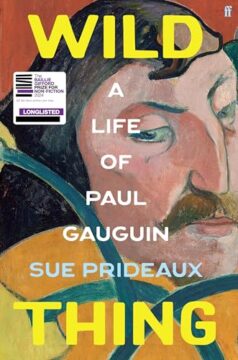 For much of his life, Paul Gauguin railed against the deadening effects of bourgeois domesticity. But as Sue Prideaux writes in “Wild Thing,” her terrific new biography of the artist, for about a decade early in his career the self-proclaimed “savage from Peru” enjoyed a stint as a happily married stockbroker in Paris.
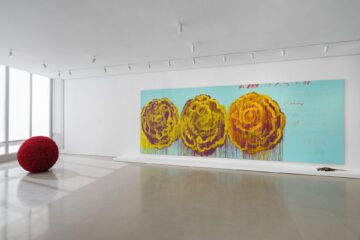 I begin with some questions. What is the difference between writing and drawing? What distinguishes seeing from reading? Can a painting be illegible? Can you write a drawing? In what ways can writing resist erasure and yet also be a mode of erasure? These are the dilemmas that haunt me when I think of the work of Cy Twombly, one of the United States’ most enigmatic artists.
 Google wasn’t around for the advent of the World Wide Web, but it successfully remade the web on its own terms. Today, any website that wants to be findable has to play by Google’s rules, and after years of search dominance, the company has
 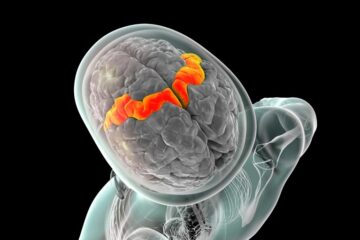 A man with a severe speech disability is able to speak expressively and sing using a brain implant that translates his neural activity into words almost instantly. The device conveys changes of tone when he asks questions, emphasizes the words of his choice and allows him to hum a string of notes in three pitches.
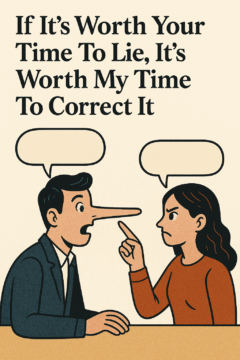 If you say Joe Criminal committed ten murders and five rapes, and I object that it was actually only six murders and two rapes, then why am I “defending” Joe Criminal?
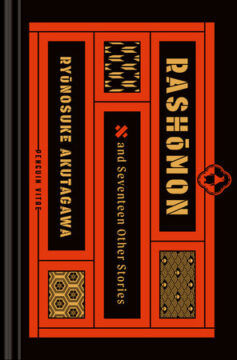 There is a certain privilege in looking at a group of novels-in-translation from a single country originally written and published across almost a century. What appears at first glance to be a disparate assortment of texts gathered solely by the date of their reissue in a new language reveals an unexpected coherence. That the following five short Japanese novels-in-translation are being made available to a wider audience now, in the middle of the 2020s, feels timely.
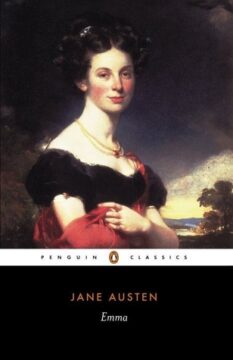 One of Jane Austen’s many mind-bending skills was her ability to wrest so much drama from a world that was, by present-day standards, almost unfathomably static. Austen’s novels are preindustrial time capsules from an era before even trains, gas lights, or telegraphs—the first in a stampede of inventions that transformed nineteenth-century life and are vividly present in the work of many novelists emblematic of that century. Born in 1775, a year before American Independence, Austen has preserved for us an epoch when indoor illumination required candles, remote communication took place by messenger or mail, and locomotion meant walking or engaging at least one horse—more if, like Emma’s protagonist and namesake (and indeed every woman in that novel), you didn’t ride, and needed a carriage to travel any distance.
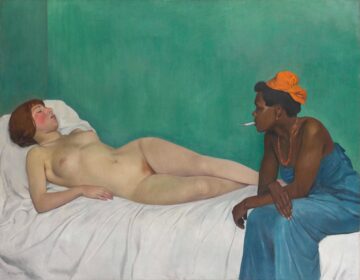 Sometimes it pays to spend more time in the detours of art history—leaving behind the rigor mortis of the canon to follow new pathways—not necessarily toward an alternative canon, but to discover forgotten artists deserving of more attention.
 In less than five years, we will have access to an error-free quantum supercomputer – so says IBM. The firm has presented a roadmap for building this machine, called Starling, slated to be available to researchers across academia and industry in 2029.