
Dorian Lynskey in The Guardian:
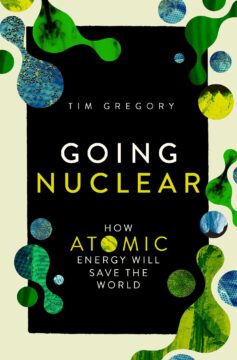 There is something biblical about the fraternal relationship between the atomic bomb and the nuclear reactor. Both involve bombarding uranium-235 atoms with neutrons to produce a chain reaction via nuclear fission. Both were made possible in the same instant, at 3.25pm on 2 December 1942, when the Manhattan Project’s Enrico Fermi orchestrated the first human-made chain reaction in the squash court of the University of Chicago. “The flame of nuclear fission brought us to the forked road of promise and peril,” writes Tim Gregory.
The bomb came first, of course, but atomic dread coexisted with tremendous optimism about what President Eisenhower dubbed “atoms for peace”: the potential of controlled fission to generate limitless energy. As David Lilienthal of the US Atomic Energy Commission observed, atom-splitting thus inspired a pseudo-religious binary: “It would either destroy us all or it would bring about the millennium.”
Nuclear optimism was shattered by the 1986 Chornobyl disaster but, as the subtitle of his book advertises, Gregory is determined to bring it back.
More here.
Enjoying the content on 3QD? Help keep us going by donating now.
 Two weeks ago, in the run-up to the release of her ninth studio album, “Something Beautiful,” Miley Cyrus, who is thirty-two and one of the most successful pop stars of all time, revealed, in an
  I found the doorknobs
 D
D J
J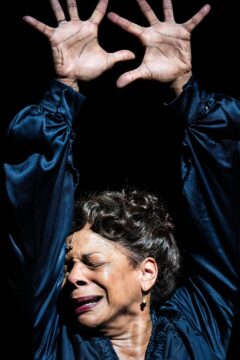 Eight times a week at the Majestic Theater in Manhattan, the entire, harrowing arc of a classic tragedy is delivered in 4½ minutes that are as exhilarating as they are upsetting. All the textbook components of tragedy according to Aristotle are vigorously at work here: self-delusion and self-knowledge, pity and terror, and the sense that what is happening is somehow both unexpected and inevitable.
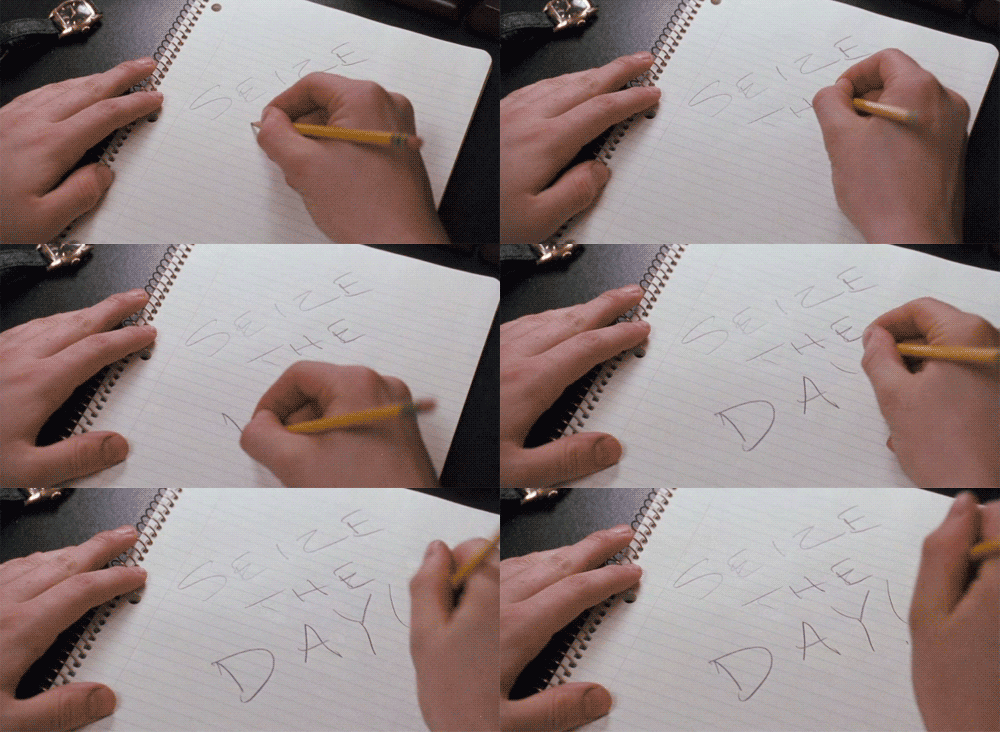 Dear Reader,
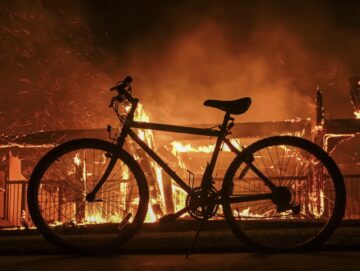 I had read about the Santa Ana winds in a Joan Didion essay but had incorrectly understood them to be a mood-altering phenomenon, something with positive ions that made people feel on edge. It did not occur to me that they were a very real weather event, not just a vibe. That day, January 7, the fires had already started in the Pacific Palisades, which is more than 20 miles from Highland Park, where I live, but even so, I was not overly concerned. At my daughter’s school, they’d kept the kids inside during recess. That seemed excessive—and when my friend texted me some X account, with a crudely circled map, warning about the winds, it sounded overblown. That evening, when I walked to pick my daughter up from her class, there were gusts of wind and palm fronds littering the road. It felt spooky, but also slightly exciting. A weather event! The L.A. version of a snowstorm.
 In 1994, an earthquake of a proof shook up the mathematical world. The mathematician Andrew Wiles had finally settled
 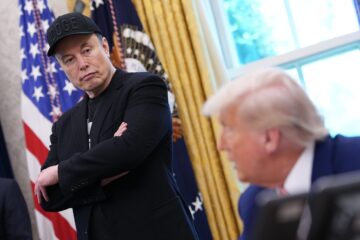 The “HUGEst” political alliance of the century is breaking apart before our eyes in suitably spectacular fashion.