
Olivia Laing in The Times:
 At the age of 39 I was fairly sure I would spend the rest of my life alone. I lived alone, I worked alone. No matter what I did, or who I dated, I didn’t seem to be able to find the relationship I longed for.
I’d first joined the vast ranks of the lonely five years earlier. In 2011, I moved to New York in the wake of a break-up. A new relationship had come to an abrupt end. I’d pinned far too much hope on it, and though lovers had come and gone before, this particular departure left me desolate, my self-esteem on the floor. In a strange city, 3,000 miles from my family and friends, I was rapidly overwhelmed by loneliness.
Being so lonely was agonising. Worse, it felt actively repellent. It didn’t take long to realise that one of the worst elements was the omnipresent shame — the gnawing belief that being lonely was bad and wrong, a humiliating failure that could never be confessed. But the more I thought about it, the more illogical this seemed. After all, millions of people are lonely. Why was it so unspeakable?
More here.
 If the ICS [International Commission on Stratigraphy] declares the Anthropocene as a new epoch, it will reverse at one stroke three great humiliations science has inflicted on humanity. First, it will restore humanity to the self-importance it knew when people believed that the Earth and humanity were created at about the same time. The Anthropocene, as Erle Ellis and colleagues have written, “will divide Earth’s story into two parts: one in which humans are a geological superpower — an epoch called the Anthropocene — and the other encompassing all that came before our species had a major influence on Earth’s functioning.”
 “Democracies erode slowly, in barely visible steps” these days, Steven Levitsky and Daniel Ziblatt write in
  The tropics are, like many cities, hot, busy and crowded. It was previously thought
 Fireworks, hypnotic and sublime, are used to celebrate national independence around the globe, as signs of sovereignty or political autonomy. They are the window dressing of the modern state. The exploding rainbows are a tribute to the bloody wars that made the celebration possible. They are a reminder that—under that same sky and upon that same land to which the ashes float—we are kinfolk.
 We are living in new Bayesian age. Applications of Bayesian probability are taking over our lives. Doctors, lawyers, engineers and financiers use computerized Bayesian networks to aid their decision-making. Psychologists and neuroscientists explore the Bayesian workings of our brains. Statisticians increasingly rely on Bayesian logic. Even our email spam filters work on Bayesian principles.
 In
In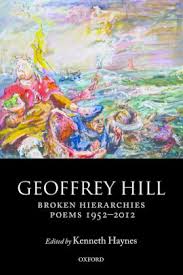 As many critics have noted, Hill established himself from the beginning as an elegist. The title For the Unfallen promises a
memorial for the living, and the book itself contains “
As many critics have noted, Hill established himself from the beginning as an elegist. The title For the Unfallen promises a
memorial for the living, and the book itself contains “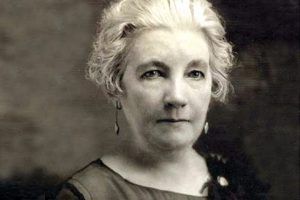 Laura Ingalls Wilder
 Like many women, Baskin was buying things that male dealers weren’t interested in, such as women printers and artists, which put her under the radar. “In the sixties, I could be a ferret and find things,” she said, citing a late 17th century-early 18th century book by Maria Sibylla Merian, the first person of either gender to observe and draw the metamorphoses of insects in the field. “She made some of the most beautiful books,” Baskin said. “As a child, Merian was fascinated by watching caterpillars turn into moths. She made a book about the insects of Suriname and another about the insects of Europe.” Baskin purchased a copy of Merian’s De Europische Insecten (1730); copies of the book about the insects of Suriname go for hundreds of thousands of dollars now. “The issue is: Are women taken seriously as dealers and as collectors? I don’t think it’s a reflection on the works they sell or collect. I think these works were, and are, valued less,” says Baskin. She mentions J.P. Morgan’s (d. 1913) great Morgan Library, whose collection—of books by both men and women—was largely acquired by its director and librarian Belle da Costa Greene, daughter of the first African American to graduate from Harvard. “It was said that da Costa Greene had the brains and the wit and Morgan had the money,” Baskin says.
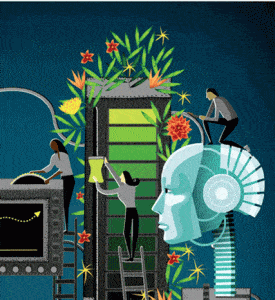 Our planet is in a perilous state. The combined effects of climate change, pollution, and loss of biodiversity are putting our health and well-being at risk. Given that human actions are largely responsible for these global problems, humanity must now nudge Earth onto a trajectory toward a more stable, harmonious state. Many of the challenges are daunting, but solutions can be found. In this issue of Science, we launch a series of monthly articles that call attention to some of the choices we can still make for shaping tomorrow’s Earth—commentaries and analyses that will hopefully provoke us to making thoughtful choices (see
 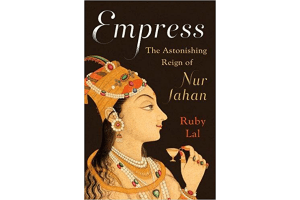 If you grew up in South Asia, the lush 17th-century romance of a captivating young widow and a Moghul emperor is likely as familiar to you as Romeo & Juliet are in the West. They meet, and she wows the ruler of tens of millions of people with her beauty, wit, and fearlessness. Wise and savvy, she becomes his beloved 20th wife and goes on to live an extraordinary life. She writes poetry, designs gardens and buildings, and even saves a village by hunting down and killing four dangerous tigers with six shots. That’s as far as the legend and the history books tend to go. But there’s much more to the story, as historian Ruby Lal reveals in her fascinating new book Empress: The Astonishing Reign of Nur Jahan.
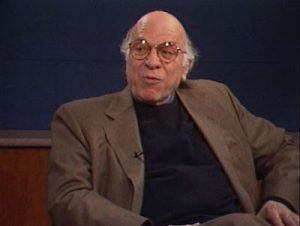 Inasmuch as he had a specialization, Cavell’s was our human life in words and he, along with Cora Diamond and James Conant, is credited with giving second life to a hitherto expiring mode of thought known as ordinary language philosophy. Cavell was fascinated by how language proves constitutive of what it means to be human, and was further fascinated by how much we humans want to deny that—probably, he thought, because of what the implications would demand of us. In a characteristically exquisite passage from the legendary fourth part of The Claim of Reason, Cavell wrote, “There is no assignable end to the depth of us to which language reaches; that nevertheless there is no end to our separateness. We are endlessly separate, for no reason. But then we are answerable for everything that comes between us; if not for causing it then for continuing it; if not for denying it then for affirming it; if not for it then to it.”
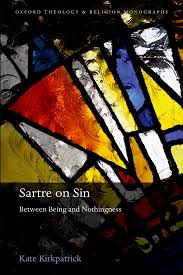 Kate Kirkpatrick’s provocative interdisciplinary study argues that Sartre’s conception of nothingness in Being and Nothingness (BN) can be fruitfully understood as an iteration of the Christian doctrine of original sin, “nothingness” being synonymous with sin and evil in the Augustinian tradition. Hence, Sartre in BN presents us with “a phenomenology of sin from a graceless position” (10). For readers used to understanding Sartre through the lens of German phenomenology, this will come as a surprise. However, the book should be welcomed by all readers as it breathes life into the field of Sartre studies, offering a fresh perspective from which to judge the magnum opus of French existentialism.
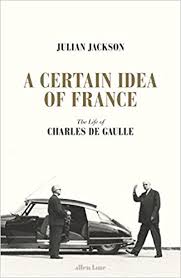 W
W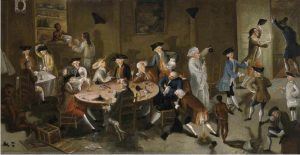 As we commence celebrating July 4th with the time-honored traditions of beer, block parties and cookouts, it’s fun to imagine a cookout where the Founding Fathers gathered around a grill discussing the details of the Declaration of Independence. Did George Washington prefer dogs or burgers? Was Benjamin Franklin a ketchup or mustard guy? And why did they all avoid drinking water?