
Ormesby Psalter
East Anglican School, c. 1310
The psalter invites us to consider
a cat and a rat in relationship
to an arched hole, which we
shall call Circumstance. Out of
Circumstance walks the splendid
rat, who is larger than he ought
to be, and who affects an expression
of dapper cheer. We shall call him
Privilege. Apparently Privilege has
not noticed the cat, who crouches
a mere six inches from Circumstance,
and who will undoubtedly pin
Privilege’s back with one swift
swipe, a torture we can all nod at.
The cat, however, has averted
its gaze upward, possibly to heaven.
Perhaps it is thanking the Almighty
for the miraculous provision of a rat
just when Privilege becomes crucial
for sustenance or sport. The cat
we shall call Myself. Is it not
too bad that the psalter artist
abandoned Myself in this attitude
of prayerful expectation? We all
would have enjoyed seeing clumps of
Privilege strewn about Circumstance,
Myself curled in sleepy ennui,
or cleaning a practical paw.
by Rhoda Janzen
from Poetry Magazine, 2007
 In his 1946 classic essay ‘Politics and the English language’, George Orwell argued that “if thought corrupts language, language can also corrupt thought”. Can the same be said for science — that the misuse and misapplication of language could corrupt research? Two neuroscientists believe that it can. In an intriguing paper published in the Journal of Neurogenetics, the duo claims that muddled phrasing in biology leads to muddled thought and, worse, flawed conclusions.
 THIRTY YEARS AGO, while the Midwest withered in massive drought and East Coast temperatures exceeded 100 degrees Fahrenheit, I testified to the Senate as a senior NASA scientist about climate change. I said that ongoing global warming was outside the range of natural variability and it could be attributed, with high confidence, to human activity — mainly from the spewing of carbon dioxide and other heat-trapping gases into the atmosphere. “It’s time to stop waffling so much and say that the evidence is pretty strong that the greenhouse effect is here,” I said.
 By several measures, including rates of poverty and violence, progress is an international reality. Why, then, do so many of us believe otherwise?
 If the names of these Black Oberlinites are unfamiliar, I suspect it is with good reason: we do not know how to talk about them. Over the course of my life I have learned that to be black and a classical musician is to be considered a contradiction. After hearing that I was a music major, a TSA agent asked me if I was studying jazz. One summer in Bayreuth, a white German businessman asked me what I was doing in his town. Upon hearing that I was researching the history of Wagner’s opera house, he remarked, “But you look like you’re from Africa.” After I gushed about Mahler’s Fifth Symphony, someone once told me that I wasn’t “really black.” All too often, black artistic activities can only be recognized in “black” arts.
 Last week, the philosopher Stanley Cavell died. His contributions to human thought are vast and rich; his subjects range from the intricacies of human language to the nature of skill. But one of Cavell’s best-known books is also, at least at first glance, his most frivolous: Pursuits of Happiness. In this book, originally published in 1981, Cavell claims that what he calls “comedies of remarriage”—Hollywood comedies from the 1930s and 40s that share a set of genre conventions (borderline farcical cons, absent mothers, weaponized erotic dialogue), actors (Cary Grant, Clark Gable, Katharine Hepburn, Barbara Stanwyck), and settings (Connecticut)—are the inheritors of the tradition of Shakespearean comedy and romance, and that they constitute a philosophically significant body of work.
 Visitors to Pyongyang, North Korea’s capital, often report feeling as though they have landed in a Truman-Show-type setup, unable to tell whether what they see is real or put there for their benefit, to be cleared away like props on a stage once they have moved on. The recent transformation of Kim Jong Un, the country’s dictator, from recluse to smooth-talking statesman has heightened interest in the country but not really shaken the fundamental sense of bewilderment when trying to make sense of it. Oliver Wainwright, the Guardian’s architecture critic (and the brother of The Economist’s Britain editor), who has compiled his photographs from a week-long visit to Pyongyang in 2015 into a glossy coffee-table book published by Taschen, starts from this initial sense of strangeness. He describes wandering around Pyongyang as moving through a series of stage sets from North Korean socialist-realist operas, where every view is carefully arranged to show off yet another monument or apartment building. But his eye is also alive to what the city, which was originally planned by a Soviet-trained architect, has in common with other places that were influenced by Soviet aesthetics.
 You can halt aging without punishing diets or costly drugs. You just have to wait until you’re 105. The odds of dying stop rising in people who are very old, according to a new study that also suggests we haven’t yet hit the limit of human longevity. The work shows “a very plausible pattern with very good data,” says demographer Joop de Beer of the Netherlands Interdisciplinary Demographic Institute in The Hague, who wasn’t connected to the research. But biodemographer Leonid Gavrilov of the University of Chicago in Illinois says he has doubts about the quality of the data. As we get older, our risk of dying soars. At age 50, for example, your risk of kicking the bucket within the next year is more than three times higher than when you’re 30. As we head into our 60s and 70s, our chances of dying double about every 8 years. And if you’re lucky enough to hit 100 years, your odds of making it to your next birthday are only about 60%. But there may be a respite, according to research on lab animals such as fruit flies and nematodes. Many of these organisms show so-called mortality plateaus, in which their chances of death no longer go up after a certain age. It’s been hard to show the same thing in humans, in part because of the difficulty of obtaining acccurate data on the oldest people. So, in the new study, demographer Elisabetta Barbi of the Sapienza University of Rome and colleagues turned to a database compiled by the Italian National Institute of Statistics. It includes every person in the country who was at least 105 years old between the years 2009 and 2015—a total of 3836 people. Because Italian municipalities keep careful records on their residents, researchers at the institute could verify the individuals’ ages. “These are the cleanest data yet,” says study co-author Kenneth Wachter, a demographer and statistician at the University of California, Berkeley.
 Athanassios Fokas, a mathematician from the Department of Applied Mathematics and Theoretical Physics of the University of Cambridge and visiting professor in the Ming Hsieh Department of Electrical Engineering at the USC Viterbi School of Engineering has announced the solution of one of the long-standing problems in the history of mathematics, the Lindelöf Hypothesis.
 MANY TUESDAY NIGHT were asking, “who is Alexandria Ocasio-Cortez” after her stunning primary victory over the No. 4 House Democrat Joe Crowley in New York’s 14th District. The New York Times called her a “Democratic dragon slayer.” MSNBC’s Joy Reid admitted on Twitter to “doing an Ocasio-Cortez crash course.” She didn’t have a Wikipedia page until last night. A year ago, she was working as a bartender in Manhattan. She is young. She’s working class. She’s a New Yorker who has been immersed in community-based leadership, organizing, and service work.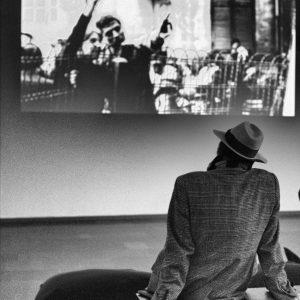
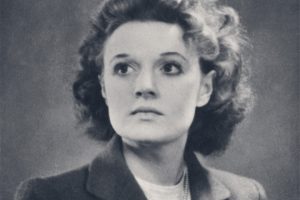 Independent and self-reliant, Spark was not an ideological feminist, although she portrayed strong and self-willed women, ranging from school teachers to film stars, abbesses, terrorists and billionaires. Even her admirers (among them Joyce Carol Oates, Ali Smith and Elaine Feinstein) use words such as “arch”, “pert” and “sly” to describe her prose, compliments which some feminists might reject as sexist. Catholics see her as a Catholic writer, but while her work has something in common with that of her supporter Graham Greene, her attitudes to her faith are far from conventional. Frank Kermode (who thought Spark “our best novelist”) describes her religion as “bafflingly idiosyncratic”. She wrote of sin and suffering, liked to split theological hairs, and was particularly drawn to the Book of Job, but many of her portraits of believers are caustic in the extreme. The devout, gullible and multiple-bosomed Mrs Hogg in her first novel, The Comforters(1957), the pig-eyed treacherous convert Sandy Stranger in The Prime of Miss Jean Brodie, the divinely wicked Abbess of Crewe and her silly flock, and the camp and parasitical Jesuits, Father Cuthbert Plaice and Father Gerard Harvey (scholar of ecological paganism) in The Takeover (1976), do not show the Church in a good light. The whisky priests and tormented adulterers of Greene fare better at the hands of their creator. This can be puzzling to readers of other faiths or none, though Greene, Evelyn Waugh and David Lodge – all fellow Catholics, and all admirers of Spark – do not seem to discern meaningful incongruities between faith and art.
 The secret of his leadership lies in a profound pessimism that is reflected in his approach to the conflict (and, to an extent, to life). It’s a pessimism that is regarded as realism by most Israelis. The fact that the evaporation of hope in the peace process has been accompanied in recent years by an economic and cultural boom in Israel has enabled him to justify his policy, exacerbating the frustration of the liberal camp in Israel, which, as in many other parts of the Western world, is in decline.
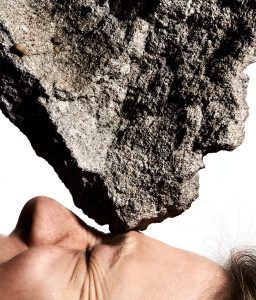 To be clear: A migraine is not a headache, and people with migraines don’t like their condition being called one. It’s not that headaches aren’t part of a migraine: They are. But a headache is a single symptom of a multifaceted neurological disease — one that includes loss of vision, intense nausea, and sensitivity to light and sound. And those are just the common side effects. Some sufferers find themselves yawning compulsively, slurring their speech, and losing sensation on one side of the body. Some migraineurs (yes, that is the technically accurate moniker for migraine sufferers) start seeing big things as small — a side effect dubbed “Alice in Wonderland syndrome” by doctors. Nonetheless, for as long as they have existed, migraines have been trivialized as headaches or dismissed altogether. Which is clear when you look at the treatments available: Almost every drug used between 1550 B.C. and today has been a repurposed one. Poultices of opium and honey, botox, anti-convulsant drugs, antidepressants, beta blockers — drugs whose efficacy was not intended but stumbled upon. Triptan, a class of vessel constrictors created to abort and lessen the effects of (not prevent) attacks at their onset was released in 1991. It was the only class of drug created specifically for migraines — that is, until now. On May 17, a preventative drug called Aimovig, 30 years in the making, gained FDA approval; it’s a monthly shot that modulates patients’ levels of CGRP, a neurotransmitter whose levels rise during migraine attacks. This means that it is days away from getting in the hands (or arms — it’s an injectable) of migraineurs. At at least for those who are able to pay full price: The drug costs $6,900 a year, or $575 per treatment.