Amitava Kumar in Granta:
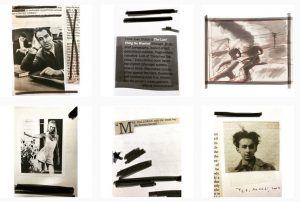 What you see below are images from my notebooks, recently posted on my Instagram. Clippings, quotes, sketches. These notebooks represent the many years I have lived with the dream of a book that turned into Immigrant, Montana. When I went to Yaddo on a writing residency one summer, it was the notebooks that I looked through each morning and night – these notebooks are a visual reminder of all the bits and pieces I was thinking about when writing this novel.
What these pictures do not show is a page from a narrow, reporter’s notebook that I used to have when finishing graduate school. Sitting in an Amtrak railcar many years ago, on my way to a Modern Language Association meeting in New York, where I’d be interviewed and eventually be given my first job teaching in an English department, I wrote the following line: ‘The red-bottomed monkeys climbed down the branches of the tamarind tree to peel the oranges left unattended on Lotan Mamaji’s house.’ I was recalling a childhood memory involving a monkey, a gun and my infant cousin still in her crib. This first sentence later turned into a short-story – I workshopped it in a small writing group, my first, which included a twenty-one-year-old Cheryl Strayed – and then, years later, it became the opening episode in my new novel.
The picture on the top left is of Philip Roth. There’s a story there.
More here.
 IN HIS ARTICLE
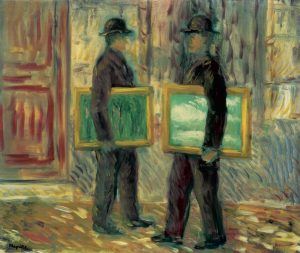 It is sometimes said that Surrealist paintings are disappointing up close; perhaps we see them so often in reproduction that by the time we see the real ones in a museum they’ve lost some of their strangeness. René Magritte’s paintings could fall into that trap. His bowler hats, apples, puffy clouds and pipes have popped up on coffee mugs, tote bags and dorm-room posters for decades. Not to mention album covers: Jeff Beck used Magritte’s “The Listening Room” on the cover of his 1969 LP “Beck-Ola”. Is Magritte too ubiquitous to be uncanny? No, is the takeaway from “The Fifth Season”, an exhibition at the San Francisco Museum of Modern Art (SFMOMA). Displaying lesser-known work alongside some of his best-loved paintings, it shows that Magritte still has the power to surprise.
 In July 3, 2014, Misty Mayo boarded a Greyhound bus bound for Los Angeles. Desperate to escape her hometown of Modesto in Stanislaus County, 300 miles north in California’s Central Valley, the 41-year-old thought the 4th of July fireworks in LA would be the perfect antidote. Even a mugging at the Modesto bus station didn’t deter her. When she arrived in LA the next morning with just a few dollars in her pocket, Misty immediately asked a police officer for directions to the fireworks display. She also knew she would need to find a Target pharmacy to refill her medication, but decided it could wait until later.
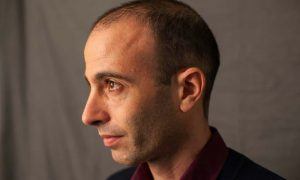 You are now a highly successful public intellectual. In what ways has international recognition changed you?
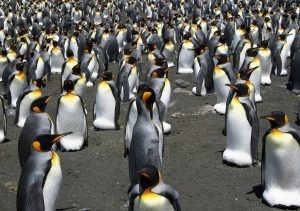 Aerial and satellite images of the colony living on the remote subantarctic island of Île aux Cochons, in the southern Indian Ocean, suggests the number of penguins has fallen from around 500,000 pairs in the 1980s, to just 60,000 pairs in photographs taken in 2015 and 2017.
 We get the word “mesmerize” from a doctor named Franz Anton Mesmer, who in Paris in the late 18th century posited the existence of an invisible natural force connecting all living things — a force you could manipulate to physically affect another person.
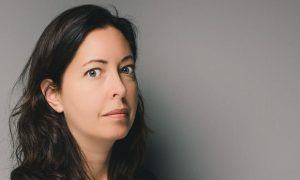 For anyone who has ever kept a diary, Sarah Manguso’s Ongoingness(first published in the US in 2015) will give pause for thought. The American writer kept a diary over 25 years and it was 800,000 words long. She elects not to publish a word of it in Ongoingness. It turns out she does not wish to look back at what she wrote. This absorbing book – brief as a breath – examines the need to record. It seems, even if she never spells it out, that writing the diary was a compulsive rebuffing of mortality. Like all diarists, she was trying to commandeer time. A diary gives the writer the illusion of stopping time in its tracks. And time – making her peace with its ongoingness – is Manguso’s obsession. Her book hints at diary-keeping as neurosis, a hoarding that is almost a syndrome, a malfunction, a grief at having no way to halt loss.
 When she moved from Michigan to be near her daughter in Cary, N.C., Bernadine Lewandowski insisted on renting an apartment five minutes away. Her daughter, Dona Jones, would have welcomed her mother into her own home, but “she’s always been very independent,” Ms. Jones said. Like most people in their 80s, Ms. Lewandowski contended with several chronic illnesses and took medication for osteoporosis, heart failure and pulmonary disease. Increasingly forgetful, she had been diagnosed with mild cognitive impairment. She used a cane for support as she walked around her apartment complex. Still, “she was trucking along just fine,” said her geriatrician, Dr. Maureen Dale. “Minor health issues here and there, but she was taking good care of herself.” But last September, Ms. Lewandowski entered a hospital after a compression fracture of her vertebra caused pain too intense to be managed at home. Over four days, she used nasal oxygen to help her breathe and received intravenous morphine for pain relief, later graduating to oxycodone tablets. Even after her discharge, the stress and disruptions of hospitalization — interrupted sleep, weight loss, mild delirium, deconditioning caused by days in bed — left her disoriented and weakened, a vulnerable state some researchers call “
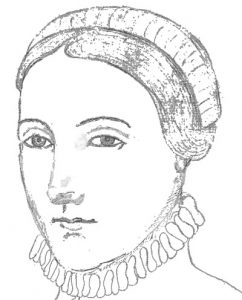 When Mrs. William Shakespeare died on this August day in 1623, her family and friends believed they would lay her to eternal rest beside her renowned husband. They did not. They did inter an ordinary wife and mother, but the memory of her went out to become a Frankenstein monster, cut up and reassembled down the centuries. Few of the many makeovers done to Anne Hathaway Shakespeare since her passing have been flattering.
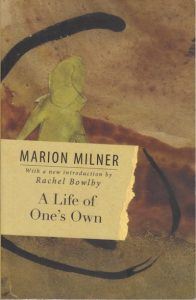 I’m tempted to describe Marion Milner’s book A Life of One’s Own as the missing manual for owners of a human mind. However, it’s not didactic or prescriptive. In fact, it’s useful mainly because it’s nothing like a manual or a self-help book. The book is more like an insightful travelogue by an articulate and honest observer with a gift for using vivid physical imagery and metaphors to describe her inner world.
 The 2020s will have a name. In the nursing homes of the future, Millennials’ grandchildren will hear all about the coming decade. Gran will remove her headset, loaded out with VR-entertainment and the latest in biometric tech, and she’ll tell the kids about the world as it was in the third decade of the 21st Century. For now, we look ahead to the Twenties, a decade certain to be charged with meaning, roaring in one way or another.