
Ed Yong in The Atlantic:
 In the 1940s, the Wyoming Game and Fish Department began trying to move bighorns back into their historic habitats. Those relocations continue today, and they’ve been increasingly successful at restoring the extirpated herds. But the lost animals aren’t just lost bodies. Their knowledge also died with them—and that is not easily replaced.
Bighorn sheep, for example, migrate. They’ll climb for dozens of miles over mountainous terrain in the spring, “surfing” the green waves of newly emerged plants. They learn the best routes from one another, over decades and generations. And for that reason, a bighorn sheep that’s released into unfamiliar terrain is an ecological noob. It’s not the same as an individual that lived in that place its whole life and was led through it by a knowledgeable mother.
More here.

 ‘If we don’t do this
 THE RELATIONSHIP BETWEEN FACEBOOK
 When the British philosopher Gilbert Ryle was asked whether he read novels, he famously replied, without missing a beat, “Oh, yes—all six, every year.” And without missing a beat we get the joke, of course, not because we believe that Jane Austen’s novels throw all others into the shadows (though we do), and not because they bear annual rereading (though they do), but rather because we all know—or think we know—that she wrote six of them.
 A massive study of nearly 4,000 variants in a gene associated with cancer could help to pinpoint people at risk for breast or ovarian tumours. The information is sorely needed: millions of people have had their BRCA1 gene sequenced. Some variations in the DNA sequence of BRCA1are linked to breast and ovarian cancer; others are thought to be safe. But
 Film and theatre are not the only cultural sectors to have come into Fidesz’s crosshairs – the offensive was indeed ‘total’. For example, shortly after Orbán assumed power, the National Cultural Fund was restructured. Originally an independent body, it was responsible for distributing subsidies across all cultural sectors. A great advantage of the cultural fund was that it was independent of government. But Orbán subordinated it to a minister and a secretary of state, who henceforth had the power to revise the decisions of the committees responsible for the various cultural sectors. In summer 2010, members of the Cultural Fund’s councils responsible for publishing were replaced with Fidesz sympathizers. The procedure appeared paradoxical. The state created a fund which was charged not only with distributing money, but also with ensuring that decisions be made by qualified representatives. However, the government then intervened to ensure that these qualified, elected experts could not make democratic decisions about the money.
 The Bureau had received credible evidence regarding Sontag’s trip to Hanoi—a feature in Esquire describing her experiences talking to leading figures of the North Vietnamese government, including Prime Minister Pham Van Dong, that would later be adapted into the book Trip to Hanoi.
 It would be uncool, priggish, unthinking to care too much about the artist’s intoxication. Torments require relief and expression: numbing and utterance; alcohol and art. You can’t unpick the work from the circumstances of its creation, nor should you want to. In 1975, the critic Lewis Hyde tried caring about Berryman. A few years after the poet’s death, Hyde published an essay, an angry blast against the romanticization of the inebriated artist. When Hyde read The Dream Songs he didn’t hear the genius so much as “the booze talking”. “Its tone is a moan that doesn’t revolve.” Hyde seemed to believe – unfashionably – that Berryman’s work would have been better had he been sober.
 Merve Emre’s new book begins like a true-crime thriller, with the tantalizing suggestion that a number of unsettling revelations are in store. Early in “The Personality Brokers: The Strange History of Myers-Briggs and the Birth of Personality Testing,” she recalls the “low-level paranoia” she started to feel as she researched her subject: “Files disappear. Tapes are erased. People begin to watch you.” Archival gatekeepers were by turns controlling and evasive, acting like furtive trustees of terrible secrets. What, she wanted to know, were they trying to hide?
 As I prepared to teach my class ‘Science and Islam’ last spring, I noticed something peculiar about the book I was about to assign to my students. It wasn’t the text – a wonderful translation of a medieval Arabic encyclopaedia – but the cover. Its illustration showed scholars in turbans and medieval Middle Eastern dress, examining the starry sky through telescopes. The miniature purported to be from the premodern Middle East, but something was off.
 So effectively has the Beltway establishment captured the concept of national security that, for most of us, it automatically conjures up images of terrorist groups, cyber warriors, or “rogue states.” To ward off such foes, the United States maintains a historically unprecedented
  Seventy-five years ago, in April 1943, the research chemist Albert Hofmann did something distinctly out of scientific character. Impelled by what he later called a “peculiar presentiment”, he resolved to take a second look at the 25th in a series of molecules derived from the ergot fungus, a drug he had discovered some years earlier and dismissed as of no scientific interest. As he synthesised it for the second time, it made contact with his skin, giving rise to an unprecedented experience: a “stream of fantastic pictures [and] extraordinary shapes with intense, kaleidoscopic play of colours”. Five days later, on 19 April, he decided to test the chemical on himself under controlled conditions, thus becoming the first person in history knowingly to embark on an acid trip.
 The storms of rivalry and feud currently blowing through America’s internet portals rise to the wind-scale force of Wagnerian opera, but it’s hard to know whether the sound and fury is personal, political, or pathological. The stagings of vengeful lies to destroy a graven Facebook image, or the voicing of competitive truth that is the vitality of a democratic republic? The problem doesn’t yield to zero-sum solution.
 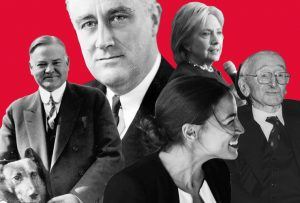 Recent primaries have given Democrats reasons for hope, but they have also exposed fault lines within the party. Divisions are visible in the very labels used to describe them. Many use the word “liberal” as a catchall to describe left-of-center politics in general, but self-described leftists and members of the Democratic Socialists of America often characterize liberals and Democrats as their opponents—viewing them as the compromising centrists standing in the way of a more progressive or socialist agenda.