Dominic Green in Spectator:
 Watching Blasey Ford’s opening statement and questioning this morning before an almost entirely male panel, I am more sure than ever that she is telling the truth. Either that, or she is a better character actor than Meryl Streep. There are no serious grounds to believe that this is a case of mistaken identity either. Nothing in Blasey Ford’s demeanour, her statements or her responses suggested that she is doing anything other than telling the truth. Everything about her traumatised manner, her detailed statements and responses has the ring of credibility. As Democratic senator Sheldon Whitehouse of Rhode Island said, her account matches prosecutorial standards of ’preliminary credibility’, and its details are ‘consistent with the known facts’. Everything in Blasey Ford’s account also accords with what everyone who moves in circles associated with ‘elite prep schools’ — and ‘elite’ universities too — knows is a serious problem in male behaviour. The problem has two faces, the entitlement of spoilt princelings, and its supercharging by heavy drinking into forms of dangerous and criminal idiocy. This kind of perverted male camaraderie is not high spirits, unless high spirits is the ‘uproarious laughter’ of two boys as one of them assaults a 15-year old girl.
Brett Kavanaugh has denied all and any elements of Blasey Ford’s testimony. So this case, greyed with drink and memory, comes down to a black and white decision. I don’t care whether the winners and losers are liberals or conservatives, or whether they’re men or women. This is a watershed moment, and the responsiveness and credibility of America’s governing institutions are at stake.
Republicans and conservatives have climbed up a tree out of misplaced party loyalty and masculine blind spots. They still have time to climb down. They need to do so quickly, before they confirm every negative stereotype about them. They need to get out of the echo chambers of their social media and the closed rooms of their political strategizing, and understand that they are insulting more than 50 per cent of the electorate. Donald Trump, who routinely insults more than 50 per cent of the electorate, wants to leave a Supreme Court that will lean conservative for years. Kavanaugh is not the only possible conservative nominee for the bench, but he is no longer a credible one. There are bound to be more allegations against him. True or not, they will damage the dignity of the Supreme Court at a time when America needs its institutions to work. If Trump and the Republicans stick with him, they will damage the Court, the presidency and their party. Out of self-interest, if nothing else, they need to drop Kavanaugh before he takes them down with him.
More here.

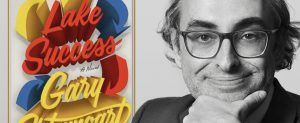 In 2016, Russian born novelist Gary Shteyngart took a bus ride. It was an uncertain time in American culture and politics, and Shteyngart, who’s won a devoted following for his bestsellers “Absurdistan, “Super Sad True Love Story” and the memoir “Little Failure,” didn’t know what would come of the journey. Two years later, he’s emerged with not just the first big novel of the post-Obama era, but the first truly great novel of it.
 Transhumanism (also abbreviated as H+) is a philosophical movement which advocates for technology not only enhancing human life, but to take over human life by merging human and machine. The idea is that in one future day, humans will be vastly more intelligent, healthy, and physically powerful. In fact, much of this movement is based upon the notion that death is not an option with a focus to improve the somatic body and make humans immortal.
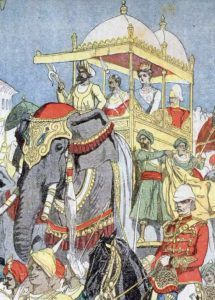 On 24 September 1599, while William Shakespeare was mulling over a draft of Hamlet in his house downriver from the Globe in Southwark, a mile to the north a motley group of Londoners were gathering in a half-timbered Tudor hall. The men had come together to petition the ageing Elizabeth I, then a bewigged and painted sexagenarian, to start up a company “to venter in a voiage to ye Est Indies”.
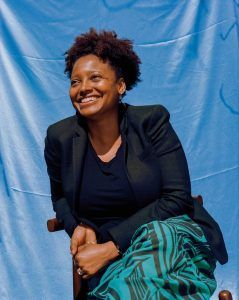 In “Duende” and in her third book, the Pulitzer Prize-winning “
 Some of the biggest names in English letters, including
 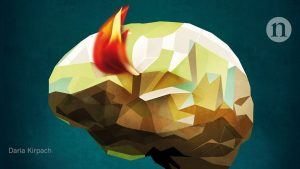 Even in comparison to other types of cancer, brain cancer is particularly deadly. People with glioblastoma multiforme, one of the most common forms of brain cancer, have a median survival of less than 15 months after diagnosis. The US Food and Drug Administration (FDA) has so far approved only five drugs for treating brain cancer. Given this limited range, researchers could search for potential treatments among the wider pool of all FDA-approved drugs; however, any found to be effective would probably work in just a slim percentage of people with brain cancer.
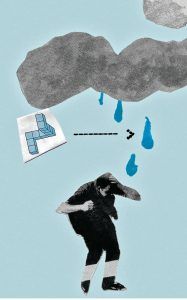 Ever since completing his Ph.D. at the University of Pittsburgh in 1993, the Israeli philosopher Irad Kimhi has been building the résumé of an academic failure. After a six-year stint at Yale in the ’90s that did not lead to a permanent job, he has bounced around from school to school, stringing together a series of short-term lectureships and temporary teaching positions in the United States, Europe and Israel. As of June, his curriculum vitae listed no publications to date — not even a journal article. At 60, he remains unknown to most scholars in his field.
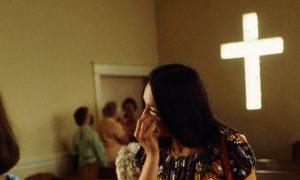 Sigmund Freud, who referred to himself as a ‘godless Jew’, saw religion as delusional, but helpfully so. He argued that we humans are naturally awful creatures – aggressive, narcissistic wolves. Left to our own devices, we would rape, pillage and burn our way through life. Thankfully, we have the civilising influence of religion to steer us toward charity, compassion and cooperation by a system of carrots and sticks, otherwise known as heaven and hell.
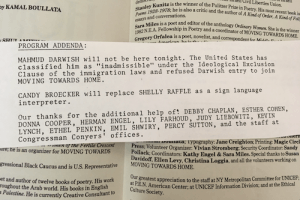 I’m not one to go digging around in old dirt, but sometimes you find good bones. Recently I’ve been doing some research in the papers of an important scholar and public intellectual who taught at my university and died on my twenty-second birthday. When he died, I was a baby editor, and bad at my job, but I felt a little grand. I managed to get the day off from work for the memorial and bought a prim looking black dress from Goodwill, linen with a satin ribbon. I dug out my interview heels. People like Noam Chomsky said very moving things, but I couldn’t pay attention. The shape of everyone’s grief was so different and it didn’t really make sense to me. Everyone took his death personally, and the obituary in the Times was less than totally respectful.
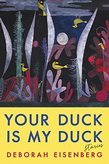 These stories are family sagas writ short, a form Eisenberg may well have invented. The word saga generally brings to mind giant, beach-sandy paperbacks, like Gabriel García Márquez’s One Hundred Years of Solitude—not short stories, not even long short stories. Stories don’t in principle have the space to unfurl lifetimes, multiple settings, formation and reverberation. Yet Eisenberg’s stories— with their telescoping time lines and surprising associative turns—expand, even in their ellipses. “Hang on,” thinks young Adam in “Recalculating,” as he considers the earth’s revolution, the chance of it spinning off its axis. “Adam clung to some bits of stubble and closed his eyes. Hang on, he thought, as the Earth gained speed and spun recklessly into the night—hang on, hang on, hang on!” Because Adam is young, his imagination is terrifyingly vivid, and life around him will spin out of control. He will find purchase on stubble in unexpected places, like the girl seeking facts in “Cross Off and Move On.” There is so much living and expression these characters (small and large) bring to the page, lest anyone forget the amplitude.
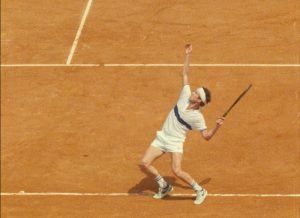 In the Realm of Perfection dismisses this conventional wisdom and insists that we engage McEnroe on another plane altogether. The inquiry begins in our bemusement at the man-child. When McEnroe interrupts a match to vent, when he spits profane and acid mockery at line judges and referees, when he taunts fans or takes a swat at a photographer with his racquet—the crowd booing lustily—his matches approach the spectacle of professional wrestling, with its travesty of villainy. Why would a player aspire to that?
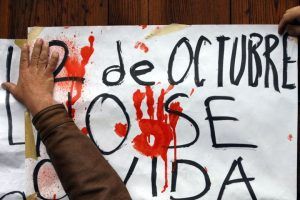 So began a utopian experiment in direct democracy, especially remarkable in Mexico’s authoritarian culture, where vertical hierarchies prevailed socially and politically. The encounter between classes was a mutual education: history and theory in exchange for street smarts and live contact with the country’s social problems. As told to Elena Poniatowska for her collection of testimonies Massacre in Mexico(1971; see also the TLS, May 4, 2018), the university students felt duty-bound to enlighten the polytechnicians, droning on about Lenin, Marcuse and imperialism. Impatient IPN delegates would shout out “¡Concretito!”, “Nuts and bolts! Who’s got tomorrow’s posters?” CNH assemblies also saw heated disagreement about tactics and clashes between those of differing political affiliations. The overarching demand for greater civic participation meant the crucial work of consciousness-raising took place in the streets and slums. The IPN was at the forefront of the roving brigadas with their loudspeakers, xeroxed leaflets and newspapers shoved through bus and car windows, and their street theatre and speak-ins that attracted sympathetic crowds and gave people the chance to voice their own complaints.
 Hold tight. Because I’m now going to try to explain what I think is happening in
 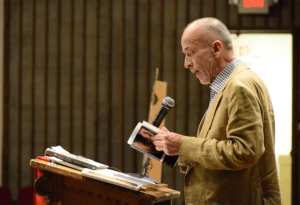 One part of the Hippocratic Oath, the vow taken by physicians, requires us to “remember that there is art to medicine as well as science, and that warmth, sympathy, and understanding may outweigh the surgeon’s knife or the chemist’s drug.” When I, along with my medical school class, recited that oath at my white coat ceremony a year ago, I admit that I was more focused on the biomedical aspects than the “art.” I bought into the mechanism of insulin lowering blood sugar. I bought into the concept of diabetes-induced kidney damage. I bought into the idea of small intestinal bacterial overgrowth in patients with diabetes. But art’s—poetry’s—role in the modern practice of medicine? I’ve changed my mind. Physicians are beginning to understand that the role of language and human expression in medicine extends beyond that horizon of uncertainty where doctor and patient must speak to each other about a course of treatment. The restricted language of blood oxygen levels, drug protocols, and surgical interventions may conspire against understanding between doctor and patient—and against healing. As doctors learn to communicate beyond these restrictions, they are reaching for new tools—like poetry.