
Rebecca Roberts in The Scientist:
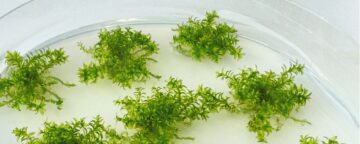 Moss is an often-overlooked, ancient plant that is far from insignificant. Among the first to colonize land, mosses greened the planet and transformed Earth’s climate, providing an oxygen-rich atmosphere that allowed animals to evolve.1 These hardy pioneers can even filter and clean the polluted air of cities.2,3
Where others see a natural air purifier, Ralf Reski, a plant biotechnologist at the University of Freiburg, saw untapped potential in moss. In addition to the range of valuable compounds they produce naturally, Reski believed it made an ideal culture system to grow recombinant human proteins at scale. Reski first worked on moss as an undergraduate, studying their genetics. He immediately fell in love with the tiny plants, so much so that he asked his supervisor if he could continue working on them for a PhD project. From those early days, his peers quickly dismissed the notion, pointing out that mosses didn’t have to do anything with biotechnology. “You will never become a professor in Germany unless you work with real plants. Nobody is interested in mosses,” Reski recalled the caution from senior professors.
But he persisted.
More here.
Enjoying the content on 3QD? Help keep us going by donating now.