
John Cassidy in The New Yorker:
 In 1995, Edward Wolff, an economist at N.Y.U., published a short book called “Top Heavy,” which detailed the increasingly alarming concentration of wealth in the United States, and warned of the threat that it posed to American democracy, as the ultra-rich sought to exercise more political power. At the time, the richest one per cent of families controlled about forty per cent of all household wealth—defined as stocks, bonds, other financial assets, equity in private businesses, trusts, real estate, and bank deposits—while much of the population had virtually no wealth at all once debts and mortgages were taken into account. To address this disparity, Wolff called for the introduction of an annual tax on wealth. Aware that this might be considered a radical idea, he kept his proposed tax rates at pretty low levels. Under his plan, households with a net worth of a hundred thousand dollars would pay five cents in tax on every hundred dollars of their wealth; the rate would rise to thirty cents per hundred dollars for households worth a million dollars or more. (Back then, about three per cent of U.S. households fell into the latter bracket.)
Despite the modest scale of Wolff’s proposal, it didn’t get much traction in the policy world. Prior to publishing the book, he did have a lunch meeting with Bill Bradley, the Democratic senator from New Jersey, where they discussed the idea, but that was as far as it went. “He sounded enthusiastic at the lunch, but when push came to shove he walked away,” Wolff recalled when I spoke with him earlier this week. “He thought that politically it was dynamite.”
Twenty-five years later, how have things changed?
More here.
 On Monday, the Jerusalem Post, a centrist Israeli newspaper, published
  “I am not a man, I am dynamite!” Friedrich Nietzsche is famous for this kind of bombast, but most of his works are unassuming in tone, and his sentences are always plain, direct and clear as a bell. Take for instance the celebrated assault on “theorists” in his first book, The Birth of Tragedy, published in 1872. Theorists, Nietzsche says, know everything there is to know about “world literature”—they can “name its periods and styles as Adam did the beasts.” But instead of “plunging into the icy torrent of existence” they merely content themselves with “running nervously up and down the river bank.”
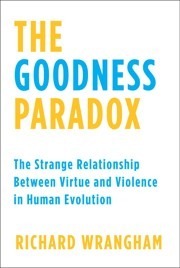 DeVore had hanging in his office an 1838 quote from Darwin’s notebook: “Origin of man now proved … He who understands baboon would do more towards metaphysics than Locke.” It’s an aphorism that calls to mind one of my favorite characterizations of anthropology—philosophizing with data—and serves as a perfect introduction to the latest work of Richard Wrangham, who has come up with some of the boldest and best new ideas about human evolution.
 String theory was originally proposed as a relatively modest attempt to explain some features of strongly-interacting particles, but before too long developed into an ambitious attempt to unite all the forces of nature into a single theory. The great thing about physics is that your theories don’t always go where you want them to, and string theory has had some twists and turns along the way. One major challenge facing the theory is the fact that there are many different ways to connect the deep principles of the theory to the specifics of a four-dimensional world; all of these may actually exist out there in the world, in the form of a cosmological multiverse. Brian Greene is an accomplished string theorist as well as one of the world’s most successful popularizers and advocates for science. We talk about string theory, its cosmological puzzles and promises, and what the future might hold.
 NOW THAT SHE IS NO LONGER
  Neanderthals disappeared from Europe roughly 40,000 years ago, and scientists are still trying to figure out why. Did disease, climate change or competition with modern humans — or maybe a combination of all three — do them in? In a recent
 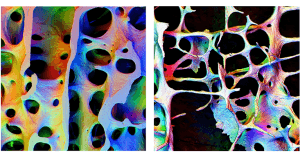 Simplicity, simplicity, simplicity!” Henry David Thoreau exhorted in his 1854 memoir Walden, in which he extolled the virtues of a “Spartan-like” life. Saint Thomas Aquinas preached that simplicity brings one closer to God. Isaac Newton believed it leads to truth. The process of simplification, we’re told, can illuminate beauty, strip away needless clutter and stress, and help us focus on what really matters. It can also be a sign of aging. Youthful health and vigor depend, in many ways, on complexity. Bones get strength from elaborate scaffolds of connective tissue. Mental acuity arises from interconnected webs of neurons. Even seemingly simple bodily functions like heartbeat rely on interacting networks of metabolic controls, signaling pathways, genetic switches, and circadian rhythms. As our bodies age, these anatomic structures and physiologic processes lose complexity, making them less resilient and ultimately leading to frailty and disease.
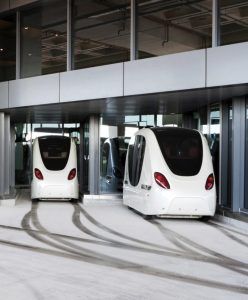 Today, cars with semi-autonomous features are already on the road. Automatic parallel parking has been commercially available since 2003. Cadillac allows drivers to go hands-free on pre-approved routes. Some B.M.W. S.U.V.s can be equipped with, for an additional seventeen-hundred dollars, a system that takes over during “monotonous traffic situations”—more colloquially known as traffic jams. But a mass-produced driverless car remains elusive. In 2013, the U.S. Department of Transportation’s National Highway Traffic Safety Administration published a sliding scale that ranked cars on their level of autonomy. The vast majority of vehicles are still at level zero. A car at level four would be highly autonomous in basic situations, like highways, but would need a human operator. Cars at level five would drive as well as or better than humans, smoothly adapting to rapid changes in their environments, like swerving cars or stray pedestrians. This would require the vehicles to make value judgments, including in versions of a classic philosophy thought experiment called the trolley problem: if a car detects a sudden obstacle—say, a jackknifed truck—should it hit the truck and kill its own driver, or should it swerve onto a crowded sidewalk and kill pedestrians? A human driver might react randomly (if she has time to react at all), but the response of an autonomous vehicle would have to be programmed ahead of time. What should we tell the car to do?
 Last week, as world leaders and business elites arrived in Davos for the
  A new report from the
  In 1966, Robert “Bob” Taylor, an employee at the U.S. government’s Advanced Research Projects Agency, had an insight that led to the creation of the internet: “[Bob Taylor’s] most enduring legacy, however, was … a leap of intuition that tied together everything else he had done. This was the ARPANET, the precursor of today’s Internet.
 Donald Trump has been hot for Venezuela for some time now. In the summer of 2017, Trump, citing George H.W. Bush’s 1989–90 invasion of Panama as a positive precedent, repeatedly