
Dan Hancox at Poetry Magazine:
 Grime music is catharsis delivered from a vertiginous height. Born and bred in London’s inner city housing projects in the early 2000’s, among a Black youth subculture that drew more on Jamaican reggae than American rap, grime was a product of confinement. London’s social housing tower blocks, in which many of grime’s pioneers grew up, became synonymous with the genre’s grittiness and hyperlocal roots, but they were also essential to the music’s distribution. Grime was first popularized by pirate radio stations broadcast from illegal transmitters and squatted “studios” erected on the rooftops of 20- and 30-story buildings. Up there, elevated from their impoverished upbringings, grime’s founders found space to breathe. What they created was unapologetically strange and uncompromising: music built from beats too irregular to dance to, rapping too fast to be intelligible on the radio, lyrics full of niche slang and swear words, and songs not geared around hooks and choruses. Moreover, all of this was produced by artists unwilling to play with a British music industry focused on developing homegrown guitar bands and importing rap and R&B from the United States.
more here.
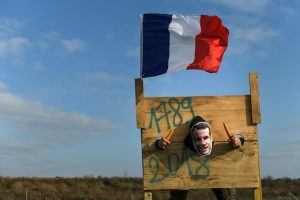 A crisis of this magnitude almost invariably reveals wider dysfunctions, and so it has been with Macron’s debacle with the gilets jaunes. The President seemed oblivious to the plight of the provinces, and unable to show any personal empathy with the lives of ordinary citizens. Visiting all corners of the territory and making an emotional connection with the people are key functions of the French republican monarch. De Gaulle managed this with his systematic tournées across small towns and villages: by the end of his first term, he had visited every metropolitan département. The very incarnation of this esprit de proximité was Jacques Chirac, who genuinely delighted in his encounters with the public, especially when they afforded opportunities to sample tasty local victuals. Macron, in contrast, has failed to cultivate these organic (and gastronomical) ties with the citizenry. He has also communicated very patchily, with long periods of Olympian silence combined with clumsy off-the-cuff interventions – as when he grumbled about his compatriots’ “Gaulois tendency to resist change”, or when he told an unemployed man that he could find a job by “just crossing the street”. In his December 10 speech, he expressed his sorrow for having “hurt” the French people by “some of his words”, and for seeming “indifferent” to their everyday concerns. This is one of the areas where his combination of intellectual superiority and political inexperience – he never held elected office before becoming President – have come back to haunt him.
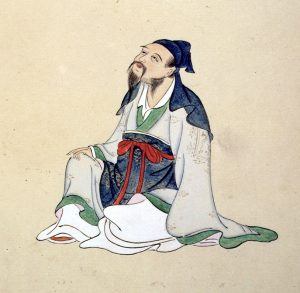 In 724 A.D., the twenty-three-year-old poet Li Bai got on a boat and set out from his home region of Shu, today’s Sichuan province, in search of Daoist learnings and a political career. He wasn’t headed anywhere in particular. Instead, he began a life of roaming—hiking up mountains to Daoist sites, meeting men of letters all over the country, and leaving behind hundreds of poems about his travels, his solitude, his friends, the moon, and the pleasures of drinking wine. In the centuries since, Li’s verse, by turns playful and profound, has made him China’s most beloved poet.
 During a six-month period in 1889, nearly 900,000 people descended upon the sprawling Universal Exposition in Paris, the fourth world’s fair to be held in the city, this one constructed in the shadows of the new Eiffel Tower. For the average Parisian strolling down the Esplanade des Invalides, the sight of a Tunisian palace, an Algerian bazaar, or a Cambodian pagoda would have meant pure enchantment, and nobody was more enchanted than Claude Debussy. Inside a replica of a Javanese village, the 26-year-old composer encountered the ensemble of bronze metallophones, gongs, and other instruments known as a gamelan, the musicians in the pavilion joined by a male singer and four young female dancers. For an artist recoiling from the rigid orthodoxy of the conservatory, the music’s bright, sensuous timbres, its feeling of spaciousness, and its vaguely pentatonic scales offered Debussy a path toward something new, even if he struggled to make sense of what he heard in the context of western harmony and counterpoint.
 From where I work at the University of Sydney, you cannot see the ocean. However, in Australia, the ocean is part of our national consciousness. This is perhaps why I think of the research literature as an ocean, linking researchers in disparate yet ultimately connected fields. Just as there is growing alarm about our rising, polluted oceans, scientists are increasingly talking about the swelling research literature and its contamination by incorrect research results.
 Frederick Douglass
 On Monday, a trail runner in Colorado was attacked by a mountain lion. While fighting to defend his life, the man managed to kill the lion. This is how he did that.
 Researchers in
 As Zachary Lazar put it in his New York Times review: “It helps that James . . . is a virtuoso at depicting violence, particularly at the beginning of this book, where we witness scene after scene of astonishing sadism, as young men and boys are impelled by savagery toward savagery of their own.” Later he writes, “The novel’s great strength is the way it conveys the degradation of Kingston’s slums.” Lazar’s praise, the elements of the novel he highlighted, would be echoed again and again in each review I read, and I can’t say he’s wrong. James ismasterful with violence and sadism, and Kingston’s slums are vividly portrayed.
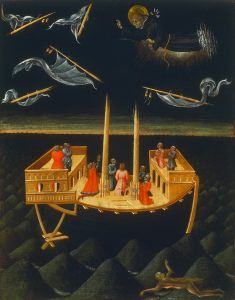 If, as one sometimes hears, people can be divided into two groups—those who run away from violence and danger and those who run toward it—something similar could be said about ones who, like Brassaï and Caravaggio, see themselves as nocturnal beings, as opposed to those who see themselves as creatures of daylight, or even identify with that loaded appellation morning person. Some, like Sancho Panza, wish only to go to bed at twilight and to sleep undisturbed—escaping the real and imagined terrors that they perhaps sense lurk in the dark. Others, like Don Quixote, feel the compulsion to stay awake for at least part of the night, to maintain a vigil.
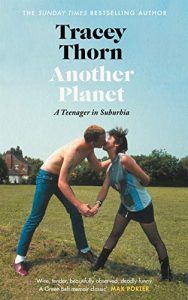 You don’t turn to Thorn’s memoirs (this is her second; she is also a New Statesman columnist) for rock ’n’ roll name-dropping, but for someone who can – to quote her quoting Updike – “give the mundane its beautiful due”. My brother-in-law says of being a fan of the band: “The only difference between them and us was that we were listening to Everything but the Girl, while they were in Everything but the Girl.” The past is another planet and the diary twinkles with the arcane poetry of lost brand names – Aqua Manda, Green Shield Stamps.
 Last fall it was voted America’s best-loved book. This winter it made it to Broadway, grossing more at the box office in its first full week than any other play in history. Harper Lee’s “To Kill a Mockingbird” became a classic the moment it was published in 1960 – a tale of racial injustice set in Depression-era Alabama told through the eyes of 6-year-old Scout. It garnered the Pulitzer Prize in 1961, and its movie adaptation won three Oscars in 1963. That it has smashed theater records and risen to the top of
  “I don’t want to make somebody else,” Toni Morrison’s character Sula declares, when urged to get married and have kids, “I want to make myself.” Morrison herself might have understood this to be a false dichotomy—she was a single mother of two by the time she published “
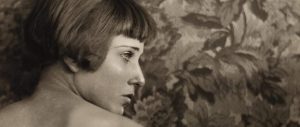 In Diego Rivera’s La creación, Nahui Olin sits among a gathering of figures that represent “the fable,” draped in gold and blue. She appears as the figure of Erotic Poetry, fitting for what she was known for at the time: her erotic writing and sexual freedom.
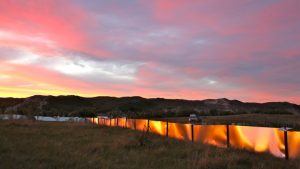 A young evolutionary biologist, Barrett had come to Nebraska’s Sand Hills with a grand plan. He would build large outdoor enclosures in areas with light or dark soil, and fill them with captured mice. Over time, he would see how these rodents adapted to the different landscapes—a deliberate, real-world test of natural selection, on a scale that biologists rarely attempt.
 When
When