Colm Toibin in Bookforum:
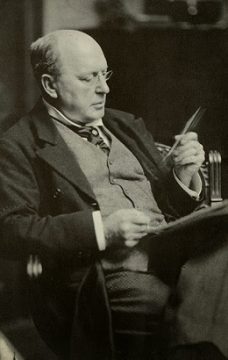 Henry James did not wish to be known by his readers. He remained oddly absent in his fiction. He did not dramatize his own opinions or offer aphorisms about life, as George Eliot, a novelist whom James followed closely, did. Instead, he worked intensely on his characters, offering their consciousness and motives a great deal of nuance and detail and ambiguity. James was concerned with his privacy, burning many of the letters he received. Most of the time, he conducted his own correspondence with caution and care. But at the end of the nineteenth century and in the early years of the twentieth, when James was in his late fifties and early sixties, he began to write letters to younger men whose tone had a mixture of open affection and something that is more difficult to define.
For example, on February 25, 1900, he wrote to the writer Howard Sturgis, then forty-five: “I repeat, almost to indiscretion, that I could live with you. Meanwhile I can only try to live without you.” On May 19, 1912, he ended a letter to the writer Hugh Walpole, twenty-eight at the time, with: “I don’t know how to tell you vividly enough how yearningly I pat you on the back or in fact take you to the heart. But feel it, know it, like it.”
These letters and some late stories, such as “The Beast in the Jungle” and “The Jolly Corner,” are the only clues we get from James about his secret desires. Many of his readers have tried to find clarity in James when there is obfuscation, a definite sexual identity for him when he sought, using artistry, to disguise himself, to conceal himself behind an elaborate prose style and an intricate architecture for his novels. The cultivation of secrecy in James’s life and work was not merely a strategy he used during his time in England, a time when homosexuality, as we learn from the Wilde case, could be punished severely. It is not simply that he kept things to himself so that he would not be ruined by disclosure. Rather, sexual secrecy and disclosure became his great subject as an artist. His four best novels—The Portrait of a Lady (1881), The Wings of the Dove (1902), The Ambassadors (1903), and The Golden Bowl (1904)—are animated by a story of a liaison that if revealed will be explosive.
More here.

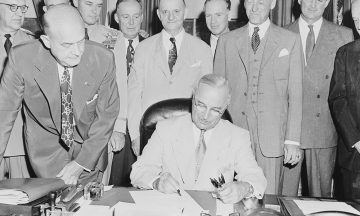 Since the Truman administration dissolved the Department of War and replaced it with a Department of Defense in the early years of the Cold War, our presidents — Republican and Democrat, conservative and liberal — have used the idea of defense to mask a hard-to-ignore fact: the United States has looked to black, brown, and Asian countries to imagine invasions and define enemies. It has fought wars in East Asia, Southeast Asia, Central America, East Africa, and the Middle East. It has declared none, because the United States no longer wages war against people; it defends itself against communism, crime, totalitarianism, and terrorism. Or so we’re told.
 Jipson John and Jitheesh P.M. interview Akeel Bilgrami in Frontline:
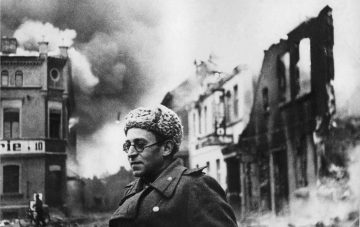 Sheila Fitzpatrick in The Nation:
 Tiffany Li & Belabbes Benkredda in Quartz:
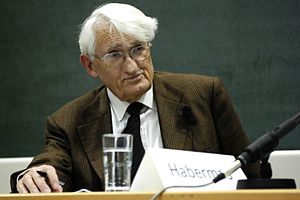 Raymond Geuss in The Point:
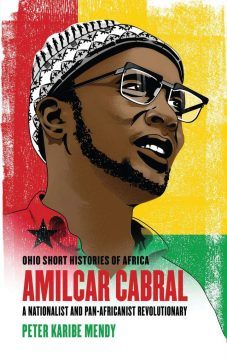 Kim Yi Dionne over at the WaPo’s The Monkey Cage:
 William Hazlitt
 Which brings me to the question of just why Les’s poetry — the poetry of the ‘bush’, and not the poetry of the ‘street’ or city say. It must be remembered (as Guy Debord told us in The Society of the Spectacle) that the aesthetic credo under Capitalism is ‘That which appears is good, that which is good appears’ — cos aesthetics is also a socially-constructed activity, and our heads have been steered, not only towards the bush, but away from the sea or city, or anything else starting with C. John Kinsella sez in his posthumous tribute that Les ‘strangely’ had ‘more in common with many experimentalists than with the more conservative traditionalists who lionise him’ — which i suggest you take with a grain of salt — as one wonders what Kinsella means by the word ‘experimentalists’ here — no family that i belong to that’s for sure.
 Jane Austen’s “Pride and Prejudice” has given birth to a cottage industry of sequels, variations, and modernizations, from “Bridget Jones’s Diary” or the Bollywood film “Bride and Prejudice,” to “Pride and Prejudice and Zombies.” Now comes an update set among Muslim Canadians, “Ayesha at Last,” the debut novel of Uzma Jalaluddin, who writes a humorous advice column on parenting for the Toronto Star. Does the world need “Pride and Prejudice and Muslims”? Indeed, it does – at least, it needs Jalaluddin’s version, which is full of wit and verve and humor. Like “Pride and Prejudice,” “Ayesha at Last” is not just about a heroine finding her man, but how she navigates her small community’s narrow expectations for women and her family’s foibles and financial struggles, finding strength in her voice.
 In 1969, when the New York police raided the Stonewall Inn and encountered unexpected resistance from LGBT protesters, homosexuality was still criminalised in most countries. Even in more tolerant societies, venturing out of the closet was often akin to social and professional suicide. Today, in contrast, the prime minister of Serbia is openly lesbian and the prime minister of Ireland is proudly gay, as are the CEO of Apple and numerous other politicians, businesspeople, artists and scientists. In the United States, the average Republican today holds far more liberal views on LGBT issues than the average Democrat held in 1969. The argument has moved from “should the state imprison LGBT people?” to “should the state recognise same-sex marriage?” (and almost
 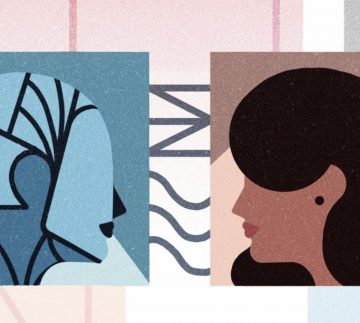 What did you think of the last commercial you watched? Was it funny? Confusing? Would you buy the product? You might not remember or know for certain how you felt, but increasingly, machines do. New artificial intelligence technologies are learning and recognizing human emotions, and using that knowledge to improve everything from marketing campaigns to health care.
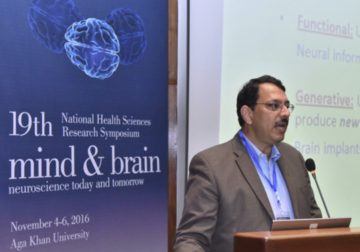 ALI: Both. AI poses many dangers that people are now waking up to, such as biases in automated decision-making, the creation of hyper-realistic false information, the profiling and micro-targeting of people for commercial exploitation. And then there is the fear that AI will take away millions of jobs. One area where there’s serious alarm is autonomous weapons. Every technology that can be used as a weapon ultimately has been throughout history. It is guaranteed to happen with AI. In principle, when you have an intelligent weapon, it could reduce unintended casualties, but it will also be much more lethal and tempting to use. That’s why it is critical to develop rules and treaties for intelligent autonomous munitions just as we have for nuclear, chemical and biological weapons. Unfortunately, military imperatives often trump regulations and treaties.
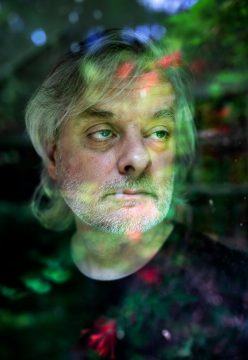 David Chalmers: I think artificial general intelligence is possible. Some people are really hyping up A.I., saying that artificial general intelligence is just around the corner in maybe 10 or 20 years. I would be surprised if they turn out to be right. There has been a lot of exciting progress recently with deep learning, which focuses on methods of pattern-finding in raw data.
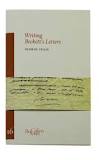 Between 1948 and 1952 there took place a particularly remarkable correspondence: that between Samuel Beckett and Georges Duthuit. In the course of his life Beckett wrote something approaching 20,000 letters. Fascinating as many of these are, they offer nothing that can match this explosion of words. But then Duthuit was not just any correspondent: he was a highly cultured and intellectually rigorous art historian and critic, with total confidence in his own judgement. For Beckett, recognising these qualities and drawn by Duthuit’s impatient refusal of cultural orthodoxies, he represented something close to an ideal interlocutor: someone to whom, in the areas that mattered, anything could be said.