
Matthew Karp in Sidecar:
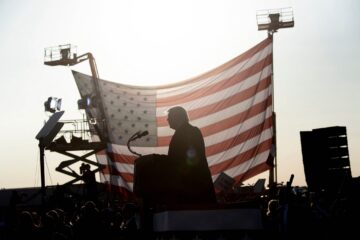
The US political world can today be divided not only between left and right, but along another axis: Trump maximalists and Trump minimalists. Maximalists are inclined to view Trump as an agent or conduit of a sudden historical rupture, whether the transformation of the party system, the destruction of American democracy or the implosion of the liberal world order. Minimalists see Trump not as a fundamental break but rather as a lurid symbol of longer-running developments, or a symptom of crises that lie elsewhere – a black hole detracting attention from real political problems.
This is not a cleanly partisan or ideological distinction, which is one of the things that makes it interesting. There are many familiar liberal maximalists, of course – some of them have recently decamped to Canada in fear of or in protest at the tyrannical regime; and there are conservative maximalists too, mostly right-leaning newspaper columnists who have mobilized few votes but left an outsize impact on the texture and tenor of anti-Trump politics. Despite some disagreement, liberal and conservative maximalists unite in seeing the President himself as the chief and often the only issue in national politics; both have also leapt to enlist in the ‘fascism wars’, often brandishing the F-word as a cudgel to discipline the left at elections, and elsewhere.
Yet there is also a countervailing minimalism of the centre.
More here.
Enjoying the content on 3QD? Help keep us going by donating now.
 Democratic National Committee (
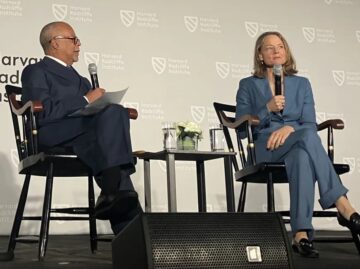 At Friday afternoon’s
 I
I  It’s been an enormous week for nuclear. On Monday, in a landmark policy U-turn, the new German Chancellor Friedrich Merz finally dropped his country’s longstanding opposition to nuclear energy at the European level. In a
 Majorities of Americans across the political spectrum have long understood that their system of government doesn’t serve them well. Institutional obstacles at all levels em- power elite minorities to safeguard their own interests and block popular policies that would broadly serve the American people, from universal health care to a higher minimum wage. Of course, Trump’s attacks on political institutions have little to do with constraining the power of elites or advancing such policies; on the contrary, with Elon Musk at the head of DOGE, they are advancing rank corruption and kleptocracy for the benefit of the ultrawealthy and extreme ideologues. But Trump does tap into the sentiment that our institutions are broken. Acknowledging the flaws in our system does not mean endorsing his, or any president’s, unlimited power. Nor does it mean there is no form of checks and balances that can serve American democracy. Rather, it clarifies the necessity and urgency of reforming government so it responds better to the needs of ordinary people.
 The Phoenician Scheme:
 Humans have a new way of seeing infrared light, without the need for clunky night-vision goggles. Researchers have made the first contact lenses to convey infrared vision — and the devices work even when people have their eyes closed.
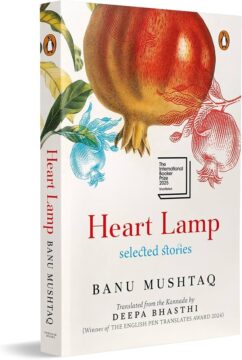 Every year, judges for the International Booker Prize search for the best works of fiction translated into English over the previous twelve months. We asked Anton Hur, the novelist, translator and 2025 judge, to talk us through the six-book shortlist—including five novels and this year’s winner, the first short story collection ever to triumph.
 Every time you see an apple spontaneously break away from a tree, it falls downward. You therefore claim that there is a law of physics: apples fall downward from trees. But how can you really know? After all, tomorrow you might see an apple that falls upward. How is science possible at all? Philosophers, as you might expect, have thought hard about this. Branden Fitelson explains how a better understanding of probability can help us decide when new evidence is actually confirming our beliefs.
 Virginia Woolf might be at once the English novelist who is the most accomplished and the most shrugged off. The characters of Mrs Dalloway were never going to appear on cigarette cards, as Dickens’ characters did. Orlando even irritated Elizabeth Bowen (because it had too many in-jokes for Vita Sackville-West). Admirers must admit that, as Penelope Fitzgerald said, Woolf’s techniques were taken as far as they could go. She had the genius to exhaust a whole line of artistic inquiry, and many have felt exhausted by her.
 Seventeen years ago, Eric Topol, a cardiologist and founder of the Scripps Research Translational Institute in the La Jolla neighborhood of San Diego, set out to discover why some people age so well, when others don’t. Aged 53 at the time, Topol considered healthy aging to be of deep scientific — and personal — interest. He also suspected the answer was genetic. So, with colleagues, he spent more than six years sequencing the genomes of about 1,400 people in their 80s or older with no major chronic diseases. All qualified, Topol felt, as “Super Agers.”
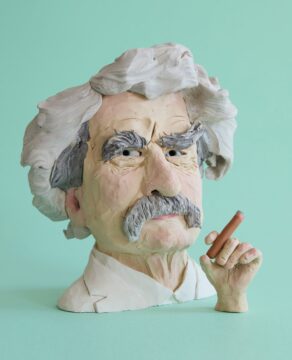 It’s said that when “War and Peace” was finished and about to be published, Tolstoy looked at the huge book and suddenly exclaimed, “The yacht race! I forgot to put in the yacht race!” At 1,174 pages, Ron Chernow’s “Mark Twain” is essentially the same length as “War and Peace,” but seemingly nothing has been overlooked or left out. Normally, this would be a signal weakness in a biography — shape and form do matter — but Chernow writes with such ease and clarity that even long sections on, say, Twain’s business ventures prove horribly fascinating as the would-be tycoon descends, with Sophoclean inexorability, into financial collapse and bankruptcy.
 Capuchin monkeys on a remote Panamanian island are abducting babies from howler monkey families, in a first-of-its-kind trend.