
Enjoying the content on 3QD? Help keep us going by donating now.
Category: Recommended Reading
Smallpox: The Rise and Decline of a Deadly Plague
Gerald Early at The Common Reader:
 On February 24, 1947, Eugene Le Bar began a bus trip from Mexico City that would take him to New York. By March 1, when he arrives in New York he was not feeling very well but went sightseeing nonetheless, coming in contact with lots of people. On March 10, he died in Willard Parker hospital from the rare but extremely deadly hemorrhagic smallpox. Only five percent of smallpox cases take this intensely virulent form, so it is not surprising that Le Bar’s case was originally misdiagnosed. Overall, twelve persons were infected with traditional, not hemorrhagic, smallpox (with a much higher survival rate) from Le Bar’s ring of contacts; two died. The infection rate was low because New York embarked on a mass vaccination effort to prevent the spread of the disease. Six million New Yorkers were vaccinated against smallpox in the spring of 1947, an enormous accomplishment by the local public health service employees and hospital personnel as shots were given around the clock to prevent an epidemic.
More here.
Enjoying the content on 3QD? Help keep us going by donating now.
Trump Middle East Trip
Enjoying the content on 3QD? Help keep us going by donating now.
How much ultra-processed food do you eat? Blood and urine record it
Smriti Mallapaty in Nature:
 Molecules in urine and blood can reveal how much of a person’s diet comes from ultra-processed foods, according to a study published in PLOS Medicine today1. The paper suggests that these measurements provide an objective way to track consumption of ultra-processed food — and would be useful for investigating links to diseases such as diabetes and cancer.
Ultra-processed foods are industrially manufactured and often contain ingredients, such as additives and emulsifiers, that are not typically found in home-cooked food. From sweetened yogurts to factory-made bread and packaged snacks, “it’s a really wide range of foods”, says study co-author Erikka Loftfield, an epidemiologist at the US National Cancer Institute in Rockville, Maryland. Studies have linked high consumption of ultra-processed food to an increased risk of obesity2, cardiovascular disease, diabetes and some types of cancer3. But these investigations have typically relied on asking individuals to remember what they have eaten, which can be unreliable. Studies have also shown the potential of studying the products of metabolism excreted in the blood and urine, but only for a small number of such metabolites4,5. Loftfield and her colleagues have now expanded that analysis to include more than 1,000 metabolites, which are produced when the body converts food into energy.
More here.
Enjoying the content on 3QD? Help keep us going by donating now.
Wednesday Poem
Currencies
You will not need the pieces of paper
that used to define
you: the deeds, the degrees, the diplomas.
Leave them behind.
Leave, too, your dollars and coins.
Now your currency will be clementines
and tangerines. The ferrymen
prefer fruit.
You spent decades struggling against your shape,
but now you will be grateful for the extra calories stored
in your hips, the strength
in your stocky thighs.
Dig into your long-neglected
backpacking equipment for your waterproof
matches and purification tablets.
Hope for the best.
Sew seeds into your hemlines.
Seeds will be the new gemstones.
Take all your needles and strong thread.
Cut your hair haphazardly.
Fill your small shampoo bottle with champagne.
You’ll need it for disinfectant.
Pour yourself a glass of wine; admire
the crystal in the candlelight.
Sink into sleep,
one last night of softness
before you strap your sturdy
boots to your feet to set forth.
by Kristin Berkey-Abbott
from Rattle Magazine
Enjoying the content on 3QD? Help keep us going by donating now.
Tuesday, May 20, 2025
Yasmin Zaher wins Dylan Thomas prize with her novel “The Coin”
Ella Creamer in The Guardian:
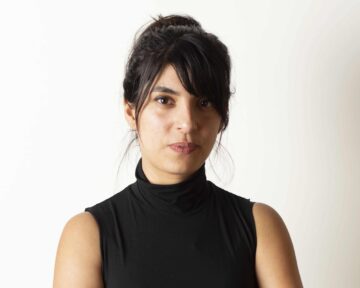 A novel about a Palestinian woman who participates in a pyramid scheme reselling Birkin bags has won this year’s Swansea University Dylan Thomas prize.
Palestinian journalist Yasmin Zaher took home the £20,000 prize – awarded to writers aged 39 or under in honour of the Welsh poet Dylan Thomas, who died at that age – for her debut novel The Coin. She was announced as the winner at a ceremony in Swansea, Thomas’s birthplace.
The Coin, chosen in a unanimous decision by judges, “is a borderless novel, tackling trauma and grief with bold and poetic moments of quirkiness and humour”, said writer and judging chair Namita Gokhale. “It fizzes with electric energy”, with Zaher bringing “complexity and intensity to the page through her elegantly concise writing”.
Born in 1991 in Jerusalem, Zaher studied biomedical engineering at Yale University and creative writing at the New School, where she was advised by the novelist Katie Kitamura.
More here.
Enjoying the content on 3QD? Help keep us going by donating now.
Matt Ridley: CRISPR announcement is great moment in medical history
Matt Ridley at Rational Optimist Society:
 The announcement last week that a nine-month-old baby in Philadelphia has been cured of a rare genetic disorder by gene editing is a great moment in medical history. For the first time, doctors have altered a gene inside many cells in the liver of a living human being using CRISPR, the molecular tool borrowed from microbes that can home in on particular DNA sequences and in some cases alter them.
It reinforces my view that biotechnology, applied to medicine, represents the greatest opportunity for innovation, and the greatest hope for rational optimism in the current generation. More so, perhaps, even than artificial intelligence (AI).
The baby, known as KJ, lacked a working copy of a gene vital for processing protein in food. This meant that even with a very low protein diet, he would probably die young or face mental and physical disability – even if he could get a liver transplant when a little older. Today, after the experimental treatment, he is thriving.
More here.
Enjoying the content on 3QD? Help keep us going by donating now.
Nick Bostrom: From Superintelligence to Deep Utopia – Can We Create a Perfect Society?
Enjoying the content on 3QD? Help keep us going by donating now.
Can We Trust Social Science Yet?
Ryan Briggs at Asterisk:
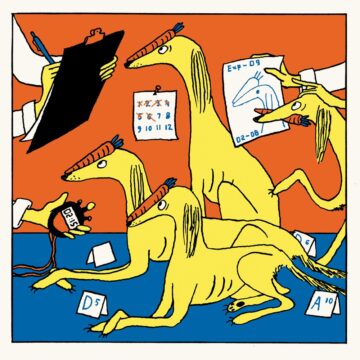 Ideally, policy and program design is a straightforward process: a decision-maker faces a problem, turns to peer-reviewed literature, and selects interventions shown to work. In reality, that’s rarely how things unfold. The popularity of “evidence-based medicine” and other “evidence-based” topics highlights our desire for empirical approaches — but would the world actually improve if those in power consistently took social science evidence seriously? It brings me no joy to tell you that, at present, I think the answer is usually “no.”
Given the current state of evidence production in the social sciences, I believe that many — perhaps most — attempts to use social scientific evidence to inform policy will not lead to better outcomes. This is not because of politics or the challenges of scaling small programs. The problem is more immediate. Much of social science research is of poor quality, and sorting the trustworthy work from bad work is difficult, costly, and time-consuming.
But it is necessary.
More here.
Enjoying the content on 3QD? Help keep us going by donating now.
Fossils reveal secrets about the mysterious humans
Michael Marshall in Nature:
 It was the finger seen around the world. In 2008, archaeologists working in Denisova Cave in southern Siberia, Russia, uncovered a tiny bone: the tip of the little finger of an ancient human that lived there tens of thousands of years ago. The fragment didn’t seem remarkable, but it was well preserved, giving researchers hope that it harboured intact DNA. A team of geneticists led by Johannes Krause at the Max Planck Institute for Evolutionary Anthropology in Leipzig, Germany, removed 30 milligrams of bone and managed to extract enough intact DNA to analyse it. They were able to sequence the entire mitochondrial genome — and were shocked by what they found. The DNA did not match that of modern humans, or of Neanderthals, the other likely candidate1. It was a new population, which they dubbed the Denisovans, after the cave.
When the team announced this result in March 2010, it caused a sensation. Up to that point, researchers had used preserved bones to identify every species or population of hominin — the group that includes modern and ancient humans and their immediate ancestors. “Denisovans were created from DNA work,” says palaeoanthropologist Chris Stringer at the Natural History Museum in London. Nine months later came the second bombshell. Krause and his colleagues had obtained the entire nuclear genome from the finger bone, which yielded much more information. It showed that the Denisovans were a sister group to the Neanderthals, which lived in Europe and western Asia for hundreds of thousands of years.
More here.
Enjoying the content on 3QD? Help keep us going by donating now.
Tuesday Poem
What Have I Learned
What have I learned but
the proper use for several tools?
The moments
between hard pleasant tasks
To sit silent, drink wine,
and think my own kind
of dry crusty thoughts.
—the first Calochortus flowers
and in all the land,
it’s spring.
I point them out:
the yellow petals, the golden hairs,
to Gen.
Seeing in silence:
never the same twice,
but when you get it right,
you pass it on.
by Gary Snyder
Enjoying the content on 3QD? Help keep us going by donating now.
9 Federally Funded Scientific Breakthroughs That Changed Everything
Alan Burdick et al in The New York Times:
 Science seldom works in straight lines. Sometimes it’s “applied” to solve specific problems: Let’s put people on the moon; we need a Covid vaccine. Much of the time it’s “basic,” aimed at understanding, say, cell division or the physics of cloud formation, with the hope that — somehow, someday — the knowledge will prove useful. Basic science is applied science that hasn’t been applied yet.
That’s the premise on which the United States, since World War II, has invested heavily in science. The government spends $200 billion annually on research and development, knowing that payoffs might be decades away; that figure would drop sharply under President Trump’s proposed 2026 budget. “Basic research is the pacemaker of technological progress,” Vannevar Bush, who laid out the postwar schema for government research support, wrote in a 1945 report to President Franklin D. Roosevelt. Look no further than Google, which got its start in 1994 with a $4 million federal grant to help build digital libraries; the company is now a $2 trillion verb.
Here are nine more life-altering advances that government investment made possible.
GPS
The first commercial GPS unit, a $3,000 brick for hikers and boaters, was made in 1988. The technology is now so ubiquitous — in cars, planes, phones, smartwatch running apps — that its existence can seem almost preordained.
More here.
Enjoying the content on 3QD? Help keep us going by donating now.
Monday, May 19, 2025
The Fabricated Crisis of Art Criticism
Hakim Bishara at Hyperallergic:
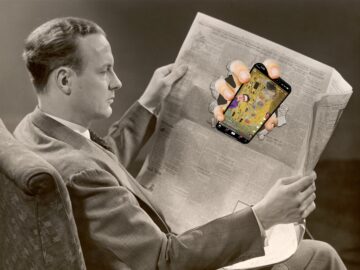 Art criticism is thriving. It’s taking on new forms, shedding old skin, and adapting to novel venues. It’s as alive and relevant as ever, still generating conversation and controversy. Instead of fizzling out, it’s being embraced by new generations of critics, whether in these pages or on Substack, Instagram, YouTube, and TikTok (no matter the platform, it always comes down to writing). It’s a buzzing genre that attracts readers of all ages, from septum-pierced college students to cigar-puffing art collectors.
Yes, gone are the days when an insular clique of critics had the ability to make or break artists’ careers — and good riddance. That was more power than anybody deserves. The quality of a critic’s work now carries more weight than their cult of personality. That’s not a bad thing. Insightful, incisive, and inventive writing will always have a future and an audience. So long as there’s art, there will be art criticism.
Art criticism is not in crisis. Good art criticism is the crisis.
More here.
Enjoying the content on 3QD? Help keep us going by donating now.
How the Universe Differs From Its Mirror Image
Zack Savitsky in Quanta:
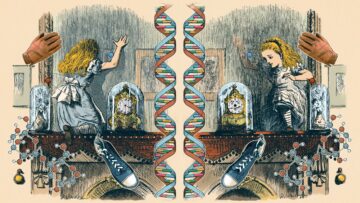 After her adventures in Wonderland, the fictional Alice stepped through the mirror above her fireplace in Lewis Carroll’s 1871 novel Through the Looking-Glass to discover how the reflected realm differed from her own. She found that the books were all written in reverse, and the people were “living backwards,” navigating a world where effects preceded their causes.
When objects appear different in the mirror, scientists call them chiral. Hands, for instance, are chiral. Imagine Alice trying to shake hands with her reflection. A right hand in mirror-world becomes a left hand, and there’s no way to align the two perfectly for a handshake because the fingers bend the wrong way. (In fact, the word “chirality” originates from the Greek word for “hand.”)
Alice’s experience reflects something deep about our own universe: Everything is not the same through the looking glass. The behavior of many familiar objects, from molecules to elementary particles, depends on which mirror-image version we interact with.
More here.
Enjoying the content on 3QD? Help keep us going by donating now.
Tech mogul Palmer Luckey creating arsenal of AI-powered autonomous weapons
Enjoying the content on 3QD? Help keep us going by donating now.
The sharp decline in young Americans’ support for free speech
Jacob Mchangama in The Conversation:
 For much of the 20th century, young Americans were seen as free speech’s fiercest defenders. But now, young Americans are growing more skeptical of free speech.
According to a March 2025 report by The Future of Free Speech, a nonpartisan think tank where I am executive director, support among 18- to 34-year-olds for allowing controversial or offensive speech has dropped sharply in recent years.
In 2021, 71% of young Americans said people should be allowed to insult the U.S. flag, which is a key indicator of support for free speech, no matter how distasteful. By 2024, that number had fallen to just 43% – a 28-point drop. Support for pro‑LGBTQ+ speech declined by 20 percentage points, and tolerance for speech that offends religious beliefs fell by 14 points.
This drop contributed to the U.S. having the third-largest decline in free speech support among the 33 countries that The Future of Free Speech surveyed – behind only Japan and Israel.
Why has this support diminished so dramatically?
More here.
Enjoying the content on 3QD? Help keep us going by donating now.
What My Two 98-Year-Old Patients Taught Me About Longevity
Eric Topol in Time Magazine:
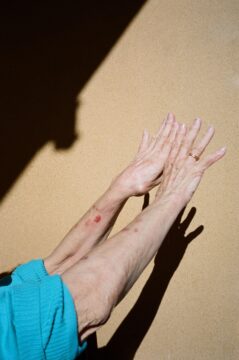 Meet my patient Mrs. L. R. She’s 98 years young and has never suffered a day of serious illness in her long life. She was referred to me by her primary care physician to assess her heart condition because she had developed swelling in her legs, known as edema. When we first met in the clinic, I noted there was no accompanying family member, so I asked how she got to the medical center. She’d driven herself. I soon learned much more about this exceptionally vibrant, healthy lady who lives alone, has an extensive social network, and enjoys her solitude.
Her remarkable health span isn’t shared by her family members. Her mother died at 59; her father at 64. Her two brothers died at 43 and 75. Three years prior to our meeting, her husband had died at 97. He had also been quite healthy, with a similar health span profile in contrast to his parents and siblings, who all had chronic diseases and died decades younger. Following her husband’s death, Mrs. L. R. got depressed and dropped 30 pounds. She lost her interest in her hobbies of painting and doing 1,000-piece jigsaw puzzles. She did continue to play cards and Rummikub every week with a circle of eight women. One of these friends suggested she move from the house she’d lived in for decades to a senior residence apartment. The move led her to artists, new friends, and an extended social network. This all brought her back to her “old” self, fully restoring her life’s passions and getting back to a healthy weight.
More here.
Enjoying the content on 3QD? Help keep us going by donating now.
The Year the Leaf-Cutter Ants Took Manhattan
Emily Anthes in The New York Times:
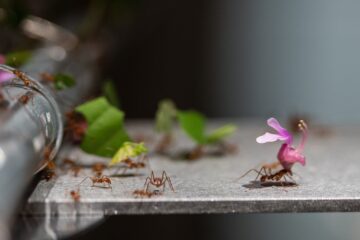 It was a cold, gray afternoon in December, and at the American Museum of Natural History, a half million leaf-cutter ants were hunkered down in their homes. The ants typically spend their days harvesting slivers of leaves, which they use to grow expansive fungal gardens that serve as both food and shelter. On many days, visitors to the museum’s insectarium can watch an endless river of ants transporting leaf fragments from the foraging area to the fungus-filled glass orbs where they live.
It was hard to blame them. It was a biting, blustery day — and the end of a long, eventful year for the colony. The tropical ants, which had been harvested in Trinidad and nurtured in Oregon, had never set foot in New York City before last December, arriving like 500,000 insect ingénues. It took time for the ants to find their footing and for museum employees to learn how to create a happy home for them.
More here.
Enjoying the content on 3QD? Help keep us going by donating now.
Sunday, May 18, 2025
How to make bureaucracies better
Nicola Jones in Knowable Magazine:
 What is the history of bureaucracies? Where did the concept originate, and how has it evolved?
It’s always been true that ideas and policies don’t execute themselves. You need a bureaucracy, a group of servants, to do that for you. That is true for nation states, and also for companies and universities.
The major leap in the evolution of bureaucracy, to a place that is not corrupt, happens when the people appointed to it aren’t friends or family or political cronies who can pay for their position, but people who are selected for their expertise, meritocratically. If you go back more than a thousand years, China is one of the first places where we see the development of a really important bureaucracy with entrance exams. It was very serious if you were caught cheating — the punishment could be death. We know from ample literature that corruption is lower where you have meritocratically recruited civil servants.
More here.
Enjoying the content on 3QD? Help keep us going by donating now.
Anna Wintour becomes an unlikely activist as Washington quashes DEI
Robin Givhan in The Washington Post:
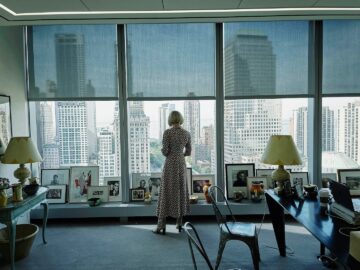 Wintour is the longtime editor in chief of Vogue and the chief content officer for the publishing behemoth Condé Nast, whose stable of magazines includes Bon Appetit, Teen Vogue and New Yorker. She is the mastermind behind the Met Gala, which lit up the pop culture cosmos earlier this month. In many respects, Wintour, at 75, remains the most recognizable face of the fashion establishment. But fashion, at the level where Wintour has long served as gatekeeper, and with its subjective assessment of aesthetics, has struggled more than most industries with diversity and inclusivity, from the pages of its magazines to its corporate boardrooms. And despite moments of intense focus on racial justice, big changes have often been superficial and real change has been slow.
Five years ago, during the powerful sweep of the Black Lives Matter movement, editors, designers, stylists and others within the fashion industry were emboldened to confront the powers-that-be with a list of outrages that included pay inequity and assertions that they were actively disrespected in their workplace.
More here.
Enjoying the content on 3QD? Help keep us going by donating now.