Another Life
Women spend the afternoon squatting on the porch,
picking lice from each other’s hair.
They spend the evening feeding the little ones,
lulling them to sleep in the glow of the bottle lamp.
The rest of the night
they offer their back to be slapped and kicked by the men of the house
or sprawl half-naked on the hard wooden cot.
Crows and women greet the dawn together,
the women blowing into the oven to start the fire,
tapping on the back of the winnowing tray with five fingers
and, with two, picking out the stones.
Half their lives women pick stones from the rice.
All their lives stones pile up in their hearts,
no one there to touch them even with two fingers.
by Taslima Nasrin
~~~~~~~~
—Taslima Nasrin, an award-winning writer, physician, secular humanist and human rights activist, is known for her powerful writings on women oppression and unflinching criticism of religion, despite forced exile and multiple fatwas calling for her death.
 A few weeks ago, a friend of mine, Paul Embery, found himself hit by a Twitter storm. Paul is a trade unionist, a socialist and is emerging as a polemical journalist of some distinction. Like many, but not all who identify as Blue Labour, he argues strongly for the democratic and radical possibilities of Brexit, which he views as a class issue. He found himself engaged in a Twitter spat with Mike Harding, who describes himself on his website as a “singer, songwriter, comedian, author, poet, broadcaster and multi-instrumentalist”, and there is no reason to doubt that he is all those things and more. He views Brexit as a horrible prelude to a new world war. Mike is from Crumpsall in Manchester, Paul is from Dagenham in the borderlands of Essex and east London. It was never going to go well.
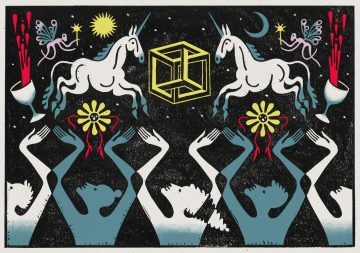 Many people believe that truth conveys power. If some leaders, religions or ideologies misrepresent reality, they will eventually lose to more clearsighted rivals. Hence sticking with the truth is the best strategy for gaining power. Unfortunately, this is just a comforting myth. In fact, truth and power have a far more complicated relationship, because in human society, power means two very different things. On the one hand, power means having the ability to manipulate objective realities: to hunt animals, to construct bridges, to cure diseases, to build atom bombs. This kind of power is closely tied to truth. If you believe a false physical theory, you won’t be able to build an atom bomb.
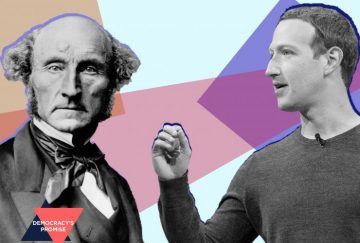 Over at the Boston Review, Henry Farrell and Bruce Schneier have the lead piece in a forum on the issue of information and democracy, with responses by Riana Pfefferkorn, Joseph Nye, Anna Grzymala-Busse, Allison Berke, Jason Healey, and Astra Taylor:
 Adam Shatz in The New York Review of Books:
 Pratap Bhanu Mehta in Indian Express:
 IN THE SPRING
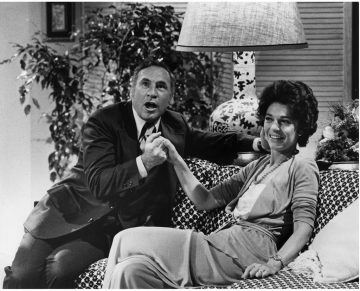 There’s a revealing moment early in “Funny Man,”
  Conspiracy theorists get a seriously bad press. Gullible, irresponsible, paranoid, stupid. These are some of the politer labels applied to them, usually by establishment figures who aren’t averse to promoting their own conspiracy theories when it suits them. President George W. Bush denounced outrageous conspiracy theories about 9/11 while his own administration was busy promoting the outrageous conspiracy theory that Iraq was behind 9/11.
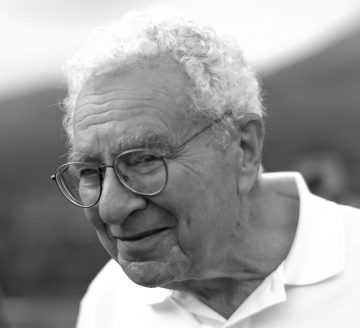 Murray Gell-Mann (
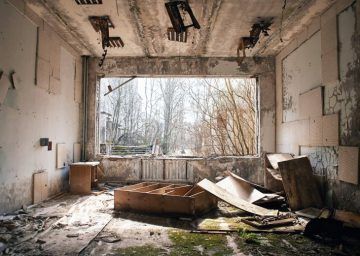 All the same, some of the confusion and apathy in the aftermath of the explosion of Reactor Four was due to an inability to comprehend the enormity of what had happened: that the reactor and the hall housing it had literally been blown apart, its pieces scattered still glowing across the site and the fiery inner core exposed to the atmosphere. There is a sense in these accounts of the truly unearthly: Higginbotham mentions the “shimmering pillar of ethereal blue-white light, reaching straight up into the night sky, disappearing into infinity” as the intense radiation streaming from the reactor ionised the air itself. Senior figures wandered around the site in a daze, muttering about routine malfunctions even as they kicked aside immensely radioactive debris from the reactor core. Radiation levels at the site were so far off the scale that they defied belief and comprehension. Meanwhile, in Pripyat life went on as normal for a day and a half, children playing in the warm spring sunshine. A film taken of those events is marred by ghostly flashes and white streaks: ambient radiation burning itself into the celluloid.
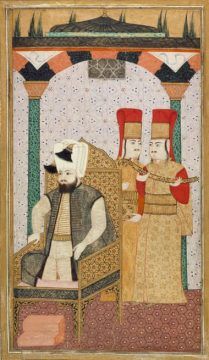 In 1534 an Ottoman delegation was in Paris to discuss a plan to unite France and Turkey against their shared enemy, the Habsburg empire. That François I should lavish courtesies on infidel diplomats was bitterly resented by French Lutherans, who were being persecuted after the “affair of the placards”: a scandalous denunciation of the Catholic mass had been discovered pinned to the door of the royal bedchamber; the Turkish visitors were escorted past pyres that would be fed by Protestant heretics. A decade later the Franco-Ottoman alliance was so fixed a part of the European scene that François allowed a Turkish fleet under Hayreddin Pasha to winter in Toulon, the Mediterranean port having been emptied of its Christian inhabitants. The church bells were silenced and cantatas in the cathedral gave way to the call to prayer.“Looking at Toulon,” remarked an eyewitness after the Ottoman sailors had settled in, “you would say that it was Istanbul, with great public order and justice.”
 You wake up on a bus, surrounded by all your remaining ossessions. A few fellow passengers slump on pale blue seats around you, their heads resting against the windows. You turn and see a father holding his son. Almost everyone is asleep. But one man, with a salt-and-pepper beard and khaki vest, stands near the back of the bus, staring at you. You feel uneasy and glance at the driver, wondering if he would help you if you needed it. When you turn back around, the bearded man has moved toward you and is now just a few feet away. You jolt, fearing for your safety, but then remind yourself there’s nothing to worry about. You take off the Oculus helmet and find yourself back in the real world, in Jeremy Bailenson’s Virtual Human Interaction Lab at Stanford University.