
Nicholas Roe at Literary Review:
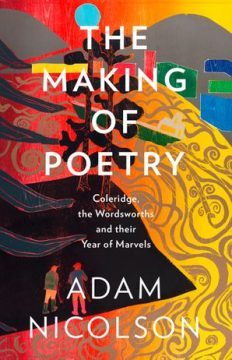 Like most of their generation, Coleridge and Wordsworth had embraced the French Revolution and its ideals of liberty and equality, then lived through the shattering reversals of massacre and war that ensued. By the mid-1790s, many of the poets’ acquaintances were racked by mental and emotional stress. Some of them fled the country; others opted for internal exile, hidden, they hoped, from the spies and informers patrolling the cities. Nicolson argues convincingly that the fragmentary, fierce and strange poetry Wordsworth produced before Lyrical Ballads was composed on the cusp of madness. It was only by going to ground in England’s West Country that Wordsworth was able to cope. We get a rare glimpse of him at that time in Dorothy Wordsworth’s remark that her brother is ‘dextrous with a spade’. Like Heaney, Nicolson’s young Romantics are energised by ‘touching territory’ – digging in to renew themselves and their writing. The idea, Nicolson suggests, ‘that the contented life was the earth-connected life, even that goodness was embeddedness … had its roots in the 1790s’. As furze bloomed brightly on Longstone Hill, Coleridge and Wordsworth began to write poems that would challenge ‘pre-established codes’, change how people thought and so remake the world.
more here.
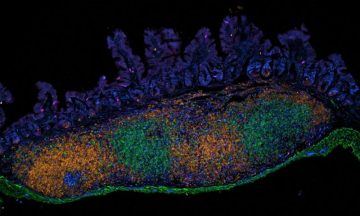 Faecal transplants from young to aged mice can stimulate the gut microbiome and revive the gut immune system, a study by immunologists at the Babraham Institute, Cambridge, has shown. The research is published in the journal Nature Communications today. The gut is one of the organs that is most severely affected by ageing and age-dependent changes to the human
 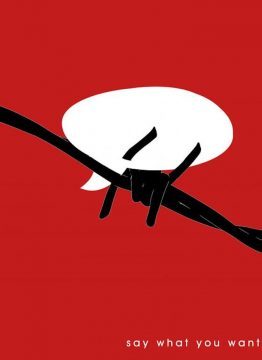 ‘Who has the right to speak?’ It is the key question in debates around free speech. Who should be allowed to speak? What should be permitted to be said? And who makes the decision?
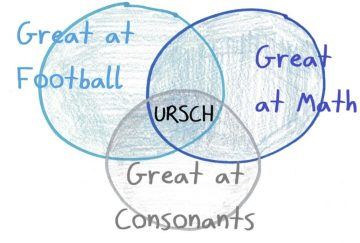 Three seasons in the NFL? Impressive.
 , cowritten with his partner Louisa Thomas—is a good classroom book, a multipurpose tool. His NFL background makes him a role model for the reluctant. His logic puzzles are brain food for the math-hungry. And his dual career is a conversation starter for everyone else.
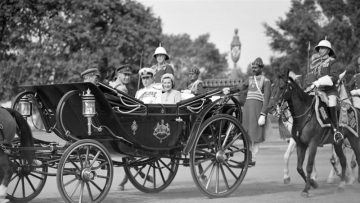 There is a story that is commonly told in Britain that the colonisation of
  Mosul’s old city lies in ruins. A major section of the third largest city in Iraq has been destroyed by war. Two years after the Iraqi government and the United States-led coalition recaptured it from ISIS, the city is still noticeably scarred. Many residents have fled, or are detained in camps elsewhere in the country. Those who have returned live amid the ruins of their old houses and their old lives. But what is being reconstructed is cultural heritage. UNESCO has worked with the Iraqi government to launch a campaign called ‘Revive the Spirit of Mosul’, focusing on a handful of historic monuments in the city. The United Arab Emirates has pledged $50 million to rebuild the 850-year-old al-Nuri mosque and its minaret, known as al-Hadba (or the hunchback), a symbol of the city.
 S
S Could a blood test detect cancer in healthy people? Grail, a Menlo Park, Calif.-based company, has raised $1.6 billion in venture capital to prove the answer is yes. And at the world’s largest meeting of cancer doctors, the company is unveiling data that seem designed to assuage the concerns and fears of its doubters and critics. But outside experts emphasize there is still a long way to go. The data, from a pilot study that Grail is using to develop its diagnostic before running it through the gantlet of two much larger clinical trials, are being presented Saturday in several poster sessions at the
 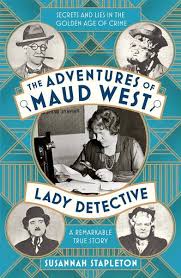 Unconventional lives can tell us much about the conventions and social currents of their times. Susannah Stapleton’s compulsively absorbing book about Maud West centres on a woman who was a splendid one-off and yet somehow entirely of her age. It is not quite a biography and not quite a personal quest, but a bit of both. Tracking her quarry through the last decades of the 19th century and the first decades of the 20th, Stapleton found that West eluded her at every turn. The bewildering array of red herrings, dead ends, fibs, disguises, half-truths and plain deceptions she encountered becomes the story not only of West herself but also of the world in which she lived. The 1920s and 1930s were the golden age of British detective fiction and many of its most famous authors were women. Maud West, with her magnifying glass and her box of disguises, could have been a character in a Dorothy L Sayers novel – and in fact, she seemed to have lived her life as though it were a continually unfolding story, complete with cloaks and daggers.
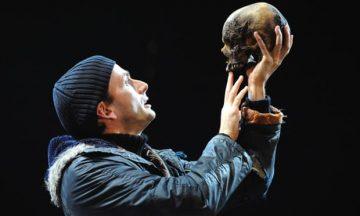 The history of philosophy usually tells us how one set of ideas gave birth to another. What it tends to overlook are the political forces and social upheavals that shaped them. Witcraft, by contrast, sees philosophy itself as a historical practice. For much of its career, it was never easy to distinguish from political conflict, religious strife and scientific controversy. For some 17th-century Puritans, philosophy was a satanic pursuit, an impious meddling with sacred truths. There was a battle between the church and the universities on the one hand, with their reverence for Aristotle and the schoolmen, and on the other the humanists, scientists, atheists and radicals. It is the stuffy old university of Wittenberg versus the humanistic Hamlet and his sceptical friend Horatio.
 Quinn Slobodian in Boston Review:
 Matteo Pucciarelli in New Left Review:
 Joe Humphreys in The Irish Times:
 Dan Bessner in The New Republic: