The laughter of Morrison’s characters disguises pain, deprivation and violation. It is laughter at a series of bad, cruel jokes. The real joke in naming Sula’s neighbourhood “The Bottom”, when it perches on barren Ohio uplands is that, in many senses it really is “the bottom” after all. Nothing is what it seems; no appearance, no relationship, can be trusted to endure.
The two earlier novels, although they anticipate the complicated and wide-ranging concerns of Song of Solomon, explore in particular the process of growing up black, female and poor. Avoiding generalities, Toni Morrison concentrates on the relation between the pressures of the community, patterns established within families (especially the models provided by mother and grandmother), and the developing sense of self. The central figures in Sula are childhood friends Sula Peace and Nel Wright, who share all their experiences until, following the death of her mother and Nel’s marriage, Sula leaves. She returns ten years later, having grown to reject convention while Nel has moulded herself into respectable domesticity; their “magical” reunion is followed by long years of bitterness.
He thought he kept the universe alone; For all the voice in answer he could wake Was but the mocking echo of his own From some tree-hidden cliff across the lake. Some morning from the boulder-broken beach He would cry out on life, that what it wants Is not its own love back in copy speech, But counter-love, original response. And nothing ever came of what he cried Unless it was the embodiment that crashed In the cliff’s talus on the other side, And then in the far distant water splashed, But after a time allowed for it to swim, Instead of proving human when it neared And someone else additional to him, As a great buck it powerfully appeared, Pushing the crumpled water up ahead, And landed pouring like a waterfall, And stumbled through the rocks with horny tread, And forced the underbrush—and that was all.
by Robert Frost from A Book of Luminous Things Harvest Books, 1996
Crawford Lake is so small it takes just 10 minutes to stroll all the way around its shore. But beneath its surface, this pond in southern Ontario in Canada hides something special that is attracting attention from scientists around the globe. They are in search of a distinctive marker buried deep in the mud — a signal designating the moment when humans achieved such power that they started irreversibly transforming the planet. The mud layers in this lake could be ground zero for the Anthropocene — a potential new epoch of geological time.
This lake is unusually deep for its size so its waters never fully mix, which leaves its bottom undisturbed by burrowing worms or currents. Layers of sediment accumulate like tree rings, creating an archive reaching back nearly 1,000 years. In high fidelity, it has captured evidence of the Iroquois people, who cultivated maize (corn) along the lake’s banks at least 750 years ago, and then of the European settlers, who began farming and chopping down trees more than five centuries later. Now, scientists are looking for much more recent, and significant, signs of upheaval tied to humans. Core samples taken from the lake bottom “should translate into a razor-sharp signal”, says Francine McCarthy, a micropalaeontologist at nearby Brock University in St Catherines, Ontario, “and not one blurred by clams mushing it about.” McCarthy has been studying the lake since the 1980s, but she is looking at it now from a radical new perspective.
Crawford Lake is one of ten sites around the globe that researchers are studying as potential markers for the start of the Anthropocene, an as-yet-unofficial designation that is being considered for inclusion in the geological time scale.
“A lie is a lie is a lie,” Whoopi Goldberg said. It was May 2nd, and she was on the set of “The View,” the daytime talk show that she co-hosts. The subject was Attorney General William Barr, who had argued that the special counsel Robert Mueller’s report was not as alarming as it seemed—endorsing Donald Trump’s claim that there had been “no collusion, no obstruction” in the Russia case. Goldberg was incredulous. “Our parents taught us, if you lie, there are consequences,” she said. “When are consequences coming back?”
Her guest, the attorney Alan Dershowitz, offered an answer that combined legal analysis and political handicapping. “They come back in November of 2020, when we all go to the polls and we vote against people that we think lied,” he said. “But it would be a terrible thing”—he held up a finger for emphasis—“to criminalize lies.”
Dershowitz is a frequent guest on shows like “The View”; for decades, he has been a frequent guest just about everywhere. If you are a television producer putting together a segment about a celebrated criminal case, Dershowitz is an ideal booking. Intellectually nimble and supremely confident, he is an emeritus professor at Harvard Law School but also an occasional reader (and subject) of the tabloids.
My colleague Patrick Riley from Google has a good piece in Nature in which he describes three very common errors in applying machine learning to real world problems. The errors are general enough to apply to all uses of machine learning irrespective of field, so they certainly apply to a lot of machine learning work that has been going on in drug discovery and chemistry.
The first kind of error is an incomplete split between training and test sets. People who do ML in drug discovery have encountered this problem often; the test set can be very similar to the training set, or – as Patrick mentions here – the training and test sets aren’t really picked at random. There should be a clear separation between the two sets, and the impressive algorithms are the ones which extrapolate non-trivially from the former to the latter. Only careful examination of the training and test sets can ensure that the differences are real.
Another more serious problem with training data is of course the many human biases that have been exposed over the last few years, biases arising in fields ranging from hiring to facial recognition. The problem is that it’s almost impossible to find training data that doesn’t have some sort of human bias (in that context, general image data usually works pretty well because of the sheer number of random images human beings capture), and it’s very likely that this hidden bias is what your model will then capture.
One night in May, a strange and seemingly inexplicable thing happened in India. A divisive and ineffectual prime minister returned to power with a historic mandate.
Prime Minister Narendra Modi’s triumph on May 23 was conclusive. His Hindu nationalist Bharatiya Janata Party (BJP) won more than 300 of the 543 seats in the lower house of Parliament. But Modi had spent the last five years letting India down. Very little he had said on the 2014 campaign trail turned out to be true and virtually nothing he promised was delivered.
The prime minister had pledged to create 10 million jobs each year, but under him the country has experienced its highest rate of unemployment in forty-five years, with more younger and better-educated people than ever before stranded helplessly. His hasty decision to void the largest currency bills, in 2016, removing more than 80 percent of the money in circulation was supposed to curb corruption, but it cost more than a million jobs and did nothing to prevent graft in India or make business more transparent.
The Cannes Film Festival has been an adoring showcase for Quentin Tarantino ever since he was anointed with the big prize, the Palme d’Or, for Pulp Fiction in 1994. That only made the discomfort of his tense exchange with New York Times reporter Farah Nayeri at this year’s event more telling. Tarantino’s latest film, Once Upon a Time in Hollywood, made its world premiere at the festival in May, where it received a six-minute standing ovation. The filmmaker and his cast were holding court at the subsequent press conference when Nayeri pressed Tarantino about why the movie’s woman lead, Margot Robbie (playing real-life Manson family murder victim Sharon Tate), had so little dialogue in the shaggy 1960s-set showbiz comedy.
“This is a person with great acting talent, and yet you haven’t given her many lines in the movie,” Nayeri said, citing Robbie’s roles in I, Tonya and The Wolf of Wall Street. “I guess that was a deliberate choice on your part. And I just wanted to know why that was that we don’t hear her speak that much.” Tarantino didn’t reply to Nayeri so much as refuted her whole line of questioning. “Well, I just reject your hypotheses,” he said, leaving Robbie to smooth over the awkward moment by speaking about the challenge of playing a character who’s mostly by herself in her biggest scenes.
It was, to be fair, an oddly phrased question. Tarantino didn’t write the script around the cast; Once Upon a Time features a range of famous faces in much smaller roles than Robbie’s; and even with a writer as verbose as Tarantino, counting lines is not a surefire way to measure the quality of a part. But his curtness in dismissing the concerns of a woman journalist (dredging up memories of his painfully testy exchange with critic Jan Wahl in 2003) made the exchange explode across the internet. And it reignited a conversation that’s dogged the director for years and that has, post-#MeToo, risen in volume: As a filmmaker, is Tarantino bad to — or for — women?
It took me three tries to understand even a little of Mrs. Dalloway, Virginia Woolf’s famous 1925 modernist novel set on a single day in London. Even now, when I try to explain the book, I tend to sound like a stereotypical rambling undergraduate literary analyst, parroting lecture slides and pontificating on the meaning of life — if Good Will Hunting saw me at a bar, he’d take me outside. But confusing as it is, this is a book that makes me walk around differently. Here’s why:
“Fear no more the heat o’ the sun Nor the furious winter’s rages.”
Fear no more the heat of the sun ⎯ it’s a line from Shakespeare’s Cymbeline, from a funeral song about embracing death and escaping the torments of life. Clarissa Dalloway, Mrs. Dalloway’s title character, happens to catch a glimpse of the lyric through the glass of a shop window as she putters about London making arrangements for her party that night. Clarissa really wants this party to be good, but she is mocked, derided; everyone thinks it’s frivolous to care so much about throwing a party for society elites.
It takes the suicide of a man she has never met for Clarissa to understand that her doubters are dead wrong. The news arrives during the party, and, stunned, she retires upstairs. But after the shock melts away, Clarissa actually feels “glad that he had done it; thrown it away. He made her feel the beauty; made her feel the fun.” Death is not to be feared, that’s true, and it’s a theme repeated enough that the concept likely doesn’t shock anyone. But the suicide helps Clarissa realize that life isn’t to be feared either: the energies, passions, and flames of human interaction are the best things we have in this world, particularly in the face of London’s constantly ticking clocks, which serve as a reminder of the thrilling knowledge that death might strike at any minute. Clarissa’s party is not frivolous. It’s actually the most important thing. Her guests await: “Fear no more the heat of the sun. She must go back to them.”
More here. (Note: The review from last year is a reminder to re-read Mrs. Dalloway yet again this summer. I just did. You should too. Magnificent.)
at the movies my eye on the Exit sign on the aisles the doorways the space between the seat in front of me and my legs how far could I crawl before I die?
wednesday after it happened I went to a work event at a gay bar I stood near the exit when I could when I couldn’t I stood near a window I made sure I could open and fit through made sure I could jump out and land on the roof of the building next door just in case after the event my coworker was leaving thought about hugging him but I don’t I waived asked myself is this the last time I’m going to see him?
two weeks after the massacre my partner is getting ready to attend Pride I am staying home
I watch him pick out his outfit I sit quietly on the couch when he is dressed he holds me I hold him a little longer ask myself is this the last time I’m going to see him? he leaves I feel as if I should go with him just in case
We hold these truths to be self-evident, that all men are created equal, that they are endowed by their Creator with certain unalienable Rights, that among these are Life, Liberty, and the pursuit of Happiness. —The Declaration of Independence
These words, from Thomas Jefferson’s Declaration of Independence, are so familiar that it is easy to assume their meaning is obvious. The puzzle lies in the assertion that we have a right to pursue happiness. John Locke, in his Two Treatises of 1690, said we are all created equal and have inalienable rights, including those to life and liberty. But for Locke the third crucial right was the right to property. In Locke’s Essay Concerning Human Understanding, also published in 1690, he wrote about the pursuit of happiness, but it follows from his account there that there can be no right to pursue happiness because we will pursue happiness come what may. The pursuit of happiness is a law of human nature (of what we now call psychology), just as gravity is a law of physics. A right to pursue happiness is no more necessary than a right for water to run downhill.
Jefferson meant, I think, that we have a right to certain preconditions that will allow us to pursue happiness: freedom of speech, so we can speak our minds and learn from others; a career open to talents, so our efforts may be rewarded; freedom of worship, so we may find our way to heaven; and a free market, so we can pursue prosperity. Read this way, Jefferson’s right to the pursuit of happiness is an elaboration of the right to liberty. Liberty means not only freedom from coercion, or freedom under the law—or even the right to participate in politics—it is also a right to live in a free community in which individuals themselves decide how they want to achieve happiness. The “public happiness” to which Jefferson aspired can therefore be attained, since public happiness requires liberty in this expanded sense.
Jefferson was well aware that being free to pursue happiness does not mean that everyone will be happy. And yet we trick ourselves into thinking we know what is needed to be happy: a promotion, a new car, a vacation, a good-looking partner. We believe this even though we know there are plenty of people with good jobs, new cars, vacations, and attractive partners, and many of them are miserable.
Will Fitzgibbon over at the International Consortium of Investigative Journalists:
A longtime possession of the Dutch, French and then the British, Mauritius was for centuries a poor agrarian society with an economy based mostly on sugarcane. Its economic prospects seemed forever limited by its location, 1,250 miles east of the African coast, and tiny size, smaller than Rhode Island.
Then in the early 1990s, Rama Sithanen pushed an idea.
The Mauritius finance minister at the time, Sithanen observed that Luxembourg, Switzerland, Hong Kong and other, more obscure jurisdictions had grown into financial powerhouses by serving as low-tax gateways to wealthy nations nearby. He said Mauritius should do something similar, offering itself as a stable, corruption-free bridge to Africa and other less developed regions.
“The potential exists to explore new avenues and to look for new markets,” he argued before the Mauritius Parliament in 1992, pushing a bill that would make possible the island’s first shell companies and allow some firms to pay zero taxes on profits and capital gains. One parliamentary colleague called the bill “a wonderful tax tool.”
An opposition member objected, saying the bill would create at least the appearance that Mauritius was benefiting at the expense of poorer neighbors.
“It is a tough world,” retorted another government minister in support of the law. “We cannot waste time.”
Mosammat Rasheda Akter (center), originally from Bangladesh, reciting the Pledge of Allegiance while holding her daughter after becoming a US citizen during a naturalization ceremony at the New York Public Library, July 2018
Joseph O’Neill in the New York Review of Books:
Jill Lepore’s new “little book” is a historian’s attempt to mobilize her knowledge to political effect. Last year Lepore published These Truths: A History of the United States, a monumental and brilliantly assembled work of political history that “is meant to double as an old-fashioned civics book, an explanation of the origins and ends of democratic institutions.” The ideological essence of that work has been distilled in This America: The Case for the Nation. In a New York Times Op-Ed that accompanied its publication, Lepore urged Democratic presidential candidates to “speak with clarity and purpose about what’s at stake: the liberal nation-state itself.” Lepore went on:
The hard work isn’t condemning nationalism; it’s making the case for the liberal nation-state.
This is an argument of political necessity and moral urgency. So far, Democrats haven’t made it. Instead, in much the same way that they gave up the word “liberalism” in the 1980s, they’ve gotten skittish about the word “nation,” as if fearing that to use it means descending into nationalism.
Whether it is electorally efficient, in the short term, to revamp our use of the word “nation” is of course debatable. But the argument, as I understand it, is that icebergs of nationalism have been an ever-present, indeed defining feature of American history; and that to avoid them we must resolutely navigate by our best national ideals—“a revolutionary, generous, and deeply moral commitment to human equality and dignity.”
“A period is something I deal with, without thinking about it particularly, or rather I think of it with a part of my mind that deals with routine problems. It is the same part of my mind that deals with the problem of routine cleanliness.” In Doris Lessing’s 1962 novel, The Golden Notebook, the protagonist, Anna, worries about her period and how it will affect the integrity of her writing. In the early 1960s, it was unusual and brave for a work of fiction to mention menstruation, let alone explore it in such detail. Broadly speaking, in mainstream fiction, examples of menstruation are few and far between.
Until recently, the topic of menstruation has been universally regarded as taboo, shrouded in secrecy and mythology. Historically, in some cultures, men refused to acknowledge it, in order to maintain a romantic image of women. In others, it is still linked with ritual impurity and lunar madness, while in certain hunter-gatherer and mountain communities, it is viewed as a sacred time for female solidarity, associated with healing and psychic powers. These ideas and practices are reflected in those few works that deal with the subject, which incorporate themes of learnt shame and the existence of women “elsewhere” due to some form of negative transformation.
they work their fingers to the soul their bones to their marrow they toil in blankness inside the dead yellow rectangle of warehouse windows work fingers to knots of fires the young the ancients the boneless the broken the warehouse does too to the bone of the good bones of the building every splinter spoken for she works to the centrifuge of time the calendar a thorn into the sole dollar of working without pause work their mortal coils into frayed threads until just tatter they worked their bones to the soul until there was no soul left to send worked until they were dead gone to heaven or back home for the dream to have USA without USA to export USA to the parts under the leather sole of the boss Read more »
Michigan’s Upper Peninsula encompasses more than 16,000 square miles of northern hardwood forest, broken here and there by hardscrabble towns whose year-round population is slowly bleeding away. In “Hunter’s Moon,” Philip Caputo’s powerful new collection of linked stories, the U.P. serves as a repository of damaged men. Elderly fathers are disappointed by their sons. Sons have goddamn well had it with the old man’s constant ragging. Lost jobs, bruised egos and failed expectations fill every middle-aged dude’s shopping cart. PTSD is as common as seasonal allergies. Like plastic swept into an ocean gyre, the wreckage of American masculinity seems to drift up to the U.P. and never leave.
The seven stories in “Hunter’s Moon” act as an unflinching reality check on the state of middle-age manhood at the close of the second decade of the 21st century. The Cialis tubs and wealth management ads that pepper every golf tournament telecast portray the American man’s empty nest phase as a silver-tipped victory lap. On the ground, though, the truth is ugly. The suicide rate among American men aged 45 to 64 rose 45 percent between 1999 and 2017. The states with the toughest solitary-cowboy reputations — Montana, Alaska and Wyoming — charted highest on the self-erasure scale. That is Caputo country. The writer who established himself more than 40 years ago with “A Rumor of War,” the classic memoir of his years as a Marine in Vietnam, now writes from the vantage point of an elder. Phil C., the author’s fictionalized self in the story “Lines of Departure,” notes that he and a fellow Vietnam veteran feel “obliged to dispense our hard-won wisdom to younger members of the soldier’s tribe. That I didn’t have much wisdom to dispense seemed beside the point.” Don’t take that display of humility as fact. Caputo’s wisdom runs deep. Few writers have better captured the emotional lives of men, their desperate yearning to improve them and their utter lack of tools or capacity to accomplish the task.

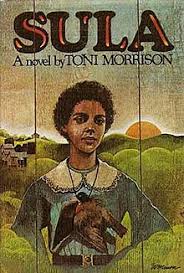 The laughter of Morrison’s characters disguises pain, deprivation and violation. It is laughter at a series of bad, cruel jokes. The real joke in naming Sula’s neighbourhood “The Bottom”, when it perches on barren Ohio uplands is that, in many senses it really is “the bottom” after all. Nothing is what it seems; no appearance, no relationship, can be trusted to endure.
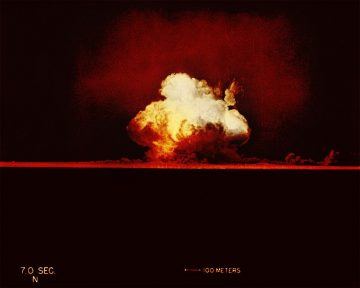 Crawford Lake is so small it takes just 10 minutes to stroll all the way around its shore. But beneath its surface, this pond in southern Ontario in Canada hides something special that is attracting attention from scientists around the globe. They are in search of a distinctive marker buried deep in the mud — a signal designating the moment when humans achieved such power that they started irreversibly transforming the planet. The mud layers in this lake could be ground zero for the Anthropocene — a potential new epoch of geological time.
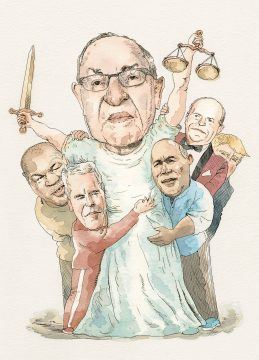 “A lie is a lie is a lie,” Whoopi Goldberg said. It was May 2nd, and she was on the set of “The View,” the daytime talk show that she co-hosts. The subject was Attorney General
  My colleague Patrick Riley from Google has a
 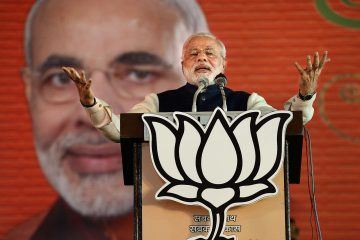 One night in May, a strange and seemingly inexplicable thing happened in India. A divisive and ineffectual prime minister returned to power with a historic mandate.
 The Cannes Film Festival has been an adoring showcase for Quentin Tarantino ever since he was anointed with the big prize, the Palme d’Or, for Pulp Fiction in 1994. That only made the discomfort of his tense exchange with
 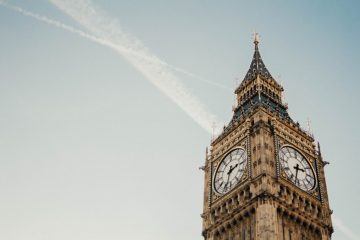 It took me three tries to understand even a little of Mrs. Dalloway, Virginia Woolf’s famous 1925 modernist novel set on a single day in London. Even now, when I try to explain the book, I tend to sound like a stereotypical rambling undergraduate literary analyst, parroting lecture slides and pontificating on the meaning of life — if Good Will Hunting saw me at a bar, he’d take me outside. But confusing as it is, this is a book that makes me walk around differently. Here’s why:
 Will Fitzgibbon over at the International Consortium of Investigative Journalists:
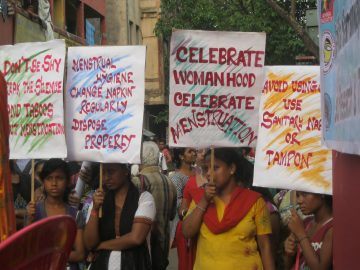 “A period is something I deal with, without thinking about it particularly, or rather I think of it with a part of my mind that deals with routine problems. It is the same part of my mind that deals with the problem of routine cleanliness.” In Doris Lessing’s 1962 novel, The Golden Notebook, the protagonist, Anna, worries about her period and how it will affect the integrity of her writing. In the early 1960s, it was unusual and brave for a work of fiction to mention menstruation, let alone explore it in such detail. Broadly speaking, in mainstream fiction, examples of menstruation are few and far between.
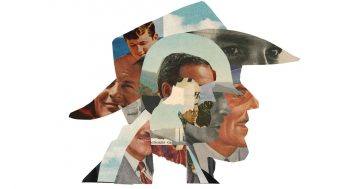 Michigan’s Upper Peninsula encompasses more than 16,000 square miles of northern hardwood forest, broken here and there by hardscrabble towns whose year-round population is slowly bleeding away. In “Hunter’s Moon,”