
Every green room of the forest planted:
Trillium and quince, alder and salmonberry, …
—Robert Sund
Go On
You could go on, I know—
green room to green room,
names scrolling off your tongue
like bark from madrona trunks.
Snowberry and salal, Douglas fir and elderberry.
Have I told you cedars are my favorites?
I see more rust-colored cedar boughs;
“flagging,” a mutual friend explains.
For me a new meaning.
Things are changing, but this flagging—
natural, this time of year.
Nothing to worry about.
Have I told you I’m feeling my age,
am more prone to cliché?
Natural, this time of life.
Weakness and pain in my right arm
is new to me. Go on. I’ll sit here
and rest, with the old meaning—
in this warming up, drying out rust-colored room.
I’m sorry for harm I’ve caused.
Why do you think I started walking,
breathing in the ragged poison bouquet
of particulates and exhaust?
Here, spiderwebs are mostly intact
and blackberries flourish.
At the tip of my old hiking boot, holey,
a beetle evades my attention, strolls
under a leaf from a trailing blackberry vine,
hides. For me a new beetle;
no name scrolls from my tongue.
I lift the leaf, only to say,
Hi. I haven’t seen you before. You’re safe.
I’m uninterested in causing further harm.
Should I buy new hiking boots? It depends.
Have I told you our time together
has been holy, a benediction?
Go on. There is nothing to fear. Don’t worry.
Know I loved you. Go on.
by Andrew Shattuck McBride
from Empty Mirror
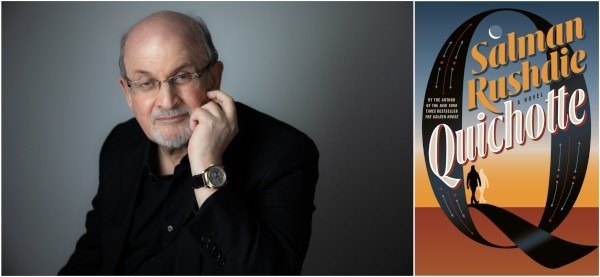 Rushdie takes another journey into unexplored territory in Quichotte, which will be published by Random House in September and was recently long-listed for the Booker. Inspired by Cervantes’s Don Quixote, the novel portrays an elderly traveling salesman “deranged by reality television” who falls in love with the host of a daytime talk show whom he has never met. As Quichotte (the name he takes in letters to his beloved) travels across the country to meet Miss Salma R, a parallel plot concerns the writer who created him; these twin story lines eventually converge in a fantastical ending that tips its hat to some of the science fiction tales Rushdie loved as a boy.
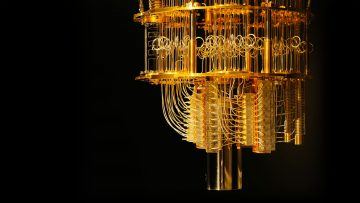
 How do quantum probabilities coalesce into the sharp focus of the classical world?
 Psychologists have lots of evidence that implicit social biases—our unconscious, knee-jerk attitudes associated with specific races, sexes and other categories—are widespread, and many assumed they do not evolve. The feelings are just too deep. But a new study finds that over roughly the past decade, both implicit and explicit, or conscious, attitudes toward several social groups have grown warmer.
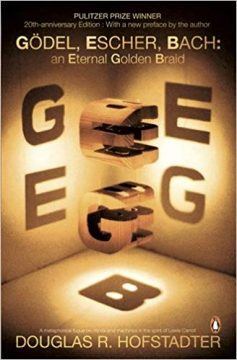 Twenty years ago, in the preface to the 20th-anniversary edition of his classic book, Douglas Hofstadter marvelled at how misunderstood its thesis has been. A treatise on the nature of consciousness, it is often wildly misconstrued as an exploration of how ‘math, art, and music are really all the same’. But one likely source of the confusion is in the name – which is, at the same time, a big reason for the book’s lasting popularity: Gödel, Escher, Bach: An Eternal Golden Braid, or GEB for short, sounds like a promise of just such a dazzling, cosmic counterpoint. Another likely culprit is Hofstadter’s own musings about music. While M C Escher’s artwork elegantly (and literally) illustrates many of the book’s themes, Hofstadter’s attempts at justifying the inclusion of Bach are mostly banal and often badly off the mark.
 I’m a theoretical physicist, but I’m going to be talking about the future of mind and intelligence. It’s not entirely inappropriate to do that because physical platforms are absolutely a fundamental consideration in the future of mind and intelligence. I would think it’s fair to say that the continued success of Moore’s law has been absolutely central to all of the developments in artificial intelligence and the evolution of machines and machine learning, at least as much as any cleverness in algorithms.
 I used to be pro-science myself. I only became an anti-science activist after I realized how much of my dream-interpretation-based worldview was incompatible with what I was reading in scientific journals. Since then, I have become a fierce activist. I make passionate arguments against the so-called “scientific method” (it’s just making guesses) and the value of peer-reviewed studies (excuse me for wanting to think for myself!). When my children ask me why the sky is blue, I tell them the truth. That there’s no way to find out.
 Suzy Hansen in the NYT Magazine:
 Kevin Hartnett in Nautilus:
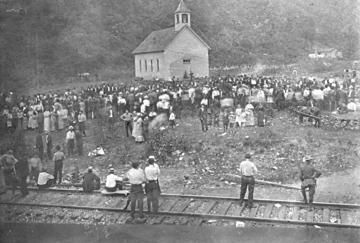 Elizabeth Catte in a Boston Review Forum:
 Where once Europeans and North Americans might have turned to religion or philosophy to understand themselves, increasingly they are embracing psychotherapy and its cousins. The mindfulness movement is a prominent example of this shift in cultural habits of self-reflection and interrogation. Instead of engaging in deliberation about oneself, what the arts of mindfulness have in common is a certain mode of attending to present events – often described as a ‘nonjudgmental awareness of the present moment’. Practitioners are discouraged from engaging with their experiences in a critical or evaluative manner, and often they’re explicitly instructed to disregard the content of their own thoughts.
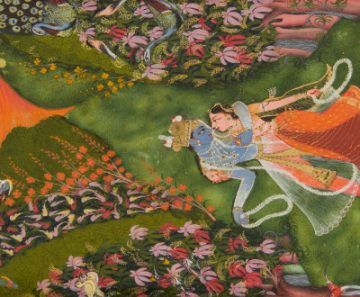 The new initiative was first announced by India’s right-wing Hindu nationalist Bharatiya Janata Party (BJP) at a state executive meeting in its Bhopal headquarters in April 2016. “The state will be made responsible for the happiness and tolerance of its citizens,” declared Shivraj Singh Chouhan, the former chief minister of Madhya Pradesh and a BJP-celebrated yoga enthusiast. “We will rope in psychologists to counsel people on how to always be happy.” They decided on a budget of $567,000 and a purpose. “Happiness will not come into the lives of people merely with materialistic possessions or development,” Chouhan explained, “but by infusing positivity in their lives so that they don’t take extreme steps like suicide in distress.”