
Charles C. Mann at The New Atlantis:
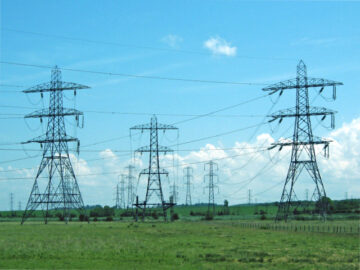 Put a bagel in a toaster oven and push a button. In a few seconds, heating elements inside the oven glow red and heat the bagel. The action seems simple — after all, ten-year-olds routinely toast bagels without adult supervision. Matters look different if you inquire into what must happen to make the oven work. Pushing the button engages the mechanism of an incomprehensibly vast multinational network: the North American electrical grid.
The numbers are dazzling. The United States alone has more than 6 million miles of power lines, enough to stretch to the Moon and back twelve times. An average U.S. single-family home contains almost 200 pounds of copper wire — and there are more than 80 million U.S. single-family homes. The Empire State Building alone has more than 470 miles of electrical wiring. And all these miles upon miles upon miles of wire and cable and circuit are so routinely and reliably coupled that most of us think nothing of the fact that southern California gets power from hydroelectric dams a thousand miles away in northern Washington State. Constructed over more than a century, embodying entire political and economic histories, the North American electrical grid may be the most complex object ever created by our species.
more here.
Enjoying the content on 3QD? Help keep us going by donating now.
 Less than two hours after sunrise, with the shadows still blue and slanting hard in a dense growth of balsam firs and spruces, the baby bird blundered into a fine black net strung along the ridgeline of Mount Mansfield, at 4,393 feet Vermont’s tallest mountain.
 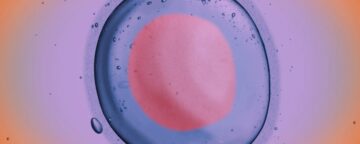 A human female is born with all the egg cells she will ever have. The possibility for the development of new oocytes is zero. Given this constraint, it is crucial that these gametes remain healthy and viable for decades until they are needed to form an embryo. Irrespective of the ‘age’ of the fertilized oocyte, the resulting embryo has the characteristics of a freshly born cell, indicating the existence of mechanisms that counteract accrued cellular damage and keep the egg fresh. What are these processes that drive the prolonged life of human egg cells?
 I begin this chapter with three outrageous facts:
 Here’s an old paradox. The scientist declares that science is the only way to truth and that philosophy is bunk. “Over here in my department,” he proclaims, “we really learn things about reality. We poke and prod the universe and see what happens. We formulate hypotheses, design and conduct experiments to test them, analyze the data, and form justified conclusions about the way the world works on that basis. Over in the philosophy department, they don’t do any of that. They make shit up. What I’m doing is REAL and IMPORTANT and GENERATES KNOWLEDGE. Philosophers do none of those things!” And the philosopher, hearing this rant, has a ready reply: “What experiments did you do to establish the truth of that little speech? None at all! (And if you did run an experiment, I’d love to hear about the setup!) Turns out that you’re endorsing a bunch of philosophical claims. So you yourself have a philosophy all your own! Philosophy is inescapable for both of us. The only difference is that I’m honest about it.”
 Put a bagel in a toaster oven and push a button. In a few seconds, heating elements inside the oven glow red and heat the bagel. The action seems simple — after all, ten-year-olds routinely toast bagels without adult supervision. Matters look different if you inquire into what must happen to make the oven work. Pushing the button engages the mechanism of an incomprehensibly vast multinational network: the North American electrical grid.
 Zohran Mamdani’s triumph in New York City’s Democratic primary for mayor has forced, among many Jews, a reckoning with how far they have drifted from one another. Mamdani does not use the slogan “globalize the intifada,” but he does not condemn those who do. He has said that if he were mayor, Benjamin Netanyahu, the prime minister of Israel, would face arrest on war crimes charges if he set foot in New York City. Israel has a right to exist, he says, but “as a state with equal rights.”
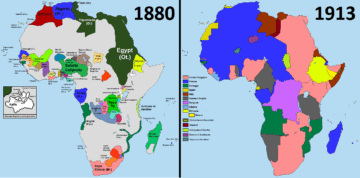 The great surprise of the first quarter of the 21st century has been the endurance of Africa’s colonial borders. The durability of Africa’s multiethnic states, most of which project power unevenly over vast territories and possess relatively small militaries, has everything to do with their tradition of multilateralism, a tradition born out of the social networks of anticolonial struggle and the Pan-African Congresses of the first half of the 20th century. Rather than a
 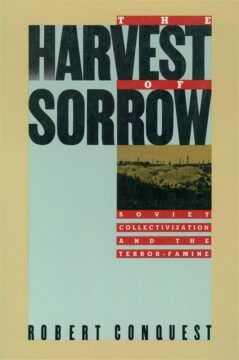 Robert Conquest is a man of contradictions: He has been called “a comic poet of genius” and “a love poet of considerable force” – but he made his mark as one of the first to expose the horrors of Stalinist communism.
 An antibody treatment developed at Stanford Medicine successfully prepared patients for stem cell transplants without toxic busulfan chemotherapy or radiation, a Phase I clinical trial has shown.
 A major mystery about a long-lost legend that was all the rage in Medieval England but survives in only one known fragment has been solved, according to
 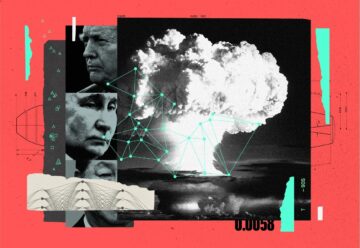 The Doomsday Clock — a symbolic arbiter of how close humanity is to annihilating itself — now sits at 89 seconds to midnight, nearer than it has ever been to signalling our species’ point of no return.
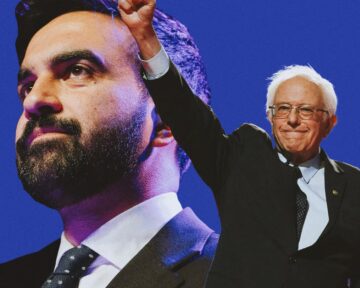 Zorhan Mamdani, the presumed front-runner in the New York mayoral race, calls himself a democratic socialist (which scares Wall Street). So did US senator Bernie Sanders in his earlier election campaigns. Historically, a socialist is usually associated with advocacy of ownership or control of means of production primarily resting with the state or other non-private entities (like cooperatives or worker-owned enterprises). I have not heard either Mamdani or Sanders being associated with the advocacy of any such transformation of most of the means of production in the US. I think they are simply European-style social democrats, who would keep the mode of production essentially capitalist (with some possible light modifications) but with a somewhat greater role of the state in education, health and other welfare services (which, of course, may require higher taxes on the rich).