
Hilton Kramer at The New Criterion:
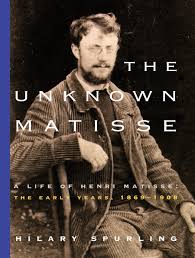 Even those of us who have loved Matisse’s work since we began to look at paintings as a serious interest could not have suspected what it had cost this great artist to persevere in his vocation. Pleasure had so often been invoked as the key to an understanding of his achievement—“Un nom qui rime avec Nice . . . peintre du plaisir, sultan de Riviera, hédoniste raffiné,” as Pierre Schneider sardonically described this mistaken characterization of Matisse—that it has come as a shock to discover the sheer scale of adversity that had to be endured at almost every stage of his life and work.
It was not only that his paintings were initially denounced as the work of a madman. That was the common fate of a great many modernists, even in the heydey of the School of Paris. Matisse’s personal circumstances were also plagued by failing health, failing confidence, and a lack of command in the academic conventions of his medium. (He had never been a good student, and his training was meager.) Even worse, there was his wife’s family’s financial scandal, which, though neither Matisse nor his wife were at fault, nonetheless cast a pall over the family’s name and position.
more here.
 If at the beginning of the crisis in Hong Kong, three months ago, it was hard for some to imagine how a supposedly democratic conclave within authoritarian China and the pride of imperial capitalists everywhere would soon become the undeclared police state it now is, it’s an even bigger challenge to imagine how the political crisis might be resolved without a dramatic redefinition of the relationship between the semi-autonomous territory and Beijing’s dictatorial central government. The movement—the revolution, the rebellion, the resistance, the terrorism, the uprising, whatever it is called, depending on who you ask—started as a protest against
 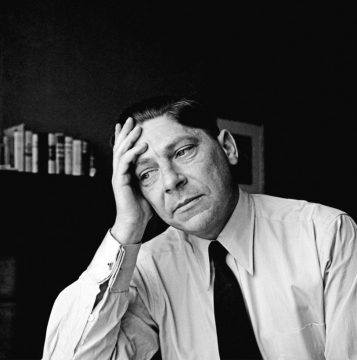 This new “Darkness at Noon” arrives in a very different world from that which greeted the original, and one important difference has to do with Koestler’s reputation. In 1940, he was thirty-five and little known in the English-speaking world. He had been a successful journalist in Berlin and a Communist Party activist in Paris, but “Darkness at Noon” was his first published novel. It transformed him from a penniless refugee into a wealthy and famous man, and was also the best book he would ever write. It was followed, in the forties, by an important book of essays, “The Yogi and the Commissar,” and several thought-provoking but less consequential novels of politics and ideas, including “Arrival and Departure,” which reckoned with Freudianism, and “Thieves in the Night,” about Jewish settlers in Palestine.
 “Plato once defined humans as featherless bipeds, but he didn’t know about dinosaurs, kangaroos, and meerkats. In actual fact, we humans are the only striding, featherless, and tailless bipeds. Even so, tottering about on two legs has evolved only a few times, and there are no other bipeds that resemble humans, making it hard to evaluate the comparative advantages and disadvantages of being a habitually upright hominin. If hominin bipedalism is so exceptional, why did it evolve? And how did this strange manner of standing and walking influence subsequent evolutionary changes to the hominin body?
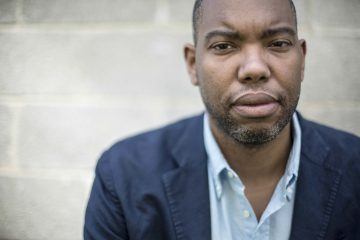 Eight years ago, Ta-Nehisi Coates wrote
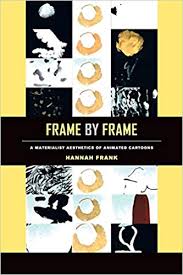 IT’S NOT EVERY DAY that a posthumously published Ph.D. thesis nudges the world of cinema studies off its axis. All hail Frame by Frame: A Materialist Aesthetics of Animated Cartoons (2019), by Hannah Frank, who completed the book shortly before her tragic death in 2017, at age thirty-two, from an illness believed to have been pneumococcal meningitis.
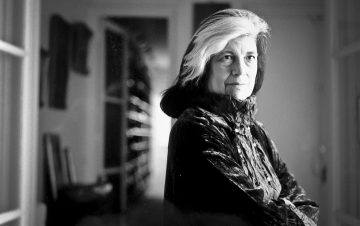 Sontag emerges less as the heir to intellectual crusaders such as Hannah Arendt or Mary McCarthy than the better-educated cousin of the wily and preening Gore Vidal – another victim of an abusive single mother who was obsessed with renown and recognition, unable to identify as homosexual, and took cover behind a persona largely created in the New York Review of Books. Where Vidal’s contemporary Norman Mailer once hoped that he would go deeper into himself and turn “the prides of his detachment into new perception”, the feminist poet Adrienne Rich wrote of Sontag that “one is simply eager to see this woman’s mind working out of a deeper complexity, informed by emotional grounding”.
 We had our fun last week, exploring how progress in renewable energy and electric vehicles may help us combat encroaching climate change. This week we’re being a bit more hard-nosed, taking a look at what’s currently happening to our climate. Michael Mann is one of the world’s leading climate scientists, and also a dedicated advocate for improved public understanding of the issues. It was his research with Raymond Bradley and Malcolm Hughes that introduced the “hockey stick” graph, showing how global temperatures have increased rapidly compared to historical averages. We dig a bit into the physics behind the greenhouse effect, the methods that are used to reconstruct temperatures in the past, how the climate has consistently been heating up faster than the average models would have predicted, and the relationship between climate change and extreme weather events. Happily even this conversation is not completely pessimistic — if we take sufficiently strong action now, there’s still time to avert the worst possible future catastrophe.
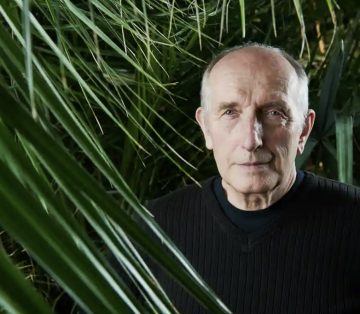 Vaclav Smil
 Pancreatic cancer, which will be diagnosed in about 56,770 people in the United States this year, is the
 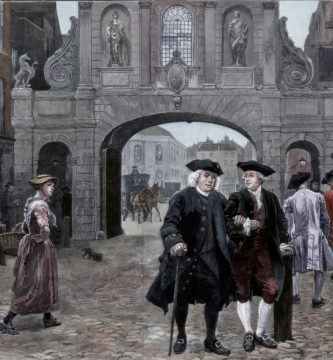 Do contemporary approaches to translation tell us something about our times?
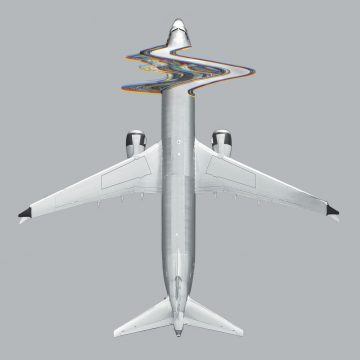 On Oct. 29, 2018, Lion Air Flight 610 taxied toward the runway at the main airport in Jakarta, Indonesia, carrying 189 people bound for Bangka Island, a short flight away. The airplane was the latest version of the Boeing 737, a gleaming new 737 Max that was delivered merely three months before. The captain was a 31-year-old Indian named Bhavye Suneja, who did his initial flight training at a small and now-defunct school in San Carlos, Calif., and opted for an entry-level job with Lion Air in 2011. Lion Air is an aggressive airline that dominates the rapidly expanding Indonesian market in low-cost air travel and is one of Boeing’s largest customers worldwide. It is known for hiring inexperienced pilots — most of them recent graduates of its own academy — and for paying them little and working them hard. Pilots like Suneja who come from the outside typically sign on in the hope of building hours and moving on to a better job. Lion Air gave him some simulator time and a uniform, put him into the co-pilot’s seat of a 737 and then made him a captain sooner than a more conventional airline would have. Nonetheless, by last Oct. 29, Suneja had accumulated 6,028 hours and 45 minutes of flight time, so he was no longer a neophyte. On the coming run, it would be his turn to do the flying.
 If we try to map out an East-West divide for the global political developments of the last decade or so, we might end up with this: the East-West divide is not exactly what it was during the Cold War. It is now a divide between liberal and ‘illiberal’ democracies, and the ideas and undemocratic impulses that have recently come to represent the East have also more recently become ascendant in parts of the West—and also parts of the South—under governments that are further rightwing or leftwing than the norm.
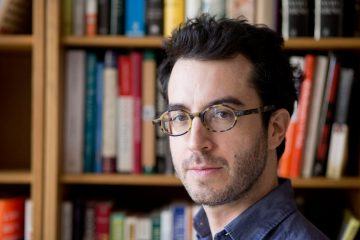 Jonathan Safran Foer’s second book of nonfiction is an eye-opening collection of mostly short essays expressing both despair and hope over the climate crisis, especially around individual choice. It’s a wide-ranging book — there are tributes to grandparents and sons, as well as musings on suicide, family, effort, sense and much more — but it has a point, and that is to persuade us to eat fewer animal products.