By Maniza Naqvi
 Our infallibility—our goddamn innocence, Eileen, the infallibility of—-of—of– our goddamn—-goddammit!
He had slurred-his words when he had called her in the middle of the night-it was 4.22 a.m. to be exact because she had seen the numbers glowing on the digital bedside clock built into the dashboard at her bedside.
Then he said: Wow! D'ya see that? That's some lightning. Storm's coming in.
She had managed to mumble an outraged: Stan, do you know what time—-
But he had hung up.
She had fallen asleep—knowing that this was just Stan—continuing on with an unfinished argument earlier in the evening when he had come over for dinner at the hotel.
In the morning a phone call from the Embassy had awakened her. It was the security officer telling her to spend the day in the hotel—the security alert for traveling anywhere outside the hotel was a level three—
With time to kill, she had spent an hour on the treadmill at the gym, showered and then made her way leisurely to breakfast at 8.00 am. Two of her breakfast companions, the daily newspapers, were handed to her by a welcoming and cheerful hostess at the entrance as she was ushered to her table. Coffee was poured for her—and a waiter fussed around her before leaving to attend to the next incoming guest.
For you everyone is CIA! He's CIA-she's CIA! Honestly!
Eileen hadn't meant to overhear the conversation but it was hard not to, the hotel was packed it seemed—and the breakfast room was overflowing with guests. The young woman, at the next table over, her hands lathered in henna patterns, her face, too made up for this time of the day, probably a bride, newlywed, and probably last night in ballroom two, had just exclaimed this in exasperation to her young husband. The bride groom—perhaps 26—was hunched over his plate and kept glancing over his shoulders suspiciously replied: Well you look around yourself, and tell me what you see? The bride and the bridegroom caught her looking at them—Eileen smiled — they looked at each other self consciously and giggled. He squeezed her hand and she reached out and touched his cheek.
Eileen shifted her attention back to the newspapers——She scanned through them: The twelve Pakistani students arrested in Britain accused of plotting the worst terrorist attack in Britain's history—and all the hullaballoo in the newspapers and on TV and by the Government too—-it now appeared were innocent. No apologies from the British Government. Holbrooke was to be called to the Hague Tribunal to be cross examined in the war crimes trial of Karadzic to testify whether he had cut a deal with the war criminal. Karzai and Zardari were meeting in a conference presided over by Hillary Clinton in Washington DC. The Pakistani delegation was protesting the AF-PAK acronym. Hillary Clinton had made it clear—that unless Pakistan did something about the militants the US military would. Another drone attack in Bajaur–40 militants killed. Over 2 million people had been displaced in Swat. Photographs of babies, small children—– young and old women confined to the tents in the camps. A luxury hotel was being constructed nearby in Chitral by the same company which was doing brisk business in hotels in Kabul and Islamabad. General Mullen was warning about the Taliban being seventy miles from Islamabad. Again. The UNDP man kidnapped in Baluchistan had been released. One of the demands by the kidnappers belonging to the Baluchistan Liberation Army had been the release of 181 women—captured by the secret agencies. Discussions and plans were underway to sell thousands of acres of farm land, to foreign concerns based in the Middle-east— Fishermen's associations were demonstrating at Gwadar port over losing their access to the sea and their land rights—villagers were protesting for having been forcibly removed from the area. Altaf Hussain, based in London, had been visited by State department officials. Again. Altaf Hussain had given another tape recorded speech to his party workers sounding the alarm that the Taliban were waiting within Karachi to attack. And there was a news item about 45 rigs producing and supplying oil and gas across the country. The E&P companies would pay 12.5 % royalty and 40% income tax to the government. The Ministry of Energy had so far awarded 119 exploration licenses to public and private sector companies, while 100 new licenses with more incentives would be awarded under the new petroleum policy to local and foreign investors. Sixth largest coal reserves in the World. A memorandum of understanding presided over by Hillary Clinton was signed by Pakistan and Afghanistan in Washington DC to give India rights for transporting its goods through Pakistan to and from Afghanistan. At a tea time event organized at the Sindh Club Pervaiz Hoodbouy, had shown a scary video of madmen training and warned against the impending invasion of the Taliban. No doubt Eileen thought amused, nail biting and enthralled members must have listened to him while their Pathan drivers wait outside in the parking lot in the heat. Ahmed Rashid followed up on the same act at the Mohatta Palace, same audience, same servants waiting outside.–And Arundhati Roy too had made an appearance- to speak against the Taliban and to speak against the Americans at a Women's Action Forum meeting at the Karachi Press Club. Same audience, same servants waiting outside. Well,well, well—thought Eileen: Ms. Roy and the hoi polloi? Why on earth would Ms. Roy come to Pakistan to speak to Karachi's elite about Talibanization? Interesting. Eileen had never been a fan—but this was certainly useful. The photogenic opposition—singing from the same page as us on Talibanzation? Barrick Gold of Canada and Chile's Antofagasta planned to invest up to US$3 billion in a copper and gold mine at Reko Diq in the southwestern province of Balochistan. The single-largest foreign investment in Pakistan. But of course there were security concerns. More snippets on the oil and gas pipelines agreements between Pakistan, Iran, India, China. The usual lines about The Line of Control: a shot fired here—a shot fired there. A person had been shot dead in Badin for trespassing on a foreign concern's drilling site.
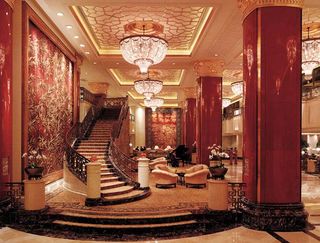
Nothing much there— Her attention reverted to the others in the restaurant. Bright, cheerful in the early morning, the room was transformed from the darkened restaurant atmosphere in the evenings. Now, white gauze blinds, delicately and intricately embroidered in white silk thread covered the ceiling to floor windows but let in suffused sunlight into the air conditioned room. Soft music, along with central air, though unfortunately the same four seasons Vivaldi tune over and over again— was soothing nonetheless. The guests talking amongst themselves created an energetic hopeful, happy hum of well being and assurance.
There, just beyond the young couple, were two tables occupied by military officers—one by Nato officers, the other by Pakistani officers. She recognized their nationalities and ranks from the colors of their uniforms and the stripes and braids at their shoulders and chests. At a third table sat a European General and a Pakistani General. A joint Nato-Pakistan conference was about to be kicked off in ballroom two.
The rest of the room was filled with laptop rollers—everyone in a business suit, the women graced theirs with scarves in deference to cultural sensitivities, several foreigners wore shalwar kameezes. Some looked corporate, they sat up straight—talked with their laptops open in front of them—the rest looked like bureaucrats—hunched over their cereals and newspapers. Bleary eyed and pale from long nights of staring at spread sheets and memos and the suffering from dysentery, no doubt. The chicken biryani and raitha she felt on the room service menu was a repeat intestinal offender. She watched as the six guys who came in every morning around this time, single file, made their way to the same space, in the shadow of a pillar-placed their keys on the table and headed for the buffet. Buffed and buzz cuts—resembling cyborgs, they seemed to be in residence at the hotel. They ate and it seemed went immediately back up to their rooms. They didn't seem to go anywhere else. She never saw any of them in the lobby, or in the other restaurants or the salon or spa, or bakery or gift shops, or at the pool, nor in the lawn or in the parking lot or in line with other guests at the security checks and metal detectors at the entrance to the hotel. They seemed to disappear right after breakfast, emerging only at the same time the next morning.
The atmosphere was having the desired effect on her. She had been uneasy these past few days. The visit to the refugee camp had been postponed. Now her nerves were steadily being soothed. The whole place had that effect on her. Someone had planned this place well. They had really understood the needs of their clients. The corridors of the hotel were decorated with modernized versions of Mughal miniatures of princes and princesses frolicking or in repose. Interspersed with these were the colorful vibrantly painted renditions of flowers, birds and animals and naïve scenes of the Khyber Pass; winding roads and snow peaks in Kashmir these “art works”, were the actual wooden panels, off of the trucks that plied the length and breadth of the country. From the port in Karachi: Keamari, to the Khyber Pass. Replicas of the stone statues of Buddha from Gandhara and Taxila stood amongst hot house orchids and lilies on console tables placed under large mirrors whose frames mimicked the intricately carved doorways oftenfound in rural villages. The intricate embroidered patterns which decorated traditional textiles all over the country had been industrially printed on to cushion covers and bedspreads—giving the sense of handicraft. Everything allowed the guests a sensation that they were experiencing culture and tradition without making them uncomfortable, everything was meant to be just enough— without being overpowering—it was captured, collected, muted for their viewing pleasure—a gentle reminder that conveyed to the guests that this was another country should they want it to be—but easily transferrable and in proximity to what was in their own comfort zone. Like the room service menu—burgers, fries, pizza, eggs any way you wanted, lomein noodles, pad thai—chicken vindaloo, chicken masala tikka, naan. The usual. Nothing unknown—nothing that would clash—scream out…
Still, ten days into her stay she had asked the hotel management for a change of rooms. At the price the hotel was charging, she had said to the young woman at the reception that the sounds of the drilling and the jack hammering throughout the day was unacceptable. The guest relations officer had taken the phone and had explained to her that they were fully occupied at the moment. Eileen had replied as calmly as she could that she would be down in a moment to have a word with him in person. You are welcome Madame he had replied—his voice all smiles.
When she came down, the lobby, with its marble floors gleaming, its fountain at the center gently gurgling, was bustling with guests. A workshop on health, in ball room one, had just let out for a coffee break. Somewhere a guitar strummed. And someone had broken out in song in the crowd behind her, out of tune. Reaching the guest relations officer's desk, she had sat down on the upholstered chair and leaned forward to be heard over the racket. Lowering her voice, she delivered the magic words in a menacing tone: US Dollars. Listen up. The expansion that you've got going outside my window—that construction site–my dollars are paying for it—So, one word from me about feeling uncomfortable here, and your little monopoly on hotels in this town will be history. All I need to do is to let customers like me—know how I rate you guys and that's it. Do you understand? Do you hear me? So what will it be?
A room was soon found. But a pre-moving in inspection uncovered that it was situated directly above the main gate to the hotel, Enraged she had demanded of the guest relations officer whether he was in his right senses—placing her at this security risk location—after all hadn't the truck full of explosives slammed into the front gate of the Marriot Hotel? The guest relations officer, appearing shaken by her fury had apologized quickly and called reception to search for another room. A short five minutes yielded results. Another room, he said had just opened up, this time he assured her it would be to her satisfaction. It was. Situated at the back of the hotel, on the first floor, so that in the event of an incident—she would be able to jump. To restore her confidence in the hotel's commitment to her comfort, the management had sent up an overflowing complimentary fruit basket and an invitation for a Swedish massage at her convenience either in her room or at the hotel spa and salon. Upon inquiry she learned that the hotel only had male masseurs—the incident at the massage parlor two years ago by the crazies at the Lal masjid had forced the hotel, concerned about security, to let go of its female masseuses.
The need to change rooms, truth be told was that it wasn't the noise of drills and hammers banging that had bothered Eileen—valium handled that well enough at night— Besides the hum of the strong central air conditioning—the shut windows and the heavy double drapes dulled any noise from outside—even banished sunlight. Rather it was the early morning view, once she drew back the curtains, which spoiled things for her. From her window she could see the day laborers filing into the huge construction site for the hotel—shivering in the cold at that time—wrapped in large chaddars, their feet shod in tattered chapals. Their daily wage not even half the cost of her morning coffee. It made no sense for her and seemed unfair for her to have to start the day that way: feeling out of sorts.
Eileen had booked her complimentary massage for five p.m. before her dinner with Stan. That would give her enough time before dinner which she knew would no doubt be trying. And sure enough dinner with Stan had been vintage Stan. Afterwards, she had gone to bed early —the massage had relaxed her. Before going to bed, she had fired off a quick missive. The subject line: Assessment. The text was a simple one liner: Needs further probing.
Stan had arrived early, that evening. She met him at the Italian restaurant on the first floor. He had brought along an article for her to read about the killing of civilians by the military in Afghanistan.
She had glanced at the title and nodded before setting it aside and said: Terrible! What a mess huh? But these things happen—those guys are under a lot of stress—and they're all coming from really stressful backgrounds. I can understand that.
He had gulped down the beer, wiped the sides of his mouth with his thumb and index finger and considered her for a long moment—-The difference between you and me he had said—is that you try to understand the murderers.
Whose side are you on Stan?
Side, Eileen?
Yeah Stan, whose side are you on? Because there are sides—y'know. This is not a game—this is real, real stuff—there is bad stuff here—and we're fighting it.
Is that a fact?
Yes, Stan, that's a fact. A capital F—fact.
Uh huh? Bad stuff? Facts. At some point we forget don't we as to who is the source of our facts? Us. We start the chain—send a memo, remember?—Send a memo to report an incident—that sets of an avalanche of discussion till it builds into a body of work, then we turn that into a report There are press releases—–and then that turns into news—we provide photographs, videos, corroborating evidence. An incident occurs. More evidence. Pundits are born. They write more reports—books. Archives full of them. Hearings are held—panel discussions-think tanks take matters up. Facts. The same journalists that were there at the build-up to the Iraq war—suddenly show up here—or report about here from there. A story is built up slowly. And it brews and brews. We're master brewers. One thing's for sure Eileen, Game over. We're the best. We've won. Now what are we fighting for? Who are we fighting? And why?
What are you talking about?
I don't know Eileen. I don't know. The violence—the coldness of it all.
Are you kidding! Stan, surely you understand, we live in the most non violent times. The world has seen incredible violence—Tamerlane—Chengiz Khan. We are fortunate to live in the most non violent times—The only problem is that nowadays every blip that occurs in a war is reported over and over again and over magnified.
Is that right? Every blip?
Just trying to tell you that this is a much more humane and non violent fight then ever was fought before. Stan, don't be on the wrong side of history on this one. We created the swamp, no doubt about it. Okay? We're cleaning it up. Don't get on the wrong side of this Stan. Don't get on the wrong side of history on this.
He had laughed. I'm trying not to Eileen! He had shaken his head: You are so good Eileen. Leave this. You should come and live with me Eileen, stay at my place while you're here. This place gives me the creeps—this hotel—-look at the people in here.
I like it here Stan.
How could you? They're all just us.
That's why Stan. Who are you?
Just look at them Eileen? The Nato guys over there and their body guards in the lobby—The suits in that corner—cutting deals—reading the riot act on loans to some bigwigs in the Government. Buzz cuts—flashy ties—big briefcases—Living in this “Gilded guest house”—internet connected—CNN ready—air conditioned—sanitized—securitized— Everything just so—everything a fantasy of how it should be. The natives, always in the roles of the waiters, the bellhops, the cleaners, the housekeepers—the doormen–indulging our every whim, like nannies watching us in the playground—indulgently, encouragingly urging us on in our every attempt at screwing their country over and all the while wearing ridiculous costumes to indulge our notions of them. Do you think this place is filled with guests who are tourists appreciating what the natives cannot, or guests who are here for commerce and war, taking what the natives must not?
Are you going native as you say, Stan?
You can remain the guest Eileen or you could decide to sleep with them. Did you ever think of it Eileen?
Are you involved here with someone Stan?
Haven't you thought about it Eileen? Sleeping with any of them?
Who? The hotel's hired help?
No the generals, the President—the Ministers?
What's the difference Stan? They're all the same to me. There I said it for you.
Order another Murree brew Eileen, will you.
What number are you on Stan?
I don't know—eighth?
So Stan, no one said you can't sleep with them—Please by all means do! Just make sure you don't forget what the terms of engagement are.
He had left early. Only to call back in the middle of the night waking her from her valium induced sleep:—Our infallibility—our goddamn innocence, Eileen!
No one had seen him or heard from him since. It had been three days. The café was closed. And the Embassy had informed her that unless he appeared in the next twenty four hours they would have to go public with a story.
Read : Losing the Plot (The Coffee Shop) Chapter One: https://3quarksdaily.com/3quarksdaily/2009/06/losing-the-plot.html