
Rafia Zakaria in The Nation:
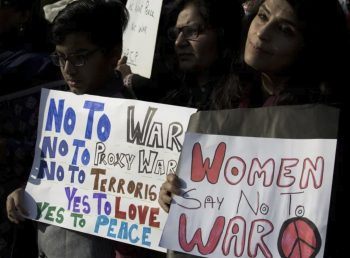 As irony would have it, Pakistan and India’s latest squabble began on Valentine’s Day when an explosive-laden truck, commandeered by a young Kashmiri Indian man, slammed into an Indian military convoy, killing 40 Indian soldiers. Even before the funerals were over, India blamed Pakistan, claiming its neighbor was sponsoring the terrorist group, Jaish-e-Muhammad, responsible for the attack. Ten days later, India carried out strikes in Pakistan—though it’s unclear what, if anything, it hit. The following day, Pakistan shot down two Indian planes that had crossed into its territory and captured an Indian pilot. The Pakistani government then closed its airspace and imposed blackouts in the Northern Areas so that Indian aircraft could not detect its cities. In an instant, it seemed, the two countries stood daggers drawn, teetering on the edge of nuclear cataclysm.
Yet peace, or the desire for it, caught on in Pakistan. On Thursday, the day after Pakistan captured the Indian pilot, peace rallies were held all over Pakistan, and the hashtag #SayNoToWar trended on Twitter. Groups of Pakistani women photographed themselves holding placards asking women across the border to #SayNoToWar.
More here.
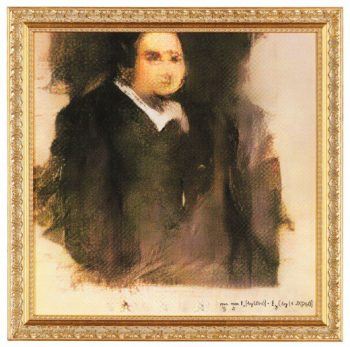 Advances in artificial intelligence have led many to speculate that human beings will soon be replaced by machines in every domain, including that of creativity. Ray Kurzweil, a futurist, predicts that by 2029 we will have produced an AI that can pass for an average educated human being. Nick Bostrom, an Oxford philosopher, is more circumspect. He does not give a date but suggests that philosophers and mathematicians defer work on fundamental questions to “superintelligent” successors, which he defines as having “intellect that greatly exceeds the cognitive performance of humans in virtually all domains of interest.”
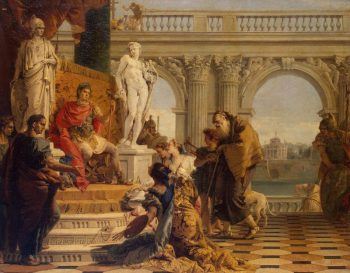 For thousands of years, the liberal arts were not liberal, and that is why they are increasingly unwelcome in our time. An honest study of the past is unsettling in a liberal age, because a person who learns to venerate earlier cultural traditions, from Homer to the baroque, may come to venerate the values to which those traditions are devoted. And those values are a direct rebuke to the substance of liberalism.
 SKOOTER MCCOY WAS
 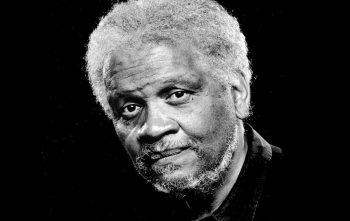 Look, we already know that Ishmael Reed hasn’t seen Hamilton.
 “I love that,” said Thompson. “He’s for America 100%. It’s America or no way. I love that.” Thompson is an African American man in his early 20s. He was wearing a camouflage shirt under black overalls, with a large pin on his chest depicting a cartoon boy – a mashup of Calvin from Calvin and Hobbes and Trump himself – urinating on the CNN logo. People continued to walk past us en route to the rally. Mothers and daughters in University of Texas-El Paso sweatshirts. A man wearing an Uncle Sam costume. Groups of young men and groups of young women, and couples holding hands and dressed up as if the rally were a night on the town. A middle-aged blond woman rushed by in a head-to‑toe suede outfit, fringes flying as she crossed the street, the lights of the Coliseum beckoning.
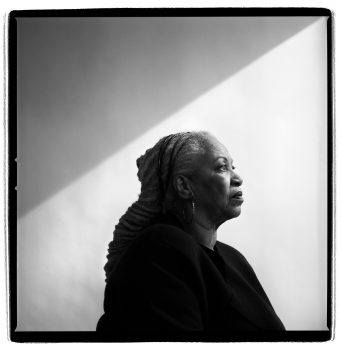 Toni Morrison, the author and Nobel Prize winner, turned 88 on Feb. 18. I have never met Morrison. And while you’ll likely see a donkey fly before you see her stand before a bunch of Harvard undergraduates and sing on demand, the fact is Toni Morrison is very much like Ella Fitzgerald. Like Fitzgerald, she rose from humble beginnings to world prominence. Like Fitzgerald, she is intensely private. And like Fitzgerald, she has given every iota of her extraordinary American-born talent and intellect to the great American dream. Not the one with the guns and bombs bursting in air. The other one, the one with world peace, justice, racial harmony, art, literature, music and language that shows us how to be free wrapped in it. Morrison has, as they say in church, lived a life of service. Whatever awards and acclaim she has won, she has earned. She has paid in full. She owes us nothing.
 Were the humanists wrong to claim that art is good for us, “like Ovaltine and yoga”? Movies have been more like a secret vice, the first and most invasive of the technologies that have progressively estranged us from one another. As a Londoner resettled in San Francisco, Thomson is also keenly aware of the way the medium has duped Americans, convincing them that happy endings are inevitable so long as gun-toting men control the narrative. “Can’t we admit,” he asks, “how much American experience has been rooted in fear?” In one mind-bending paragraph he outlines an alternative pantheon of great American films – including
  “Bloodlines” employs numbered sections, one of Carreira’s favored devices, to divide the poem into a triptych. She uses time and place to distinguish each, taking us from her adolescence in Portugal to early adulthood in New Jersey to the present moment. In the first, the adolescent version of Carreira feels shame about her body—not the first time we encounter, in heartbreaking fashion, the painful self-consciousness of a young narrator—while, at the same time yearning for physical connection. She wants “a God-fearing man,” but she observes that a young neighbor of hers is “a pretty boy.” The end of this section is marked by the advent of menstruation, a hallmark of maturity that doubles as a sign of heritage and hardship. While the neighbor boy collects the material possessions that “make for a good life,” the menstrual signature on the speaker’s bed sheets “promises thorns no bread or gold can dull.” The concrete trappings of health and prosperity are conflated with the promise of a bright future, but “blood,” in all its multi-layered meaning, complicates the simple promise of “bread or gold.” Profoundly, for Carreira, this duality echoes the divided heart of the Portuguese immigrant community in America—one heart striving and struggling forward in its quest for material security and the American Dream, while the other looks backward toward an idealized past that continues to drift further and further out of reach with the passage of time.
 Diderot is known to the casual reader chiefly as an editor of the Encyclopédie—it had no other name, for there was no other encyclopédie. Since the Encyclopédie was a massive compendium of knowledge of all kinds, organizing the entirety of human thought, Diderot persists vaguely in memory as a type of Enlightenment superman, the big bore with a big book. Yet in these two new works of biography he turns out to be not a severe rationalist, overseeing a totalitarianism of thought, but an inspired and lovable amateur, with an opinion on every subject and an appetite for every occasion.
 In 2015 I attended a workshop on political polarization with an eclectic group of scholars and activists. We swapped ideas on resolving battles over climate change, inequality, abortion and gay rights. One obstacle to compromise, a psychologist said, is that many Americans have a visceral, emotional reaction to issues like homosexuality.
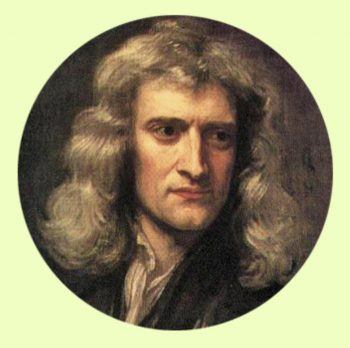 In my 50s, too old to become a real expert, I have finally fallen in love with algebraic geometry. As the name suggests, this is the study of geometry using algebra. Around 1637, René Descartes laid the groundwork for this subject by taking a plane, mentally drawing a grid on it, as we now do with graph paper, and calling the coordinates x and y. We can write down an equation like x2+ y2 = 1, and there will be a curve consisting of points whose coordinates obey this equation. In this example, we get a circle!
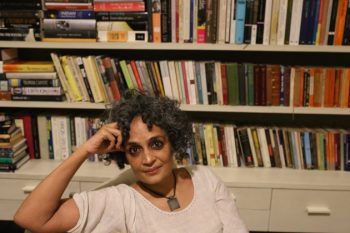 With his reckless “pre-emptive” airstrike on
 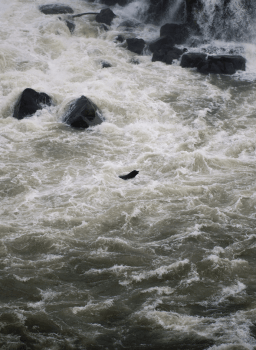 In 1974, after protracted legal efforts and sometimes violent protests, a US district court in Washington State upheld the treaties of the Columbia Plateau tribes. Known as the Boldt Decision, the ruling upended the fishing industry and still angers non-Indian fishermen. It gave tribal members the right to half of the river’s harvestable fish, and it was upheld by the Supreme Court in 1979. (The number considered harvestable varies. Fishery managers meet throughout the year to set limits that will allow weak populations to rebound and tributary stocks to spawn, but the shares are always kept equal between treaty and non-treaty fishers.) The tribes also have access to thirty-one fishing sites closed to others. A long stretch of the lower river is now divided into six fishing zones. The first five zones are in the 145 miles between the mouth of the Columbia and Bonneville Dam. Zone 6 runs above Bonneville for another 147 miles, and commercial fishing can only be done by the tribes there. The Boldt Decision affirmed the right to fish—but it didn’t bring back the fish. It did nothing to mitigate the desperate losses caused by dams, development, and overfishing. By 1995, there were about 750,000 salmon left in the entire Columbia River.