
John Horgan in Scientific American:
 In 1972 Thomas Kuhn hurled an ashtray at Errol Morris. Already renowned for The Structure of Scientific Revolutions, published a decade earlier, Kuhn was at the Institute for Advanced Study in Princeton, and Morris was his graduate student in history and philosophy of science. During a meeting in Kuhn’s office, Morris questioned Kuhn’s views on paradigms, the webs of conscious and unconscious assumptions that underpin, say, Aristotle’s, Newton’s or Einstein’s physics. You cannot say one paradigm is truer than another, according to Kuhn, because there is no objective standard by which to judge them. Paradigms are incomparable, or “incommensurable.” If that were true, Morris asked, wouldn’t history of science be impossible? Wouldn’t the past be inaccessible–except, Morris added, for “someone who imagines himself to be God?” Kuhn realized his student had just insulted him. He muttered, “He’s trying to kill me. He’s trying to kill me.” Then he threw the ashtray at Morris and threw him out of the program.
Morris went on to become an acclaimed maker of documentaries. He won an Academy Award for The Fog of War, his portrait of “war criminal”—Morris’s term—Robert McNamara. His documentary The Thin Blue Line helped overturn the conviction of a man on death row for murder. Morris never forgave Kuhn, who was, in Morris’s eyes, a bad person and bad philosopher. In his book The Ashtray (Or the Man Who Denied Reality), Morris attacks the cult—my term, but I suspect Morris would approve, since it describes a group bound by irrational allegiance to a domineering leader–of Kuhn. “Many may see this book as a vendetta,” Morris writes. “Indeed it is.” Morris blames Kuhn for undermining the notion that there is a real world out there, which we can, with some effort, come to know. Morris wants to rebut this skeptical assertion, which he believes has insidious effects. The denial of objective truth enables totalitarianism and genocide and “ultimately, perhaps irrevocably, undermines civilization.”
More here.
 Lawrence Ferlinghetti
 Consciousness has many aspects, from experience to wakefulness to self-awareness. One aspect is imagination: our minds can conjure up multiple hypothetical futures to help us decide which choices we should make. Where did that ability come from? Today’s guest, Malcolm MacIver, pinpoints an important transition in the evolution of consciousness to when fish first climbed on to land, and could suddenly see much farther, which in turn made it advantageous to plan further in advance. If this idea is true, it might help us understand some of the abilities and limitations of our cognitive capacities, with potentially important ramifications for our future as a species.
 Over the weekend, the Times tried to soften the emotional blow for the millions of Americans trained in these years to place hopes for the overturn of the Trump presidency in Mueller. As with most press coverage, there was little pretense that the Mueller probe was supposed to be a neutral fact-finding mission, as apposed to religious allegory, with Mueller cast as the hero sent to slay the monster.
 A wooden box containing one of the most valuable books in the world arrives in Los Angeles on October 14, 1950, with little more fanfare—or security—than a Sears catalog. Code-named “the commode,” it was flown from London via regular parcel post, and while it is being delivered locally by Tice and Lynch, a high-end customs broker and shipping company, its agents have no idea what they are carrying and take no special precautions.
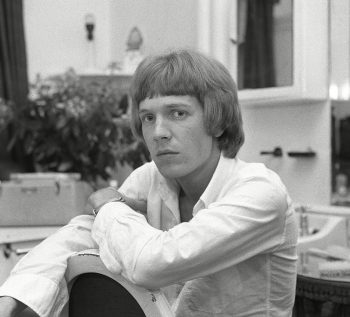 There are a handful of niche artists whom I love to play for friends who have never heard them before. Music critics are infamous for these sorts of overbearing displays—smugly dropping a needle to a record and then staring, expectantly. It’s awful! Yet the first time that a person hears the singer Scott Walker—who died on Friday, in London, at the age of seventy-six—a palpable transformation occurs, and it’s extraordinary to witness. At first,
 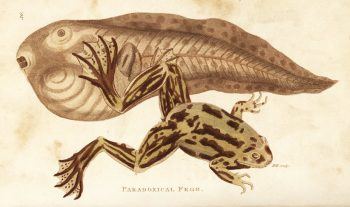 As a child growing up in the Netherlands, Hanna ten Brink spent many days lingering by a pond in her family’s garden, fascinated by metamorphosis. Tadpoles hatched from eggs in the pond and swam about, sucking tiny particles of food into their mouths. After a few weeks, the tadpoles lost their tails, sprouted legs and hopped onto land, where they could catch insects with their new tongues. Eventually Dr. ten Brink became an evolutionary biologist. Now science has brought her back to that childhood fascination. Eighty percent of all animal species experience metamorphosis — from frogs to flatfish to butterflies to jellyfish. Scientists are deeply puzzled as to how it became so common.
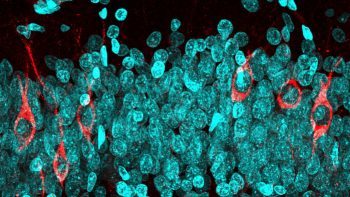 One of the thorniest debates in neuroscience is whether people can make new neurons after their brains stop developing in adolescence—a process known as neurogenesis. Now, a new study finds that even people long past middle age can make fresh brain cells, and that past studies that failed to spot these newcomers may have used flawed methods. The work “provides clear, definitive evidence that neurogenesis persists throughout life,” says Paul Frankland, a neuroscientist at the Hospital for Sick Children in Toronto, Canada. “For me, this puts the issue to bed.” Researchers have long hoped that neurogenesis could help treat brain disorders like depression and Alzheimer’s disease. But last year, a study in Nature reported that
 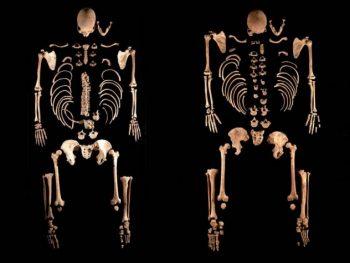 WHAT SECRETS DO THE EAR BONES
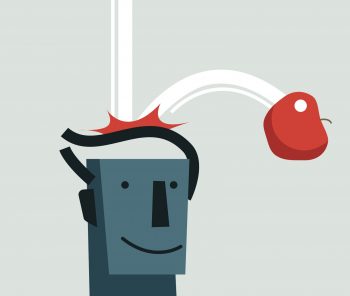 Every wild species on the planet knows to eat the diet to which it is adapted. Carnivores know to eat meat; herbivores know to eat leaves and grass; koalas know to eat eucalyptus, and giant pandas know to eat bamboo. We, too, are animals; we too, once knew what to eat based on that same blend of cultural experience and instinct. Science should only have served to enhance our native understanding. Instead, we have so abused the applications of science to nutrition that while pandas keep eating bamboo, humans are being bamboozled.
 Capitalism, like the United States itself, has a mythology, and for five decades one of its central characters has been the nineteenth-century maverick cigarette entrepreneur, James B. Duke. Duke’s risk-taking investment in the newfangled machine-made cigarette, so the story goes, displaced the pricey, hand-rolled variety offered by his stodgy competitors. This, in turn, won Duke control of the national, and soon global, cigarette market. Repeated ad nauseam in
  As I looked around, Julia said, “People are always surprised my kitchen is not more high tech.” Actually, I had imagined it would resemble one of the glamorous sets on The French Chef. My first thought was, “Where is the island? Julia Child always works at an island.” I admit now to being a little disappointed. I had been fooled by the illusion of TV. What I saw instead was a smallish, old-fashioned, eat-in kitchen with cluttered countertops and cabinets seriously in need of painting. By then it was nearly 30 years old—and it looked its age. Yet, the more I looked around, the more I realized that it was a fascinating and important place, with its old stove and its batterie de cuisine, with what looked like thousands of glistening cooking implements close at hand. It was a very comfortable and welcoming workroom full of carefully chosen tools and fixtures. Here are some of the most important things I noticed that day.
 Last April, I decided to set up a satirical account on Twitter under the guise of radical intersectionalist poet
  Most Americans still cling to the meritocratic notion that people are rewarded according to their efforts and abilities. But meritocracy is becoming a cruel joke.
 I suppose it’s true that “Democracy Dies in Darkness,” as the Washington Post’s slogan says. But journalism may also die, by morphing into forms that can no longer be described as journalism. Journalism may come to mean a crooked scandal sheet, or high-minded propaganda. Sometimes squalor and self-righteousness are equally disreputable. The Post’s apothegm, somehow off-kilter, with its alliteration and self-importance, was a purposeful bit of branding, designed to claim high ground and to poke a thumb in President Trump’s eye every morning. Such partisan intent detracts from the slogan’s claim to universality. The self-serving implication—the notion that, against the Darkness, the Washington Postrepresents the Light—invites the reader to respond (as readers have always responded to the Chicago Tribune’s slogan, “The World’s Greatest Newspaper”) by muttering, “I’ll be the judge of that, pal.”