
Mohammed Hanif in The Guardian:
 You can find the news about Pakistan’s war on women buried deep inside the metro pages of Urdu newspapers. I stumbled upon it a few years ago. I noticed that I could pick up my newspaper and almost every day find news about a murdered woman. I thought maybe it’s a coincidence, maybe Karachi is a huge city, these things happen. But it went on and on. It became so routine that I could pick up the paper, open the exact same pages, just like you can bet that you’ll find a crossword or letters to the editor, and it was always there.
Names changed, localities changed, the relationship between the murdered and her murderer changed and of course there were minor variations on how she was killed and where the body was found, but it was always there: single column, one and a half inches. Often the woman wasn’t even named: she was someone’s sister or mother of four, or the girl who ran away with her lover or the girl who refused to marry a suitor. Sometimes the news made it to the front page of the metro section but for that the murder had to be particularly gruesome, or the killer had killed himself after killing the woman, or the victim was very young, or the murderer killed the children along with the mother. That last one usually ends up on the front page if it’s a slow news day.
More here.
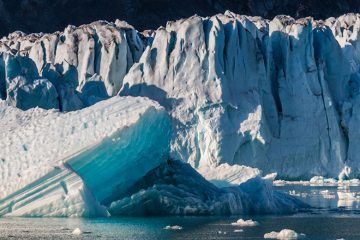 Ice remembers forest fires and rising seas. Ice remembers the chemical composition of the air around the start of the last Ice Age, 110,000 years ago. It remembers how many days of sunshine fell upon it in a summer 50,000 years ago. It remembers the temperature in the clouds at a moment of snowfall early in the
  Nusrat Jahan Rafi
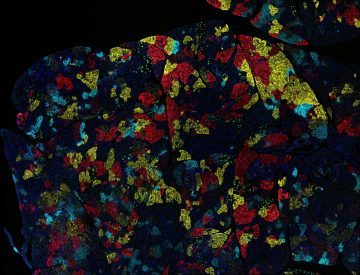 To better understand and treat cancer, physicians need to stop oversimplifying its causes. Cancer results not solely from genetic mutations but by adapting to and thriving in micro-environments in the body.
 New research has shown that the last surviving flightless species of bird, a type of rail, in the Indian Ocean had previously gone extinct but rose from the dead thanks to a rare process called ‘iterative evolution’. The research, from the University of Portsmouth and Natural History Museum, found that on two occasions, separated by tens of thousands of years, a rail species was able to successfully colonise an isolated atoll called Aldabra and subsequently became flightless on both occasions. The last surviving colony of flightless rails is still found on the island today.
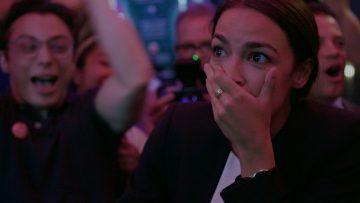 A scene near the end of the new documentary Knock Down the House finds Alexandria Ocasio-Cortez, five days after her surprise win in the 2018 primary, visiting the landmark that would soon become her office. Perched on a ledge in front of the U.S. Capitol, the building sprawling and gleaming in the midsummer sun, the Democratic nominee for New York’s 14th Congressional District talks about an earlier visit to Washington, D.C. “When I was a little girl, my dad wanted to go on a road trip with his buddies,” she says. “I wanted to go so badly. And I begged and I begged and I begged, and he relented. And so it was like four grown men and a 5-year-old girl went on this road trip from New York. And we stopped—we stopped here.”
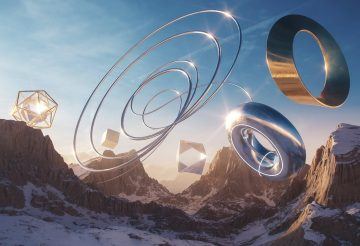 Mountain climbing is a beloved metaphor for mathematical research. The comparison is almost inevitable: The frozen world, the cold thin air and the implacable harshness of mountaineering reflect the unforgiving landscape of numbers, formulas and theorems. And just as a climber pits his abilities against an unyielding object — in his case, a sheer wall of stone — a mathematician often finds herself engaged in an individual battle of the human mind against rigid logic.
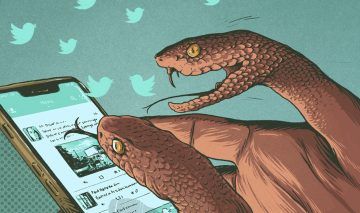 Across the political spectrum, a consensus has arisen that Twitter, Facebook, YouTube, and other digital platforms are laying ruin to public discourse. They trade on snarkiness, trolling, outrage, and conspiracy theories, and encourage tribalism, information bubbles, and social discord. How did we get here, and how can we get out? The essays in this symposium seek answers to the crisis of “digital discourse” beyond privacy policies, corporate exposés, and smarter algorithms.
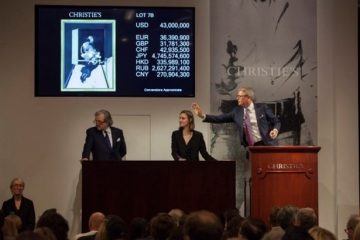 Looking at this market through the eyes of an investor, what can art offer? Like, say, real estate, it boasts strong capital gains over the longer term. Of the 600% growth in turnover since 1990, price escalation has been a major contributor, albeit skewed toward higher priced works. Advocates say that returns on art investments are uncorrelated with the returns from other asset classes, making it attractive for inclusion in a diversified portfolio. Art is both durable and highly mobile. Various airports in Europe and elsewhere host tax free storage zones where valuable artworks can be held. If a painting quietly changes hands and moves from one storage suite to another, who is to know? Individuals unhappy with their tax bills or nervous about their spouse’s divorce lawyers have been known to exploit these characteristics to great effect. And, of course, art emphatically offers aesthetic returns – it looks great on the living room walls while you await the capital gains.
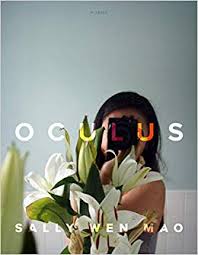 Mao was born in Wuhan, China, and moved to the United States at age five. She draws upon her experience of Chinese and Asian American visual culture, which saturates the book with allusions so dense the text requires endnotes. Her landscape is the detritus of television and cinema and internet webcams, the jetstream of the image in an era when most everything has become visual matter. In the aforementioned interview with the Creative Independent, Mao describes the themes at the heart of Oculus: “It’s obsessed with spectacle and being looked at, but it also is aware of all the violence that comes with being looked at.”
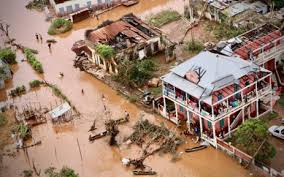 I manage to travel two weeks after the cyclone. The pilot of the plane is a friend and he tells me that he is going to fly over the area around my city so that I can see the extent of the flooding. He’s right to show me: for miles around, the land is sea. Villages and small towns that I would normally recognize are still under water. I regret sitting next to the window. I regret not taking Dany’s advice to cancel my trip. I remember the moment my brothers decided to go to visit the body of my father in the morgue. I refused to go with them. I wanted to find again the living expression and warm hands of the man who gave me life. And once more, I’m torn apart by what I must confront. Beneath me is my decapitated city. I have to wipe my eyes to keep on looking. The other passengers are filming and taking photographs. And all this is unreal to me. I’m the last to leave the plane, as if afraid of not knowing how to walk on that ground, my first ground. As children, we don’t say goodbye to places. We always think that we’ll come back. We believe that it’s never the last time. And that trip had the bitter taste of goodbye.
 First published in 1964, Susan Sontag’s essay Notes on Camp remains a groundbreaking piece of cultural activism. Sontag’s achievement was to give a name to an aesthetic that was everywhere yet until then had gone largely unremarked. It was visible in
  Plastic pollution in the world’s oceans may have an impact of $ 2.5 billion, adversely affecting “almost all marine ecosystem services”, including areas such as fishing, recreation and heritage. But a breakthrough from researchers at Berkeley Lab may be the solution the planet needs for this eye-opening problem – recyclable plastic. The study, published in Nature Chemistry, describes how the researchers could find a new way to assemble plastic and reuse them “to new materials of any color, shape or shape.” “Most plastic materials were never made to be recycled,” says senior author Peter Christensen, a postdoctoral researcher at Berkeley Lab’s molecular foundry, in the statement. “But we have discovered a new way to assemble plastic that takes into account recycling from a molecular perspective.”
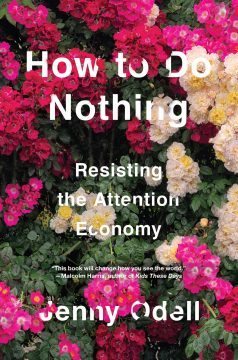 In 2015, Jenny Odell started an organization she called
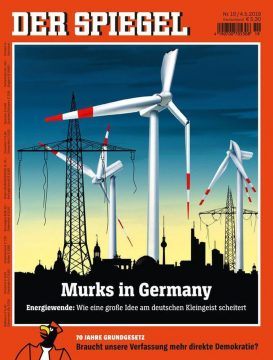 Over the last decade, journalists have held up Germany’s renewables energy transition, the Energiewende, as an environmental model for the world.
 Is anyone free to decide her own destiny? Or is the course of her life determined by prior events? Since so many of our decisions operate under constraints of various kinds — the imperative to do something or be somewhere at a fixed time — is free will an illusion? The question takes on added significance given the overwhelming economic imperative to survive in a vicious world. So much of what we desire nowadays is not so much “unthinkable” — we can always dream — as practically impossible. What hope is there of recovering possibility from a world in which the future has become as predictable as the next rent day?