
From The New York Times:
Toni Morrison spoke at Harvard Divinity School on the subject of altruism in 2012. Her lecture is published here for the first time.
 On an October morning in 2006, a young man backed his truck into the driveway of a one-room schoolhouse. He walked into the school and after ordering the boy students, the teacher and a few other adults to leave, he lined up 10 girls, ages 9 to 13, and shot them. The mindless horror of that attack drew intense and sustained press as well as, later on, books and film. Although there had been two other school shootings only a few days earlier, what made this massacre especially notable was the fact that its landscape was an Amish community — notoriously peaceful and therefore the most unlikely venue for such violence.
Before the narrative tracking the slaughter had been exhausted in the press, another rail surfaced, one that was regarded as bizarre and somehow as shocking as the killings. The Amish community forgave the killer, refused to seek justice, demand vengeance, or even to judge him. They visited and comforted the killer’s widow and children (who were not Amish), just as they embraced the relatives of the slain. There appeared a number of explanations for their behavior — their historical aversion to killing anyone at all for any reason and their separatist convictions. More to the point, the Amish community had nothing or very little to say to outside inquiry except that it was God’s place to judge, not theirs. And, as one cautioned, “Do not think evil of this man.” They held no press conferences and submitted to no television interviews. They quietly buried the dead, attended the killer’s funeral, then tore down the old schoolhouse and built a new one.
Their silence following the slaughter, along with their deep concern for the killer’s family, seemed to me at the time characteristic of genuine “goodness.” And I became fascinated with the term and its definition.
More here.
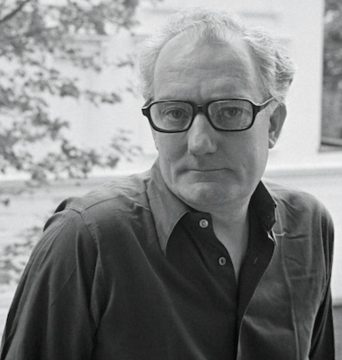 When I met him, Bryan Magee was nearly 89, marvellously lucid, curious to hear about my time at Oxford, and paralysed from the waist down: in many ways the ideal interviewee. For a generation of young viewers, Magee’s legendary television series about philosophy were a baptism in the waters of the subject, and he the urbane and worldly gatekeeper to a realm of theoretic abstraction and grounded, vigorous discussion such as had never before been entered—a watershed moment in a primetime slot.
 India’s decision two days ago to revoke most of Article 370 of its constitution and annex the part of Jammu & Kashmir it holds has sent Subcontinental and transcontinental punditocracy into a frenzy of analysis, interpretation, speculation, and prediction. Several scenarios have risen to the surface.
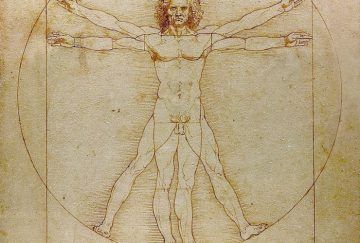 In recent years, biology’s “nature vs. nurture” war has reemerged with advanced weapons, although the central questions have not changed: What makes us human? Why are we different from one another? Nonetheless, the methods used to address them have undergone several revolutions. We now benefit from hundreds of twin and adoption studies, which have provided heritability estimates for dozens of characteristics relating to human behavior and wellness. Simultaneously, we are reaping the benefits of technological breakthroughs that have made it possible to screen thousands of individuals to uncover genes associated with particular traits. Thanks to this, we have been able to correlate genetic signatures with a growing list of physical (e.g., height, skin color), physiological (e.g., risk for type-2 diabetes, hypertension), and behavioral (e.g., risk for depression, autism) traits. At the same time, epidemiology, psychology, and sociology continue to demonstrate the pliability of the human experience across populations, and we continue to learn more about the social forces that create vast differences in the human experience.
 We’ve got these bodies and these brains, which work okay, but we also have minds. We see, we hear, we think, we feel, we plan, we act, we do; we’re conscious. Viewed from the outside, you see a reasonably finely tuned mechanism. From the inside, we all experience ourselves as having a mind, as feeling, thinking, experiencing, being, which is pretty central to our conception of ourselves. It also raises any number of philosophical and scientific problems. When it comes to explaining the objective stuff from the outside—the behavior and so on—you put together some neural and computational mechanisms, and we have a paradigm for explaining those.
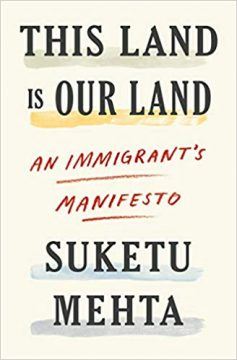 “I claim the right to the United States, for myself and my children and my uncles and cousins, by manifest destiny.” The claimant is Suketu Mehta, in This Land Is Our Land: An Immigrant’s Manifesto. The reference to manifest destiny isn’t merely trolling. Mehta’s thesis is that extensive migration from poor parts of the globe to the US is as inevitable and justified as the westward migration that built this country. He goes on:
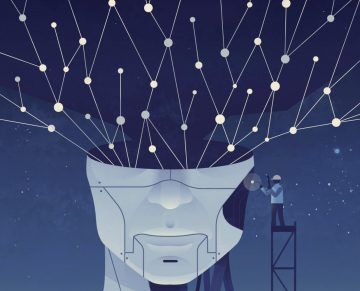 When we design a skyscraper we expect it will perform to specification: that the tower will support so much weight and be able to withstand an earthquake of a certain strength.
 The cheerleaders for Prime Minister Narendra Modi of India are cheering for Partition redux, a world-class massacre, ethnic cleansing. The brute power of Hindu supremacy has its own logic, and it requires not only that Kashmiris be denied a future but also that they be humiliated and punished for their past sin of not being grateful Indians. While individual Indian Muslims across the country are being lynched for trading beef or
  The authors find little proof of increasing busyness among the population. Yes, as expected, people were spending far more time on digital devices in 2015 than they were in 2000. But the data provides little evidence that people now spend more time multitasking or that they’re switching more often from one activity to another, which might make our time seem fragmented and frantic.
 In novels spanning several hundred years of history, Toni Morrison used her historical imagination and her remarkable gifts of language to chronicle the horrors of slavery and Jim Crow, and their continuing fallout on the everyday lives of black Americans. Violent, heart-wrenching events occur in her fiction: a runaway slave named Sethe cuts the throat of her baby daughter with a handsaw to spare her the fate she suffered herself as a slave (
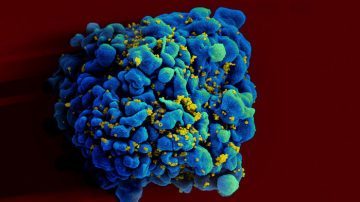 Drugs work stunningly well to control HIV—but not in everyone, and not without side effects. That’s why a small cadre of patients known as elite controllers has long fascinated researchers: Their immune system alone naturally suppresses HIV for decades without drugs. Now one team, inspired by success in mice, hopes to endow HIV-infected people with tailormade immune cells that target HIV, in effect creating elite controllers in the clinic. The immune strategy has risks, but it builds on increasingly popular cancer treatments with T cells engineered to have surface proteins, called chimeric antigen receptors (CARs), that can recognize markers on the surfaces of tumor cells and destroy the cancer. Such CAR T cells can also be tailored to identify and eliminate HIV-infected cells. This approach was tested in HIV-infected humans long before CAR T cells proved their worth against cancer, but it roundly failed. The field wants “to move what’s been learned from cancer back to HIV, completing the circle,” says Steven Deeks, an HIV/AIDS clinician at the University of California, San Francisco, who first tested a CAR T cell against the virus in the late 1990s.
 I think it’s very difficult to make the case for an objective morality if you’re using the word ‘objective’ in a strong sense, either to mean a universal morality or a foundational morality that all people everywhere understand and accept in a globalising world.
 Fiction shines a light on the human condition by putting people into imaginary situations and envisioning what might happen. Science fiction expands this technique by considering situations in the future, with advanced technology, or with utterly different social contexts. Seth MacFarlane’s show The Orville is good old-fashioned space opera, but it’s also a laboratory for exploring the intricacies of human behavior. There are interpersonal conflicts, sexual politics, alien perspectives, and grappling with the implications of technology. I talk with Seth about all these issues, and maybe a little bit about whether it’s a good idea to block people on Twitter.
 The mass shootings over the weekend in El Paso, Texas, and Dayton, Ohio, killed at least 31 people and wounded scores more. Those incidents were just the latest such deadly attacks in the United States, which has tallied more than 250 since Jan. 1, according to a new report by