
James McElvenny in Aeon:
 Switching between languages, we may feel as if we are stepping from one world into another. Each language seemingly compels us to talk in a certain way and to see things from a particular perspective. But is this just an illusion? Does each language really embody a different worldview, or even dictate specific patterns of thought to its speakers?
In the modern academic context, such questions are usually treated under the rubrics of ‘linguistic relativity’ or the ‘Sapir-Whorf hypothesis’. Contemporary research is focused on pinning down these questions, on trying to formulate them in rigorous terms that can be tested empirically. But current notions concerning connections between language, mind and worldview have a long history, spanning several intellectual epochs, each with their own preoccupations. Running through this history is a recurring scepticism surrounding linguistic relativity, engendered not only by the difficulties of pinning it down, but by a deep-seated ambivalence about the assumptions and implications of relativistic doctrines.
There is quite a bit at stake in entertaining the possibility of linguistic relativity – it impinges directly on our understanding of the nature of human language. A long-held assumption in Western philosophy, classically formulated in the work of Aristotle, maintains that words are mere labels we apply to existing ideas in order to share those ideas with others. But linguistic relativity makes language an active force in shaping our thoughts.
More here.
 People would later say
 Scientists and philosophers sometimes advocate pretty outrageous-sounding ideas about the fundamental nature of reality. (Arguably I have been guilty of this.) It shouldn’t be surprising that reality, in regimes far away from our everyday experience, fails to conform to common sense. But it’s also okay to maintain a bit of skepticism in the face of bizarre claims. Philosopher Eric Schwitzgebel wants us to face up to the weirdness of the world. He claims that there are no non-weird ways to explain some of the most important features of reality, from quantum mechanics to consciousness.
 Normally at Five Books we ask experts to recommend the best books in their field and talk to us about them in an interview, either in person, by phone or via Zoom. In January 2023, we asked the AI bot, ChatGPT, to recommend books to us on the topic of AI. Being an AI doesn’t necessarily make the chatbot an expert on AI books, but we thought it might have some ideas. This week we caught up with ChatGPT to find out if there were any new AI books it wanted to recommend in the year since we spoke.
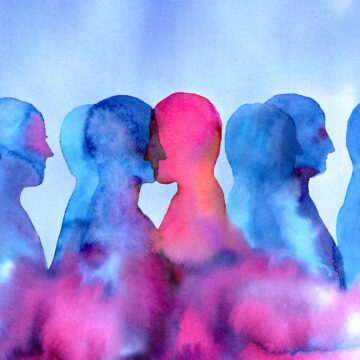 A somewhat obscure text, about 2,000 years old, has been my unlikely teacher and guide for the past many years, and my north star these last several months, as so many of us have felt as if we’ve been drowning in an ocean of sorrow and helplessness. Buried deep within the Mishnah, a Jewish legal compendium from around the third century, is an ancient practice reflecting a deep understanding of the human psyche and spirit: When your heart is broken, when the specter of death visits your family, when you feel lost and alone and inclined to retreat, you show up. You entrust your pain to the community. The text,
 A
A I had two memorable experiences with the moon this year. The first was seeing the
  It struck me recently that it’s been quite some time since I last heard anyone speak of the importance of maintaining a “work/life balance”. Like co-dependency, like low blood-sugar,
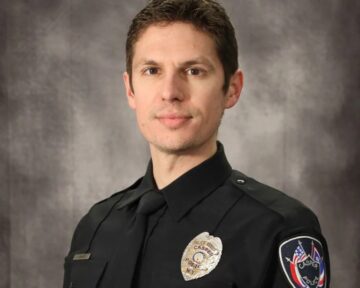 This might sound as though Lincowski is a crime-fighting hunter of aliens in a Marvel superhero film, and that interpretation isn’t far off. Until the end of last year, Lincowski worked as a police detective in Casper, Wyoming, from Monday to Thursday. And on Fridays, he looked for signs of life on planets beyond the Solar System, as part of a research team at the University of Washington in Seattle. Earlier this month, he started working as a mathematician at Eastern Wyoming College in Torrington, where he will be teaching mainly 18–21-year-old students. However, he will continue his one-day-a-week planetary science research at Washington.
 GAZANS HAVE INDEED SOUGHT OUR EYES and attention amid these days of peril. Defying Israel’s