
Karen Swallow Prior at Marginalia Review of Books:
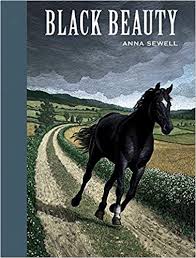 It is perhaps partially owing to this plain style that Black Beauty is now classified as children’s literature. (But it is perhaps owing, too, to a modern day disdain for simple things like manual labor, animals, imagination, and kindness.) During the mid-Victorian era, children’s literature was a still-developing category of books. The fact is that Sewell was writing for men. And she was read by them, too, as one review attests: “Both men and boys read it with the greatest avidity, and many declare it to be ‘the best book in the world’.”
While horse stories and talking animals are relegated today to children (especially girls), literary categories were less rigid then. So although the premise—a tale narrated by a horse—might seem childish to modern day readers, such a conceit was a novelty, edgy even, in its day.
more here.
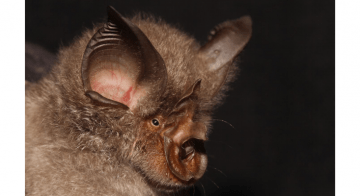 Long before the first reports of a new flu-like illness in China’s Hubei province, a bat—or perhaps a whole colony of them—was flying around the region carrying a new type of coronavirus. At the time, the virus was not yet dangerous to humans. Then, around the end of November, it underwent a slight additional mutation, evolving into the viral strain we now call SARS-CoV-2. With that flip of viral RNA, so began the COVID-19 pandemic. As in almost every outbreak, the mutations that set off this global crisis went undetected at first, even though the family of coronaviruses was already known to cause a variety of human diseases. “These viruses have long been understudied and have not been given the attention or funding they have deserved,” Craig Wilen, a virologist at Yale University, told me.
 Scientists agree that the main means by which the SARS-CoV-2 virus jumps from an infected person to its next host is
 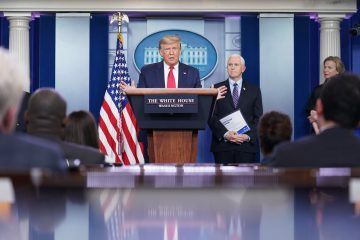 Of all the resources lacking in the Covid-19 pandemic, the one most desperately needed in the United States is a unified national strategy, as well as the confident, coherent and consistent leadership to see it carried out. The country cannot go from one mixed-message news briefing to the next, and from tweet to tweet, to define policy priorities. It needs a science-based plan that looks to the future rather than merely reacting to latest turn in the crisis.
 What direction does time point in? None, really, although some people might subconsciously put the past on the left and the future on the right, or the past behind themselves and the future in front, or many other possible orientations. What feels natural to you depends in large degree on the native language you speak, and how it talks about time. This is a clue to a more general phenomenon, how language shapes the way we think. Lera Boroditsky is one of the world’s experts on this phenomenon. She uses how different languages construe time and space (as well as other things) to help tease out the way our brains make sense of the world.
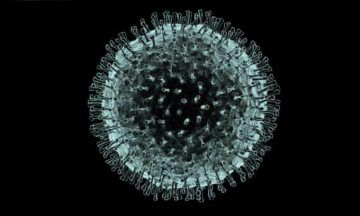 Defeating Covid-19 will call for more than vaccines; it will involve quarantines, social distancing, antivirals and other drugs, and healthcare for the sick. But the idea of a vaccine – the quintessential silver bullet – has come to bear an almost unreasonable allure. The coronavirus arrived at a ripe moment in genetic technology, when the advances of the past half-decade have made it possible for vaccine projects to explode off the blocks as soon as a virus is sequenced. These cutting-edge vaccines don’t use weakened forms of the germ to build our immunity, as all vaccines once did; rather, they contain short copies of parts of the germ’s genetic code – its DNA or RNA – which can produce fragments of the germ within our bodies.
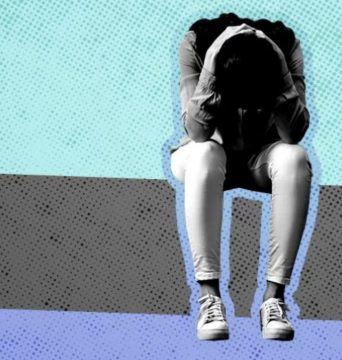 In response to the swiftly escalating COVID-19 epidemic, whole countries are
  As hundreds of millions of people, maybe billions, avoid social contact to spare themselves and their communities from coronavirus, researchers are discussing a dramatic approach to research that could help end the pandemic: infecting a handful of healthy volunteers with the virus to rapidly test a vaccine. Many scientists see a vaccine as the only solution to the pandemic. Clinical safety trials began this month for one candidate vaccine, and others will soon follow. But one of the biggest hurdles will be showing that a vaccine works. Typically, this is done through large phase III studies, in which thousands to tens of thousands of people receive either a vaccine or a placebo, and researchers track who becomes infected in the course of their daily lives. A quicker option would be to conduct a ‘human challenge’ study, argue scientists in a provocative preprint published this week
 Jake Wojtowicz in Aeon:
 Christopher Mackin in TNR:
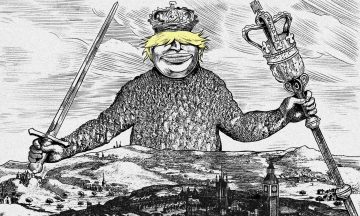 David Runciman in The Guardian: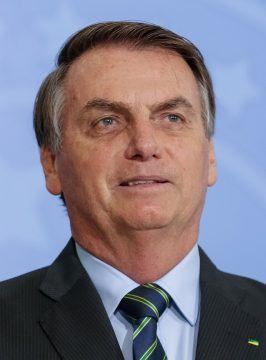
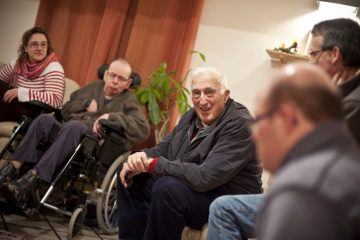 People around the world are processing the news that the revered spiritual leader