
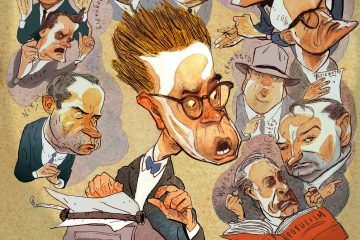
 Chris Lehman in TNR:
Hofstadter debuted his argument in his Pulitzer Prize–winning 1955 study The Age of Reform, and as the Cold War drove American politics, on the right especially, into operatic new registers of derangement, Hofstadter updated and expanded this general theory of cultural lag into a diagnosis of the distempers of the reactionary anti-modern mind. The two works now anthologized by the Library of America, Anti-Intellectualism in American Life (1963) and The Paranoid Style in American Politics (1964), showcase Hofstadter’s most ambitious efforts to supply a unified theory of the American romance with cultural reaction.
Of the two, Anti-Intellectualism in American Life (which also won a Pulitzer Prize) is the more engaging study, and in its strongest sections the book lands a sharp argument for the autonomy of intellectual inquiry in an American educational tradition that’s proved all too vulnerable to philosophic fads and watery, low-cost brands of socially minded sloganeering. Like The American Political Tradition, it’s a synthetic interpretation of the full sweep of American history. But instead of disinterring the shared material interests of the American leadership caste, as he did in that book, here Hofstadter charts the shifting fortunes of intellectuals as a class and the life of the mind as a precarious redoubt of cultural privilege.
More here.
 Dirk Philipsen in Aeon:
 In 1937 the art critic
  Perhaps more important than the way Dryer’s paintings have continued to live in the memories of those who saw them in the Eighties and early Nineties is the way her name has lived on as a kind of password among certain younger abstract painters who may never, or only rarely, have had a chance to see her work in person. In an article published in the Brooklyn Rail in 2012, the English painter and critic David Rhodes recalled his impression, reading in London about Dryer’s work years before, “that New York had done it again; a tradition was being recoined and revitalized,” thanks to her “taking a long look at abstraction and quickly coming up with something fresh and new.” Her reputation continued to circulate, sub rosa, among painters hoping to work with abstraction without bombast or the illusion of progress, to paint in ways that might be at once more intelligent and more full of feeling, more playful and yet more earnest.
 HBO’s “Bad Education,” coming out on Saturday, is a dramatization of a real-life school-district scandal that occurred on Long Island. I took note of the scandal when it first unfolded, in the early two-thousands, because I graduated from the institution at its center, Roslyn High School, three decades earlier (though my family connection to the town was already long over). What’s fascinating and significant about the film, which is written by Mike Makowsky and directed by Cory Finley, is that it takes a serious look not at Roslyn’s idiosyncrasies (“Bad Education” doesn’t dwell on local curiosities) but at the traits that Roslyn shares with more or less every prosperous suburb in America. It’s a story of aspirations and dreams, of the striving for wealth and the perpetuation of its privileges, and of the systems by which that process of heightened stratification, of upward mobility for those already on top, is sustained. It’s also a movie that exemplifies the unchallenged movie convention of distilling a complex story into information snippets, each with its own specific emotional orientation, that fit together so precisely and so tightly that, rather than exploring its implications, it seals them out.
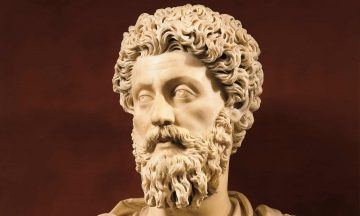 The Roman emperor Marcus Aurelius Antoninus was the last famous Stoic philosopher of antiquity. During the last 14 years of his life he faced one of the worst plagues in European history. The Antonine Plague, named after him, was probably caused by a strain of the smallpox virus. It’s estimated to have killed up to 5 million people, possibly including Marcus himself. From AD166 to around AD180, repeated outbreaks occurred throughout the known world. Roman historians describe the legions being devastated, and entire towns and villages being depopulated and going to ruin. Rome itself was particularly badly affected, carts leaving the city each day piled high with dead bodies.
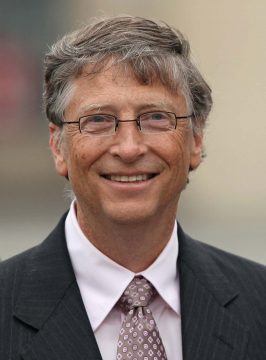 The coronavirus pandemic pits all of humanity against the virus. The damage to health, wealth, and well-being has already been enormous. This is like a world war, except in this case, we’re all on the same side. Everyone can work together to learn about the disease and develop tools to fight it. I see global innovation as the key to limiting the damage. This includes innovations in testing, treatments, vaccines, and policies to limit the spread while minimizing the damage to economies and well-being.
 Someone must have been telling lies about Jared K., for one fine morning without having done anything wrong, or right for that matter—without having done anything save run a major metropolitan newspaper into the ground and kick thousands of poor people out of their apartments—he was put in charge of the nation’s pandemic response. This had never happened to K. before. Except for that time he was put in charge of the border wall. And opioids. And prison reform. And presidential pardons. And the Middle East peace process. “I’d better get someone in authority to help me,” K. said. But there was no one.
 CH: Yes. I’m not sure atheism, as we now know it, was generally available as an option for 17th-century thinkers. By “atheism” I mean a total rejection of any sort of divine being. There may have been a few real radicals who proclaimed such a belief, but encountering them in those days must have been like meeting someone today who denies the existence of electrons. Some sort of divinity metaphysics was woven into the very fabric of metaphysics back then – maybe the biblical God, maybe a less specific divine person, maybe an impersonal divine force, maybe something falling between these notions. But to think that there wasn’t some sort of special being ushering into existence the world with its laws of nature must have seemed like a non-starter. Even Hume, in the next century, couldn’t shake the idea that there probably was some sort of Big Designer, if we take the conclusion of his dialogues to represent his view. It’s not until the 19th century, with the postulation of deep time, that atheism in our sense becomes really thinkable.
 Indeed, from the beginning, the popular response to Greta Thunberg has displayed some of the characteristics of a millenarian movement, as described by Norman Cohn in his classic study The Pursuit of the Millennium (1957). The millenarian movements of the Middle Ages, Cohn writes in that indispensable book, appealed to “an unorganised, atomized population”; they tended to take place “against a background of disaster” (plague, famine, economic crisis); they were “salvationist” in tendency (imagining the redemption of the world through struggle); they convocated around “intellectuals or half-intellectuals”, figures of humble rank perceived by their followers as prophets or messiahs, leaders who possessed “a personal magnetism which enabled [them] to claim, with some show of plausibility, a special role in bringing history to its appointed consummation”.
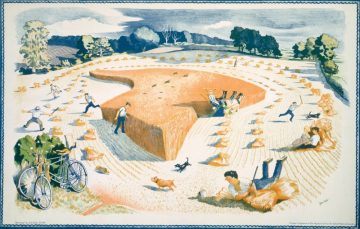 There is little evidence in Harvesting, a charming and amusing picture of harvesters, rabbit catchers, idlers and canoodlers that the artist, John Nash (1893-1977), was a painter haunted by his experiences of the First World War. In 1917 his regiment, the Artists Rifles, was involved in a counter-attack against the Germans near Cambrai. As the men went over the top, he recalled, there was silence and then: “Suddenly the Germans opened up and that seemed to be every machine gun in Europe…” Of the 80 men who climbed out of the trenches, only 12 returned alive and unfounded: Nash was one of them. Although his brother Paul was a better known war artist, John’s 1918 painting of the episode, Over the Top, poignantly captures the leaden-footed fatalism of the soldiers – not just weary but life-weary – as they trudge into no man’s land towards their deaths.
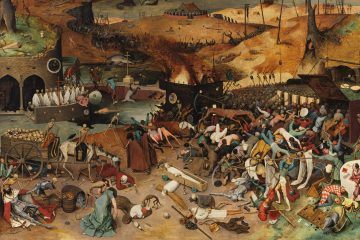 The panic began the moment the earliest cases were confirmed. Those with means hurriedly packed their belongings and fled the city. Those who stayed had a range of reactions: many laid siege to the markets, stocking up on provisions before barricading themselves and their families in their homes; some congregated in churches while others consulted astronomers and fortune-tellers; many more, dismissive of the invisible disease or the visible fear it stoked in the masses, continued their lives unabated. These individuals were the first to die. The government acted swiftly. Invoking emergency measures passed in earlier times, the mayor issued a series of orders that aggressively changed life in the city. Public events and gatherings were banned, schools were closed and the city was divided into more readily policeable quarters. Infected individuals were locked in their houses with their families and were forbidden from leaving under the penalty of death. Upstanding citizens, deputized in various capacities as searchers, examiner, and watchmen, were — under the penalty of death — tasked with overseeing this quarantine. The city in question is not Wuhan or Milan or Manhattan. It is London and the year is 1665. Before the end of 1666, the Bubonic Plague will kill roughly one-quarter of the city’s population. As devastating as this figure is, it could have been much worse.
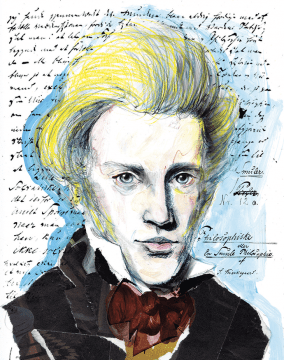 Throughout its history, philosophy has been marked by figures who sought to demolish the prevailing intellectual systems of their moment—to practice “philosophy with a hammer,” as Friedrich Nietzsche put it—in order to look with fresh eyes at the most urgent human problems. As depicted in Plato’s early dialogues, Socrates railed against professional Sophists who charged fees to engage in what amounted to rhetorical games. By contrast, he merely wandered the agora, posing pointed questions about life’s meaning to anyone who’d listen. He insisted that he had no new knowledge to impart: his wisdom lay entirely in recognizing his own ignorance. He devoted his energy to unsettling commonly held beliefs rather than imposing his own, and he spoke of himself as an annoyance, a gadfly stinging a complacent Athenian society. To much of that society he was a laughingstock, but he also attracted a substantial following, for whom his personal example—his ironic temperament; his embrace of poverty and his detachment from worldly matters; and, especially, his equanimity in the face of death—signified at least as much as the content of his thought.
 India is the world’s second most populous country. Yet it boasts one of the globe’s lowest levels of public expenditure on health care, just 1.3 percent of GDP, less than a fifth of what the European Union countries invest. Knowing this, the government recognized the virus as a grave, perhaps catastrophic, threat. Public health officials heroically pursued contact tracing. “Social distancing” and “self-isolation” rapidly entered the national lexicon. By March 23, with the number of confirmed cases nearing five hundred, the government had prudently shut down all domestic and international flights and hardened its borders.
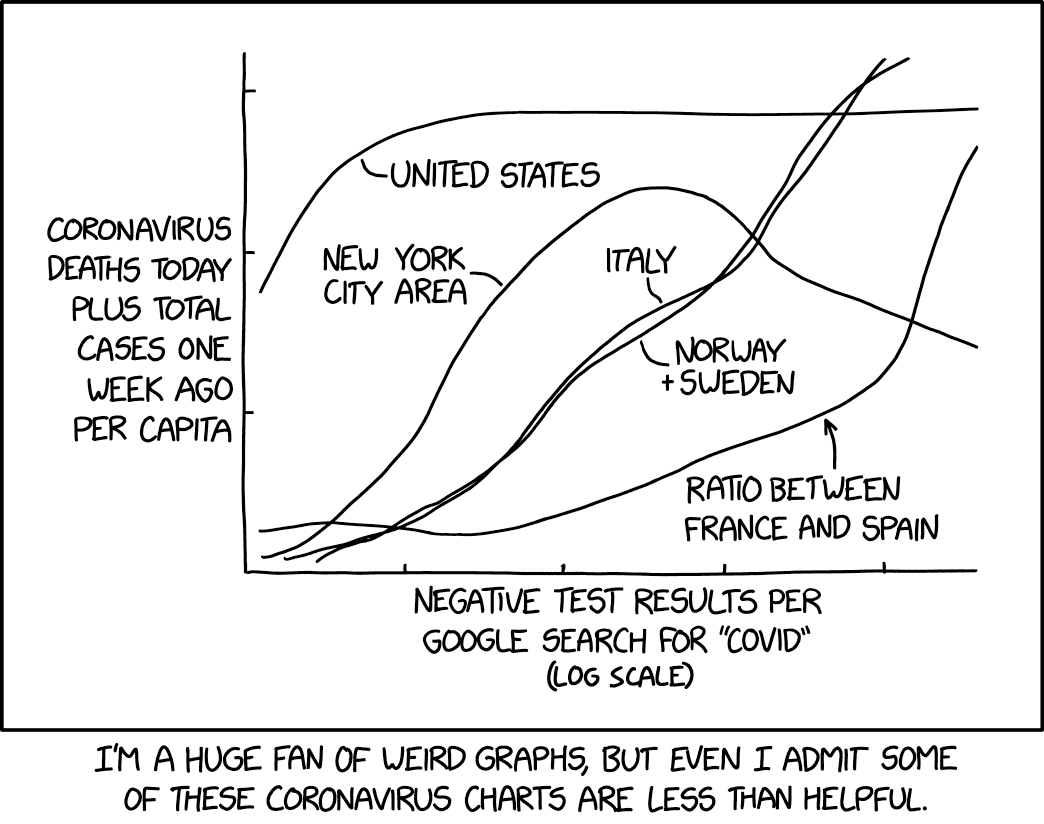 [From
[From