
Category: Archives
Heading West for The Cure
Lyra Kilston at Cabinet:
 In Southern California, early health seekers embraced the sunshine, fresh air, and opportunity to sleep outdoors. To reap the benefits of particular microclimates, they often lived somewhat nomadically, circulating between various hotels, boarding houses, or crudely erected tent cities. Some traveled by horse-drawn house wagon, wandering the desert to take air and sun baths. A family in Pasadena pitched a carpet over tree branches and lived beneath the peaked shelter for six weeks. An ill Massachusetts man roamed the bucolic Ojai Valley with a cow, subsisting only on its raw milk until he claimed a miraculous recovery.
Such makeshift regimens, reliant on climatic cures, were also practiced in the warmer parts of Europe. But a more formalized health infrastructure was being developed in Europe’s colder climes, blending the efficiency of a hospital with the comforts of a hotel.
more here.
The Delicate Paintings of Edo Japan
Tamar Avishai at the NYRB:
 You will have seen art from the Edo Period—its most recognizable images are the ukiyo-e prints: mass-produced woodblock scenes of popular entertainment and Japanese landscapes, the most world-famous of which is Katushika Hokusai’s The Great Wave off Kanagawa from 1829. These prints were ubiquitous, disseminated through the city’s pleasure quarters, and sold, it’s colloquially said, as cheaply as a second helping of noodles. And before Edo Japan opened up to the world and these inexpensive prints were splashed all over Europe, they were bought almost exclusively as souvenirs by a growing Japanese middle class, a pictorial keepsake of insular pride. The Great Wave is itself an amalgam of some of Japan’s most distinctive characteristics, illustrating its relationship with the spiritual anchor of Mount Fuji, and with the sea itself, which is embodied in both the quotidian economics of the fishing industry, and in the Buddhist philosophy of a wave’s impermanence.
more here.
The Pulitzer Problem: The journalistic elites celebrate the journalistic elites
Rafia Zakaria in The Baffler:
 THE FIRST PERSON YOU MEET in New Yorker journalist Ben Taub’s Pulitzer-winning story “Guantánamo’s Darkest Secret” is the kindly guard. Steve Wood, a member of the Oregon National Guard, was deployed to the Guantánamo Bay detention facility. Despite being told to “never turn your back” on prisoners, Wood befriended one. Prisoner 760, as he was called, is Mohamedou Ould Salahi, a man kept in a trailer called “Echo Special” whose identity was so secret that his name did not even appear in the log of America’s cruelest prison.
…If Wood is a kindly white guard who just wants to learn about Islam—he spends a lot of time at the base library reading up—then the new hero of the story is Taub himself. Great cruelties may have been inflicted at Guantánamo, New Yorker readers can tell themselves, but brave young journalists are out to expose them so that those educated well-off readers can sadly shake their heads. Except that those cruelties had already been exposed. Taub’s article was published in 2019, slightly more than four years after Salahi himself published his best-selling Guantánamo Diary, which notably did not win a Pulitzer Prize. Large parts of “Guantánamo’s Darkest Secret”—awarded a Pulitzer this week in the Feature Writing category—particularly those that deal with Salahi, rehash with the customary “he wrote” what had already been written. Yet while the content may be mostly the same, the purpose is different. Taub, unlike Salahi, is out to deliver absolution to his American reader: casting Steve Wood as an integral player is one part of this; leaving the still-constrained reality of Salahi’s present (he cannot leave tiny Mauritania) to the very end of the piece is another.
Indeed, while Salahi (whose name has also been styled as Slahi) may have told many truths in his own book, it is Taub who gets to tell them in the pages of The New Yorker. Credibility and journalistic heroism, as each year’s prizes show, reside in the pages of prestige publications; the New York Times and the Washington Post are mainstays, and since the prizes were first opened up to include magazines in 2015, The New Yorker is as well. No truth is really a truth, particularly a courageous truth, until it appears in their pages. The brown man, the accused terrorist, the actual torture survivor Mohamedou Ould Salahi may have written a great book. But the definitive story about “Guantánamo’s Darkest Secret” is the one penned by Taub.
More here.
The Other Victims of Covid-19
Aaron Rothstein in The New Atlantis:
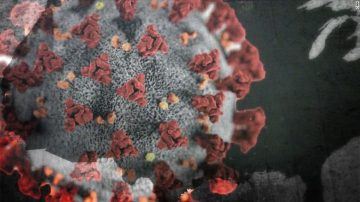 Before Covid-19 hit the United States, I saw many patients who, alas, presented too late for treatment. Occasionally they couldn’t even use their dominant arm, but they waited hours or days to seek help. Some said they thought their deficits would improve, others worried about the hospital bill, or were skeptical of physicians. The data over the past few decades corroborates this experience. In a 1997 study in the Annals of Internal Medicine, physicians examined patients with myocardial infarction, or heart attack, and the delay between the onset of symptoms and hospital presentation. Forty percent delayed their presentation for over six hours. In a 2001 study, one-third of patients with symptoms like abdominal pain, chest pain, and shortness of breath – all potentially serious – delayed seeking care. And over two-thirds of these patients waited because they thought the problem would go away. In a 2019 study, Greek physicians found that of patients presenting to the hospital with acute stroke symptoms nearly one third arrived over four and a half hours after their symptoms started, putting them outside the window for tPA eligibility. In other words, even prior to the pandemic, many patients either chose not to come or physically could not come to the hospital despite life-threatening symptoms.
Covid-19 directly causes physical devastation and in so doing exacerbates the kinds of delays described above. The exact death rate from coronavirus alone is unclear given our lack of widespread testing and our ignorance about how many people actually have it. At one point, the case-fatality rate in China was 2.3%, in Italy at another point 7.2%, while some estimate 1-2% and lower. Whatever it ends up being, it is highly significant and crippling. As of this writing, notwithstanding drastic quarantine measures, the virus has claimed over two hundred thousand lives worldwide, and that number continues to increase. Most of us understand the risk and we seclude ourselves to mitigate the disease’s damage. However, there are unintended effects of the current mitigation campaigns. There will likely be an increase in morbidity and mortality from other diseases. For instance, other hospitals and our own emergency room call us less frequently.
More here.
Wednesday Poem
The End of Pandemic
When this silence will be over
poets will compensate
till then words depart
love needs a pause
Whatever lost meanwhile
is kept in mind’s microchip
but bodies went to graveyards
memory is a dug-up hole
beeping monitors rest, comes another.
Cities are chosen
who said they are unreal
skyscrapers stand arrogantly
in squares pigeons congregate
picking food humbly
from a distance gods watch
they have not stopped breeding
we are not short of myths
the written word will return
ears are on strike, eyes watchful
the end is certainly open-ended.
Tuesday, May 12, 2020
The real Lord of the Flies: what happened when six boys were shipwrecked for 15 months
Rutger Bregman in The Guardian:
 For centuries western culture has been permeated by the idea that humans are selfish creatures. That cynical image of humanity has been proclaimed in films and novels, history books and scientific research. But in the last 20 years, something extraordinary has happened. Scientists from all over the world have switched to a more hopeful view of mankind. This development is still so young that researchers in different fields often don’t even know about each other.
When I started writing a book about this more hopeful view, I knew there was one story I would have to address. It takes place on a deserted island somewhere in the Pacific. A plane has just gone down. The only survivors are some British schoolboys, who can’t believe their good fortune. Nothing but beach, shells and water for miles. And better yet: no grownups.
On the very first day, the boys institute a democracy of sorts. One boy, Ralph, is elected to be the group’s leader. Athletic, charismatic and handsome, his game plan is simple: 1) Have fun. 2) Survive. 3) Make smoke signals for passing ships. Number one is a success. The others? Not so much. The boys are more interested in feasting and frolicking than in tending the fire. Before long, they have begun painting their faces. Casting off their clothes. And they develop overpowering urges – to pinch, to kick, to bite.
By the time a British naval officer comes ashore, the island is a smouldering wasteland. Three of the children are dead.
More here.
Robert Pinsky & Bruce Springsteen, Duet
New Zealand has ‘effectively eliminated’ coronavirus and Here’s what they did right
Aaron Gulley in National Geographic:
 On a crisp afternoon, four cyclists pedaled mountain bikes along the serpentine two-lane byway on the southern shores of Lake Wanaka. This part of New Zealand’s mountainous South Island typically sees clear days in April, with weekends bringing a buzz of tourist vehicles and campers bound for the terminus at Mount Aspiring National Park. But on this Saturday afternoon, not a single car passed, leaving the bikes to cruise the middle of the road.
The deserted highway was just one manifestation of New Zealand’s resolute response to the COVID-19 outbreak. Under stringent lockdown orders, the lights were dark and patios empty at every pub, café, and business in downtown Wanaka, and yellow police tape sealed off the skate park and playground, where the swings were zip-tied out of reach to snuff out temptation. Not that there was much risk of transgression: other than the occasional jogger or couple out for a bit of air, city streets were as abandoned as a set from The Walking Dead.
More here.
Sean Carroll’s Mindscape Podcast: Lina Necib on What and Where The Dark Matter Is
Sean Carroll in Preposterous Universe:
 The past few centuries of scientific progress have displaced humanity from the center of it all: the Earth is not at the middle of the Solar System, the Sun is but one star in a large galaxy, there are trillions of galaxies, and so on. Now we know that we’re not even made of the same stuff as most of the universe; for every amount of ordinary atoms and other known particles, there is five times as much dark matter, some kind of stuff we haven’t identified in laboratory experiments. But we do know a great deal about the behavior of dark matter. I talk with Lina Necib about why we think there’s dark matter, what it might be, and how it’s distributed in the galaxy. The latter question has seen enormous recent progress, especially from high-precision measurements of the distribution of stars in the Milky Way.
More here.
Jacques Lacan Public Lecture 1972
The Art of Earth Architecture
Phineas Harper at Literary Review:
 This is a good moment, then, for the Belgian architect Jean Dethier to release a 512-page survey chronicling earth construction from prehistory onwards across five continents. Proportioned and priced as a coffee table filler, the book is in fact ferociously polemical. Within pages, Dethier is raging against the climate-wrecking paradigm of contemporary construction: ‘The excessive use of industrialized building materials, often under the pretext of rationality, is one of the main causes of climate change.’ He argues that ‘prevailing building practices of today are often exploitative and dangerous, forced upon us by a lobby of multinational manufacturers of industrialized materials that have come to dominate our lives’.
While there is a hint of the Luddite romantic to Dethier’s writing, his core argument – that the marginalisation of earth building is a political product of industrial capitalism – is persuasive.
more here.
The Otherworldly Beauty of Jellyfish
Maria Popova at Brain Pickings:
 “I hope you are able to work hard on science & thus banish, as far as may be possible, painful remembrances,” Charles Darwin wrote in the spring of 1864 to a young and obscure German correspondent who had just sent him two folios of his stunningly illustrated studies of tiny single-celled marine organisms — a masterwork that enchanted Darwin as one of the most majestic things he had ever seen.
But Ernst Haeckel (February 16, 1834–August 9, 1919), who would go on to coin the term ecology and become a preeminent champion of evolution, could not banish the unbanishable: Months earlier, on his thirtieth birthday, Anna, the love of his life, had been snatched from him by a sudden death medicine failed to explain; the couple were about to be married that summer after a long engagement, having finally scraped together enough to start a family when Ernst received his first academic appointment.
more here.
Chemobrain is real. Here’s what to expect after cancer treatment
Anton Isaacs in Aeon:
 A few years ago, one of my students came to me and spoke about her mother who was undergoing treatment for breast cancer. She said her mother was losing her memory and her bearings, and was very worried because nobody knew what to do about her symptoms. The oncologist sent her to the psychiatrist. The psychiatrist sent her back, saying that her symptoms were a result of the cancer treatment. This experience prompted my student and me to begin studying the problem of ‘chemobrain’ or ‘chemofog’ – the terms used by people who have experienced memory loss or cognitive impairment following cancer treatment. Scientifically, it’s referred to as ‘cancer-related cognitive impairment’ or ‘chemotherapy-related cognitive dysfunction’.
Consider another example, that of ‘Jane’, a 52-year-old teacher who had her right breast removed three months after being diagnosed with breast cancer, before starting on chemotherapy. After two cycles of chemo, she noticed that she was finding it difficult to remember simple words. For instance, she would say: ‘Oh can you pass me the writing thing, the writing stick with the ink in it.’ She also kept forgetting people’s names, which was startling because she always had a good memory for names. She had trouble following traffic rules. For example, she would merge into traffic without checking, and would cross roads without looking left to right. Her daughter would have to hold her to prevent her from walking in front of cars.
More here.
Tuesday Poem
The Gardenia
The trouble is, you can never take
That flower from Billie’s hair.
She is always walking too fast
and try as we might,
there’s no talking her into slowing.
Don’t go down into that basement,
we’d like to scream. What will it take
to bargain her blues,
To retire that term when it comes
to her? But the grain and the cigarettes,
the narcs and the fancy-dressed boys,
the sediment in her throat.
That’s the soil those petals spring from,
Like a fist, if a fist could sing.
Cornelius Eady
from poets.org
How Greenwich Republicans Learned to Love Trump
Evan Osnos in The New Yorker:
 The story of Trump’s rise is often told as a hostile takeover. In truth, it is something closer to a joint venture, in which members of America’s élite accepted the terms of Trumpism as the price of power. Long before anyone imagined that Trump might become President, a generation of unwitting patrons paved the way for him. From Greenwich and places like it, they launched a set of financial, philanthropic, and political projects that have changed American ideas about government, taxes, and the legitimacy of the liberal state.
The former congressman Christopher Shays is a moderate Republican who was elected eleven times to represent the Gold Coast, from 1987 to 2009. Now conservatives mock him as a rino—a Republican in name only. “When Sean Hannity calls someone like me a rino, I want to punch him in the nose,” Shays told me. “I got elected as a Republican for thirty-four effing years, and Hannity has never gotten elected for anything.” When Shays talks to former staff and constituents in Connecticut, he has come to recognize the delicate language of accommodation: “I was talking to a guy I know well, after some pathetic thing that Trump did, and his response was ‘Yes, but he’s selecting the right Supreme Court Justices.’ I started to laugh at him, because I know for a fact that’s a minor issue for him.” Shays believes that many Americans quietly share Trump’s desire to reduce immigration and cut social-welfare programs for the poor. “He’s saying what people think, and they appreciate that,” Shays said. “But not many are going to admit that’s why they support him.”
When it comes to the essential question—will Trump get reëlected?—the answer rests heavily on a persistent mystery: how many Americans plan to vote for him but wouldn’t say so to a pollster? In Greenwich, Edward Dadakis, a corporate insurance broker who has been involved with Republican politics for fifty years, told me that many of his friends are “below the radar screen.” He went on, “In a sense, I’m one of them. I’m out there in the public domain, so people know where I stand, but in 2016, for the first election ever, I did not put a bumper sticker on my car.” He worries how strangers will react. He said, “I still have two ‘Make America Great Again’ hats at home, wrapped in plastic.”
More here.
Sunday, May 10, 2020
Naomi Klein: Under Cover of Mass Death, Andrew Cuomo Calls in the Billionaires to Build a High-Tech Dystopia
Naomi Klein in The Intercept:
 For a few fleeting moments during New York Gov. Andrew Cuomo’s daily coronavirus briefing on Wednesday, the somber grimace that has filled our screens for weeks was briefly replaced by something resembling a smile.
“We are ready, we’re all-in,” the governor gushed. “We are New Yorkers, so we’re aggressive about it, we’re ambitious about it. … We realize that change is not only imminent, but it can actually be a friend if done the right way.”
The inspiration for these uncharacteristically good vibes was a video visit from former Google CEO Eric Schmidt, who joined the governor’s briefing to announce that he will be heading up a blue-ribbon commission to reimagine New York state’s post-Covid reality, with an emphasis on permanently integrating technology into every aspect of civic life.
“The first priorities of what we’re trying to do,” Schmidt said, “are focused on telehealth, remote learning, and broadband. … We need to look for solutions that can be presented now, and accelerated, and use technology to make things better.” Lest there be any doubt that the former Google chair’s goals were purely benevolent, his video background featured a framed pair of golden angel wings.
Just one day earlier, Cuomo had announced a similar partnership with the Bill and Melinda Gates Foundation to develop “a smarter education system.” Calling Gates a “visionary,” Cuomo said the pandemic has created “a moment in history when we can actually incorporate and advance [Gates’s] ideas … all these buildings, all these physical classrooms — why with all the technology you have?” he asked, apparently rhetorically.
More here.
Little Richard (1932 – 2020)
https://www.youtube.com/watch?v=u0Ujb6lJ_mM
Florian Schneider (1947 – 2020)
https://www.youtube.com/watch?v=5DBc5NpyEoo
Dave Greenfield (1949 – 2020)