
Max Hayward in New Statesman:
 We are used to thinking of idleness as a vice, something to be ashamed of. But when the British philosopher Bertrand Russell wrote “In Praise of Idleness” in 1932, at the height of the Great Depression, idleness was an unavoidable reality for the millions who had lost their jobs. Russell realised that his society didn’t just need to confront the crisis of mass unemployment. He called for nothing less than a total re-evaluation of work – and of leisure. Russell believed that we don’t only need to reform the economic system in which some are worked to the bone while others suffer jobless destitution, we also need to challenge the cultural ethic that teaches us to value ourselves in proportion to our capacity for “economically productive” labour. Human beings are more than just workers. We need to learn how to value idleness.
Russell’s call could hardly be more relevant today, as we face the prospect of another great recession. Millions may lose their jobs in the coming months and, as automation and technology continue to advance, the jobs lost during the pandemic may never return. Today, reformers point to the possibility of a universal basic income as a way to prevent widespread poverty. But, as many have learned while locked down at home on government-sponsored furloughs, a life without work can feel desolate even when supported by a steady income. Does a jobless future condemn us to live less meaningful lives?
In 1930 the economist John Maynard Keynes predicted that, within a century, advances in productivity would allow inhabitants of developed countries to maintain a decent standard of living while working 15 hours a week. If that prediction now looks laughable, it failed for reasons that Russell foresaw. Recalling the famous example of the pin factory that Adam Smith used to explain the division of labour, Russell imagined a new technology that will halve the amount of time it takes to make a pin. If the market for pins is already saturated, what will happen? In a sane world, Russell thought, the factory would simply halve working hours, maintaining the same wages but greatly increasing the time that the workers could devote to the joys of leisure. But, as Russell observed, this rarely happens. Instead, the factory owner will opt to keep half the workers on the same hours and lay off the rest. The gains from the advances of technology will be realised not as an expansion of leisure but rather as drudgery for some and jobless destitution for others, with the savings enjoyed only by the winner, the factory owner.
Looking back over the past century, we can see Russell’s predictions borne out.
More here.
 What is
 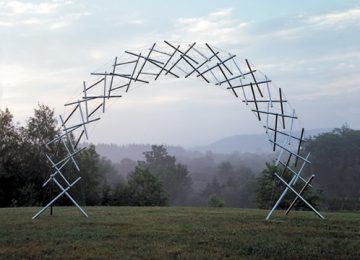 When it comes to many philosophical issues, people feel conflicted or confused. There is something drawing them toward one intuition but also something drawing them toward the exact opposite intuition. This tension seems to be an important aspect of what makes us regard these issues as important philosophical problems in the first place.
 It’s easy to foresee that technological progress will change how we live; it’s much harder to anticipate exactly how. Self-driving cars represent an enormous technological challenge, but one that is plausibly on the way to being solved. What will be the unanticipated consequences when autonomous vehicles become commonplace? Jason Torchinsky is a fan of technology, but also a fan of driving, and his recent book Robot, Take the Wheel examines how our relationship with cars is likely to change in the near future.
 On July 17, President Donald Trump sat for a
 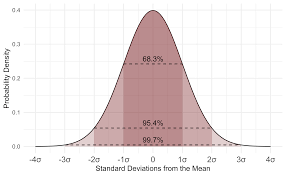 Statistics in the Progressive Era were more than mere signs of a managerial government’s early efforts to sort and categorize its citizens. The emergence of statistical selves was not simply a rationalization of everyday life, a search for order (as Robert Wiebe taught a half century of historians to say). The reliance on statistical governance coincided with and complemented a pervasive revaluation of primal spontaneity and vitality, an effort to unleash hidden strength from an elusive inner self. The collectivization epitomized in the quantitative turn was historically compatible with radically individualist agendas for personal regeneration—what later generations would learn to call positive thinking.
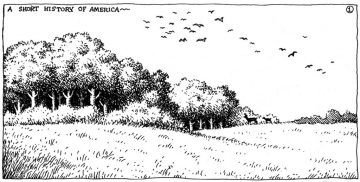 The comic is bookended by two pieces of nondiegetic text. We start with the title hovering above a pastoral scene, nature as yet unspoiled: trees, deer, birds, and a gently sloping hill. We can safely assume this is America, but when? It could be yesterday, or thousands of years ago. We deduce that the second panel shows this same setting not long after, because of a key continuity: the trees, placed in the same position inside the two panels, haven’t grown much. Our eyes adjust quickly to repetition and become acutely sensitive to any deviation, however small. Instantly, we take in the hill and felled trees, along with the introduction of the railroad track, upon which chugs a small train, billowing steam as it disappears into the distance. The wild animals are gone, a visual shorthand for the encroachment of humans. Because of the train’s presence, we infer that these first two panels take place in the early-to-mid-nineteenth century. In the third panel, a few birds glide in the sky, recalling the first panel. The hill remains in the scene (though altered), as well as the train track, but years must have passed, because we also see a house, shed, and cart (signifying “farm”), as well as a dirt road (signifying “town”), telegraph wires, and a man with horse and buggy. Will this fellow be our main character?
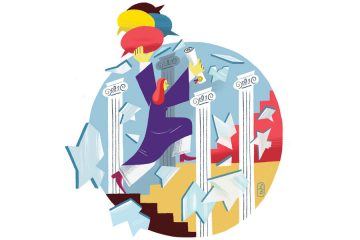 We never knew why my father took over storytelling for his three little girls, but we always suspected it was to save us from “Sleeping Beauty.” Walt Disney’s masterwork hit the big suburban screens in 1959 with a message for girls as vivid as its widescreen Technirama: If you’re pretty enough, a prince will rescue you. In a masterstroke of counterprogramming, my father invented a series of bedtime stories featuring three princesses who happened to be just our ages and even looked like us. For some reason, the grownups were never around when peril struck. So, night after night, it was up to the three sisters to save the village, which they always managed to do just about the time that one of us fell asleep. It did occur to us that this village was either highly unfortunate or its adults incredibly inept that so much fell to these little girls. We also saw that our parents wanted us to be strong. These girls didn’t need to be rescued. They were alert, wise, and bold. That was enough. But how to carry this storyline into life was not obvious. The fifth-grade teacher might like you if you raised your hand in class, but what about the boy you hoped would ask you to dance? Experience showed that boldness could have a downside.
 Two years ago, Jennifer Li and Drew Robson were trawling through terabytes of data from a zebrafish-brain experiment when they came across a handful of cells that seemed to be psychic. The two neuroscientists had planned to map brain activity while zebrafish larvae were hunting for food, and to see how the neural chatter changed. It was their first major test of a technological platform they had built at Harvard University in Cambridge, Massachusetts. The platform allowed them to view every cell in the larvae’s brains while the creatures — barely the size of an eyelash — swam freely in a 35-millimetre-diameter dish of water, snacking on their microscopic prey.
 FOR 20 YEARS,
 There’s a joke about immunology, which Jessica Metcalf of Princeton recently told me. An immunologist and a cardiologist are kidnapped. The kidnappers threaten to shoot one of them, but promise to spare whoever has made the greater contribution to humanity. The cardiologist says, “Well, I’ve identified drugs that have saved the lives of millions of people.” Impressed, the kidnappers turn to the immunologist. “What have you done?” they ask. The immunologist says, “The thing is, the immune system is very complicated …” And the cardiologist says, “Just shoot me now.”
 While attention and anger has focused on the incompetence and dysfunction of the Lebanese government and authorities, the roots of the catastrophe run far deeper and wider – to a network of maritime capital and legal chicanery that is designed to protect businesses at any cost.
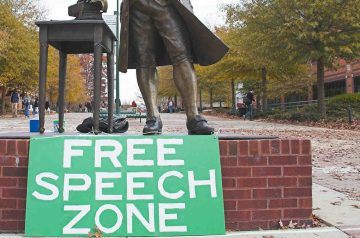 In recent years, there has been a marked and disquieting increase in the willingness of a raft of actors left, center, and right, both in government and in civil society, to engage in a practice and attitude of censorship and to abandon due process, presumption of innocence, and other core civil liberties.