
Jennifer Ouellette in Ars Technica:
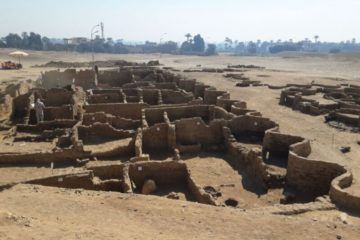 A team of Egyptian archaeologists has unearthed what some describe as an industrial royal metropolis just north of modern-day Luxor, which incorporates what was once the ancient Egyptian city of Thebes (aka Waset). The archaeologists dubbed the site “the lost golden city of Luxor,” and they believe it may have been devoted to manufacturing decorative artifacts, furniture, and pottery, among other items.
Hieroglyphic inscriptions found on clay caps of wine vessels at the site date the city to the reign of the 18th-dynasty pharaoh Amenhotep III (1386-1353 BCE), whose generally peaceful tenure was marked by an especially prosperous era, with Egypt at the peak of its international power. (Mud bricks at the site were also marked with Amenhotep III’s cartouche.) There are more surviving statues of Amenhotep III than any other pharaoh. He was buried in the Valley of the Kings, and his mummy was discovered in 1889. Analysis revealed that Amenhotep III died between 40 and 50 years of age, and he likely suffered from various ailments in his later years (most notably arthritis, obesity, and painful abscesses in his teeth).
More here.
 Think of the American Civil Liberties Union during the last two decades of the 20th century, and a certain type of person invariably comes to mind: shrewd, thick-skinned, and possessed of an unwavering—some might say irritating—commitment to principle. The men and women of the ACLU were liberals in the most honorable, but increasingly obsolescent, meaning of the term. They understood that the measure of democracy lies in the impartial application of its laws, and were prepared to defend anyone whose constitutional rights were trampled upon, irrespective of their political views or the repercussions that mounting such a defense might entail.
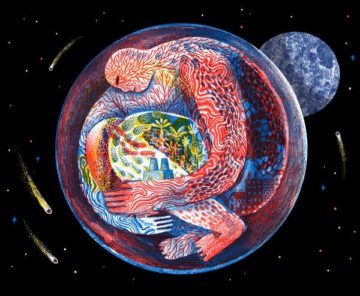
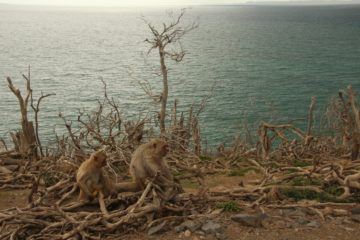 In September 2017, when Hurricane Maria hit Puerto Rico, the storm first made landfall on a small island off the main island’s eastern coast called Cayo Santiago. At the time, the fate of Cayo Santiago and its inhabitants was barely a footnote in the dramatic story of Maria, which became Puerto Rico’s worst natural disaster, killing 3,000 people and disrupting normal life for months.
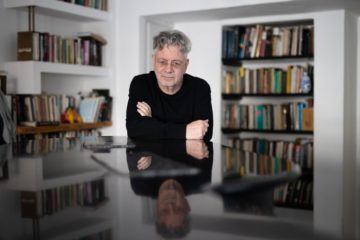 JERUSALEM — The annual Israel Prize ceremony is supposed to be an august and unifying event, a beloved highlight of the Independence Day celebrations that fall on Thursday this year. This being Israel, it is rarely without controversy. The latest ruckus goes to the heart of the political divides and culture wars rocking the country’s liberal democratic foundations even as it remains lodged in a two-year
 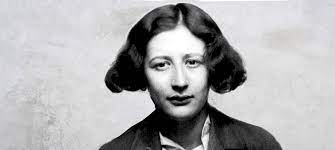 It’s hard if not impossible to imagine a figure of Weil’s stature in the intellectual and political culture of today’s left, the only region of the political spectrum where she might possibly fit. And not just because of her religiosity, which would of course instantly ghettoize her. It’s also because she’s so hard to pin down with any neat, easy label—or rather, because the labels are too many and apparently conflicting. (She’d be eaten alive on Twitter from all sides—or, worse, simply shunned and ignored.) “An anarchist who espoused conservative ideals,” Zaretsky writes in his opening pages, “a pacifist who fought in the Spanish Civil War, a saint who refused baptism, a mystic who was a labor militant, a French Jew who was buried in the Catholic section of an English cemetery, a teacher who dismissed the importance of solving a problem, the most willful of individuals who advocated the extinction of the self: here are but a few of the paradoxes Weil embodied.”
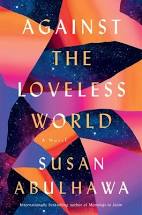 Beyond erasing this diversity, casting Palestinian radicalism as innately Islamic severs resistance from the essential question of land and geography. The novel reflects this: Nahr’s status as the daughter of Palestinian refugees in Kuwait certainly affects her life—she is pushed out of an official dance troupe, and her family’s allegiance is suspected after Saddam Hussein’s invasion. But being Palestinian doesn’t take hold as a political reality until she lives in her ancestral homeland. What fuels her fight isn’t a divine commandment about good and evil; it is the land itself. Nahr observes settlers encroaching on a Palestinian village, and wonders how Bilal and his mother have been able to keep them away from their land. She visits her mother’s childhood home, in Haifa, and picks figs from a tree her grandfather planted, before being chased off by a Jewish woman who now lives there. She helps to redirect water from a pipe meant for settlers to the olive groves. There is violence inflicted upon this land, but Abulhawa centers its beauty: “I was content to just sit there in the splendid silence of the hills, where the quiet amplified small sounds—the wind rustling trees; sheep chewing, roaming, bleating, breathing; the soft crackle of the fire; the purr of Bilal’s breathing,” Nahr reflects. “I realized how much I had come to love these hills; how profound was my link to this soil.”

 A year ago, there was no snow on the ground, and I was thinking about icebergs. “We’d rather have the iceberg than the ship,” begins the first stanza of Elizabeth Bishop’s “The Imaginary Iceberg,” and continues,
 The announcement of a new Haruki Murakami title inspires gleeful anticipation: Will there be music (classical, jazz, Beatles – yes), baseball (certainly), local watering holes (take a seat), thwarted young love (indubitably), the impossible made ordinary (naturally), and … cats (meow)? The Japanese writer doesn’t disappoint in his latest collection to arrive stateside, “First Person Singular,” a phrase that also succinctly summarizes his preferred writing style: The eight stories are each revealed by a contemplative “I”-narrator. Over the 40-plus years Murakami has produced novels, short stories, nonfiction, and personal essays, he’s first and foremost a remarkably accessible storyteller. His books are an intimate invitation to revel in his perpetually unpredictable, yet remarkably convincing, imagination.
 There exists a social hierarchy within
 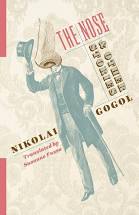 In a new collection of Gogol’s short stories, translated by Susanne Fusso, a professor of Russian studies at Wesleyan University, readers are reintroduced to the familiar cast of characters—identified by their rank, of course—that populate many of the Ukrainian author’s most celebrated works, including “The Nose” and “The Overcoat.” There are the titular councillors, the collegiate assessors, the section heads of unnamed departments, the recently promoted (and thus insufferable). In short, the book’s stories cover nearly all manner of pompous, status-obsessed, careerist bureaucrats. It could be said that the Table of Ranks defined Gogol’s narrative landscape, but what is also true is that Gogol in turn redefined the Table of Ranks for his readers, then and now. As the scholar Irina Reyfman notes, “To a large degree, the way people now think of the world of state service is determined by Gogol’s portrayal of it in his fiction.”
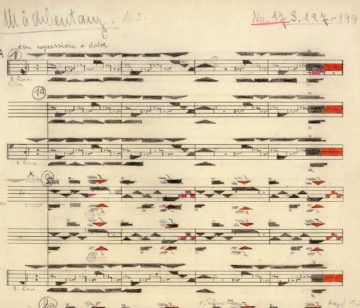 To the untrained eye, Kinetography looks esoteric and occult, but to the few who can read it the complex strips of hieroglyphs allow them to recreate dances much as their original choreographers imagined them. Dance notation was invented in seventeenth-century France to score court dances and classical ballet, but it recorded only formal footsteps and by Laban’s time it was largely forgotten. Laban’s dream was to create a “universally applicable” notation that could capture the frenzy and nuance of modern dance, and he developed a system of 1,421 abstract symbols to record the dancer’s every movement in space, as well as the energy level and timing with which they were made. He hoped that his code would elevate dance to its rightful place in the hierarchy of arts, “alongside literature and music,” and that one day everyone would be able to read it fluently.
 One of the most intriguing moments in Claude Lévi-Strauss’s magisterial