Trump Soft-Launches His 2024 Campaign

Elaine Godfrey in The Atlantic:

FLORENCE, Ariz.—Tonight, deep in the Arizona desert, thousands of people chanted for Donald Trump. They had braved the wind for hours—some waited the entire day—just to get a glimpse of the defeated former president. And when he finally appeared on stage, as Lee Greenwood played from the loudspeakers, the crowd roared as though Trump were still the commander-in-chief. To many of them, he is. “I ran twice and we won twice,” Trump told his fans. “This crowd is a massive symbol of what took place, because people are hungry for the truth. They want their country back.”

Tonight’s rally was Trump’s first public event since July. On paper, the gathering was meant as his response to the anniversary of January 6, as well as an unofficial kickoff for his efforts to support Republicans in the midterm elections. But the event also served as the soft launch of Trump’s 2024 presidential campaign. Although he didn’t say the words, the former president seems poised to run in two years—”Make America Great Again Again … Again,” he joked to the crowd—and tonight, his message was as clear as it was dishonest: He didn’t lose to Joe Biden in 2020, and he’ll spend the next year working to elect Republicans who agree.

More here.

Sunday Poem

Lying in a Hammock at William Duffy’s Farm
in Pine Island, Minnesota

Over my head, I see a bronze butterfly,
Asleep on the black trunk,
Blowing like a leaf in green shadow.
Down the ravine behind the empty house,
The cowbells follow one another
Into the distances of the afternoon.
To my right,
In a field of sunlight between two pines,
The droppings of last year’s horses
Blaze up into golden stones.
I lean back, as the evening darkens and comes on.
A chicken hawk floats over, looking for home.
I have wasted my life.

by James Wright
from
The Seashell Anthology
Random House, 1996

You Can’t Put Your Arms Around a Memory

From The Paris Review:

On Wednesday, in the hours after Ronnie Spector’s family announced her passing from cancer at seventy-eight, I played, on loop, her cover of the Johnny Thunders punk anthem “You Can’t Put Your Arms Around a Memory.” Recorded for The Last of the Rock Stars, her 2006 comeback album, the song is also a dirge for Thunders, who died in 1991; he had been one of Ronnie’s crucial supporters in the period after she left her abusive ex-husband, the megalomaniac, murderer, and iconoclastic music producer Phil Spector. On YouTube, you can watch her perform a live version of the song from 2018: after showing footage from an archival interview the Ronettes did with Dick Clark sometime in the sixties, she comes out, to applause, and says, “Sorry, I was backstage crying.” Dabbing her eyes, she mourns the breakup of her iconic girl group, which also featured her older sister, Estelle, and cousin Nedra. “I thought 1966 was the end, no more Ronettes, no more stage, no more singing. I was out here in California and out of show business for seven or eight years. Let me tell you, life was a bitch.” She then describes starting over back in New York City in the ‘70s (she was raised in Spanish Harlem), and meeting Thunders while singing at the legendary gay club and bathhouse Continental Baths, where he cried all through her set. Later, she also met Joey Ramone, who produced an EP of hers and whose contributions to The Last of the Rock Stars include backing vocals on “You Can’t Put Your Arms Around a Memory.”

On the haunting track, Ronnie’s voice, its teen-dream girlishness scratched with nicotine, bears witness to the time that’s passed.

More here.

Saturday, January 15, 2022

The collapse of humanity is deathly funny

Gary Shteyngart and Justin Jordan in The Guardian:

I do not write historical fiction. But I envy those who do. I can picture them sitting in the lamp-lit halls of the New York Public Library on 42nd Street, thumbing through fraying, early 20th‑century telephone directories or spinning the roulette of the microfiche machine, or meeting at a nearby coffee dispensary with fellow history-minded wordsmiths in the wee hours of the day, like hunters getting ready to put a bullet through the heart of a wildebeest. The best are able to address the current moment through deft metaphysical journeys between the present and the past, to illuminate our wayward realities by reminding us that it has ever been so, that the past is not even the past, or whatever Faulkner said.

Personally, I have trouble building a literary time machine. A decade ago, when I wrote a memoir set primarily in the 1980s, all I could remember of that era was Michael J Fox running around in a varsity jacket. The rest of my memories were just volumes of mist that sometimes trickled out of my minor brain holes, tantalising but highly suspect emissions that bore news of events which may or may not have been. When one’s teenage years are a distant Greek island, imagine trying to write a novel about the romantic entanglements of the Italian futurists or the political cataclysms of Meiji-era Japan, or anything at all about the ancient Egyptians.

More here.

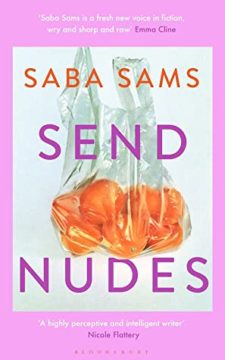
Send Nudes by Saba Sams

Madeleine Feeny at The Guardian:

“I don’t know if I was enjoying myself or just in a continual state of curiosity,” says Meg in Snakebite, one of 10 short stories in 25-year-old British author Saba Sams’s exceptional debut collection. Sams joins the ranks of writers such as Megan Nolan and Frances Leviston with these acute portraits of the fragile intimacies and euphoric moments snatched by a generation of women coming of age into a precarious future.

The first story in the collection, Tinderloin, was shortlisted for the White Review short story prize in 2019; the second, Overnight, was published by Sally Rooney in the literary magazine The Stinging Fly; and the third, Snakebite, has recently featured in Granta. Sams’s characters navigate the gaps between expectation and reality that emerge with encroaching adulthood – preoccupied parents, uneven friendships, misleading kisses.

more here.

What Role Do Emotions Play in the Way Our Brains Work?

Frans de Waal in The New York Times:

One of the greatest physicists of the last century, Paul Dirac, had no use for emotions. “My life is mainly concerned with facts, not feelings,” he declared. He loved his emotion-free existence, or so it seemed, until he met a vivacious woman who was his exact opposite — impulsive and ardent. She became his wife and not only made him a happy man but also dramatically changed his personality. He became a feeling human being, which in turn affected his science. Yes, physics! If being logical and rational were all that mattered, we wouldn’t need actual physicists. The job could be done by computers. Later in life, Dirac became so convinced that knowledge needs to be combined with intuitions, crazy hunches and irrational perseverance that whenever he was asked about the secret to his success, he stressed that one needs to be guided above all by one’s emotions.
Dirac’s case is one of many examples offered by Leonard Mlodinow in his latest book, which treats the mental impact of the emotionsTo get an eloquent reminder of this impact is timely, given the stream of recent books paying one-sided attention to rationality and knowledge. We celebrate logic and reasoning and disparage the emotions, which we find too close to our bodies — those flawed vessels of flesh and blood that carry us around and bother us with irresistible needs and urges. The “flesh is weak,” we say. Throughout history, great (male) thinkers have argued that while animals (and women) run after their emotions and impulses, the human mind is at its noblest when it transcends these. They proudly declared “man” the only rational being on the planet.

More here.

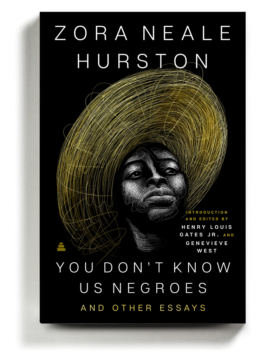
Zora Neale Hurston’s Essays

Dwight Garner at the NYT:

Zora Neale Hurston’s best-known sentence, judging by its appearance on coffee mugs and refrigerator magnets, is this one: “No, I do not weep at the world — I am too busy sharpening my oyster knife.”

As distillations of her sensibility go, that’s not terrible.

Hurston’s books, which include the classic novel “Their Eyes Were Watching God” (1937) and the memoir “Dust Tracks on a Road” (1942), are earthy, packed with rough pleasures, wide in their human sympathies and in close contact with the ebullience that can touch the margins of everyday existence.

What’s interesting about the “oyster knife” comment, read in context — it appeared in her 1928 essay “How It Feels to Be Colored Me” — is how expressive it is of her political views, which were heterodox. Were she living now, she might have a Substack.

more here.

Saturday Poem

The Song of Wandering Aengus

I went out to the hazel wood,
Because a fire was in my head,
And cut and peeled a hazel wand,
And hooked a berry to a thread;
And when white moths were on the wing,
And moth-like stars were flickering out,
I dropped the berry in a stream
And caught a little silver trout.

When I had laid it on the floor
I went to blow the fire a-flame,
But something rustled on the floor,
And someone called me by my name:
It had become a glimmering girl
With apple blossom in her hair
Who called me by my name and ran
And faded through the brightening air.

Though I am old with wandering
Through hollow lands and hilly lands,
I will find out where she has gone,
And kiss her lips and take her hands;
And walk among long dappled grass,
And pluck till time and times are done,
The silver apples of the moon,
The golden apples of the sun.

W. B. Yeats – 1865-1939

Friday, January 14, 2022

Why Nobody Really Knows What Time It Is

Chad Orzel in Forbes:

A couple of months ago, when I gave a talk about my forthcoming book A Brief History of Timekeeping, for the Physics and Astronomy colloquium at Union, I titled it “Does Anybody Really Know What Time It Is?” This was done largely as a nod to the title of a Chicago song that I’m just old enough to remember (a reference that went over the heads of some younger faculty…), but also in full awareness of Betteridge’s Law of Headlines.

If you’re not familiar with it, and are too lazy to click on the link, this is the joke “Law” that any time an article has a headline in the form of a question, the expected answer to the question is “No.” So I used that title specifically to set up an answer in the negative— that, in fact, nobody really knows what time it is.

That might seem like a strange thing to do, especially as I’ve written an entire book exploring several thousand years of the human obsession with timekeeping, and have been banging on about it on this blog for the last couple of months as well. As a matter of fundamental physics, though, it’s absolutely true— not because we’re not good at building clocks (this is, in fact, something we’re exceptionally good at), but because “What time is it?” is not, in fact, a well-formed question with a single definitive answer.

More here.

Immune system vs. virus: Why omicron had experts worried from the start

John Timmer in Ars Technica:

Right from omicron’s first description, researchers were concerned about its variant of the SARS-CoV-2 virus. Looking over the list of mutations it carried, scientists could identify a number that would likely make the variant more infectious. Other mutations were even more worrying, as they would likely interfere with the immune system’s ability to recognize the virus, allowing it to pose a risk to those who had been vaccinated or suffered from previous infections.

Buried in the subtext of these worries was a clear implication: scientists could simply look at the sequence of amino acids in the spike protein of a coronavirus and get a sense of how well the immune system would respond to it.

That knowledge is based on years of studying how the immune system operates, combined with a lot of specific information regarding its interactions with SARS-CoV-2. What follows is a description of these interactions, along with their implications for viral evolution and present and future variants.

More here.

Elon Musk Is Not the Future

Paris Marx in The Wire:

Silicon Valley has no shortage of big ideas for transportation. In their vision of the future, we’ll hail driverless pods to go short distances  – we may even be whisked into a network of underground tunnels that will supposedly get us to our destinations more quickly – and for intercity travel, we’ll switch to pods in vacuum tubes that will shoot us to our destination at 760 miles (1,220 km) per hour.

However, these fantasies of wealthy tech CEOs are just that: fantasies. None of these technologies will come to fruition in the way they promise  –  if they ever become a reality at all. The truth is that the technologies we need to transform our transportation networks already exist, but Americans have been stuck with a dated, auto-dependent system for so long while being denied the technology of the present  –  let alone the future  –  by politicians who are in the pockets of the fossil fuel lobby and addicted to a damaging “free market” ideology that they’ll believe any snake oil salesman — or wealthy entrepreneur  –  who comes along with a solution.

More here.

Friday Poem

“They will keep coming back to the same swamp each winter until it’s clean-
and then leave their bones among the cedars.”   -Durward L. Allen

I Lie Down

I wait in the woods,
I stand still as a white cedar
and hold my hands out
like branches until branches
sprout from my ribcage.

I stand still like this and wait
until the deer come to strip
my lower limbs clean down
to my furrowed bark.

I lie down here by the copper-
colored water until it blooms
white and thickens, then greys
and turns to ice.

I lie down in this silent clearing
and slow my heart to barely beating
until vines grow around my damp
and greening body.

The deer cross and recross animal
paths to return under bluer skies
and in this way, grasses will grow
and insect my clothing.

They come and go and I lay my
body down, dumbstruck.

by Liane Tyrrel
from the Echotheo review

How Civil Wars Start

H W Brands in The Guardian:

Barbara Walter does not expect to see a civil war in the US of the order of the conflict that tore the nation apart in the 1860s, but that’s chiefly because civil wars are fought differently these days. And it’s about the only comfort a concerned reader can take from this sobering account of how civil wars start and are conducted in our time. Walter is a professor of international relations at the University of California, San Diego, and a consultant to various government and international agencies. She has studied civil wars and insurgencies for three decades, and iIn this book she draws on her own work and that of other researchers to produce a typology of the descent into organised domestic violence.

The key concept is that of “anocracy”, a transition stage of government between autocracy and democracy. The transition can be made in either direction, and it is during the transition that most civil wars erupt. Autocracies possess sufficient powers of repression to keep potential insurgents in check; democracies allow dissidents means to effect change without resorting to violence. But when autocracies weaken, repression can fail, and when democracies ossify, the release valves get stuck.

More here.

A Virus Likely Triggers Almost All Multiple Sclerosis, Massive Study Concludes

From IFL Science:

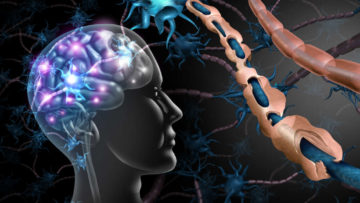
Multiple sclerosis (MS) is almost always a delayed response to infection with the Epstein-Barr virus, a study of 10 million former military personnel in the US indicates. The findings could provide clues on how to treat the disease – which is hallmarked by the immune system attacking the myelin sheath that protects the brain and spinal nerves – and raise the urgency of preventing the common virus in the first place. More broadly, it serves as a reminder that even when people appear asymptomatic or recover quickly from viral infections, there can be serious consequences down the track.

The Epstein-Barr virus is part of the herpes family of double-stranded DNA viruses. Its high transmissibility through kissing, spitting, or sharing food means the overwhelming majority of the population has been infected by their late 20s. Its most common effect is infectious mononucleosis, better known as glandular fever, which can leave people feeling exhausted for weeks and, in rarer cases damage the liver or spleen.

More here.

God’s Body Up Close

Jack Miles at the LARB:

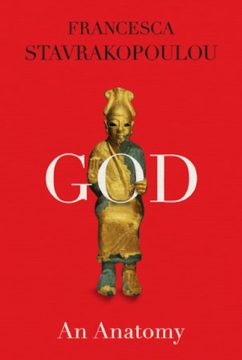
As an undergraduate, Francesca Stavrakopoulou observed to her theology professor that “lots of biblical texts suggest that God is masculine, with a male body,” and was told, to her evident frustration, that these texts were metaphorical, or poetic. “We shouldn’t get too distracted by references to his body,” her professor asserted, because to do so would be “to engage too simplistically with the biblical texts.” Anything but distracted by biblical references to God’s body, Stavrakopoulou is aesthetically entranced by them and programmatically attentive to their iconographic and literary contexts, from ancient Southwest Asia in the fourth millennium BCE to Christian and Jewish Europe as late as the 16th century. Her work, true to its subtitle, is anatomically organized into five parts plus an epilogue: I, “Feet and Legs”; II, “Genitals”; III, “Torso”; IV, “Arms and Hands”; V, “Head.” Each of these five major parts comprises three or four chapters, and each chapter has its own fresh emphasis and coherence. “Head,” for example, has separate chapters for ears, nose, and mouth.

more here.