
Listen to Me
Don’t let yourself get old,
but if you must get old,
don’t let yourself get crazy.
If you get crazy,
don’t let yourself get mean.
If you get mean,
don’t be surprised
to find that love
only goes so far
before you find
yourself alone.
Old, crazy, mean and alone
is about as shitty as it gets
until, of course, it gets worse
and it always
always
always
gets worse.
So, buck up.
Get your exercise.
Eat right.
Pray, if you believe in that sort of thing.
Do what it takes, right now.
Tomorrow is right around the corner
and the day after that
then another
and it all comes rushing.
Don’t let yourself get old.
I don’t know what else to tell you
except that the world finally swallows
everyone, we all know this,
and it is very sad
but sometimes the swallowing
goes much too slowly
for comfort,
too slowly for any of us
to bear.
by Jeff Weddle
Jeff Weddle’s Book: Advice for Cannibals
 For one thing, it is not nearly as newfangled as we usually conceive of it. It does not represent a radical rupture with everything that came before, either in human history or in the vastly longer history of nature that precedes the first appearance of our species. It is, rather, only the most recent permutation of a complex of behaviors that is as deeply rooted in who we are as a species as anything else we do: our storytelling, our fashions, our friendships; our evolution as beings that inhabit a universe dense with symbols.
 Deep time is, to me, one of the most awe-inspiring concepts to come out of the earth sciences. Getting to grips with the incomprehensibly vast stretches of time over which geological processes play out is not easy. We are,
  On his daily podcast, the conservative commentator and #NeverTrumper Charlie Sykes often refers to Donald Trump as “the orange god-king” and to the former president’s fervent MAGA following as a “cult.” The jibe may be intended for laughs, but it hints at a deeper truth: The neoauthoritarian leaders of the present era have more than a little in common with the divine kings of the ancient world, and the enchanted worldviews of those who follow Donald Trump and others like him often verge on premodern magical thinking. In this respect, Trump and Trumpism are but one example of a global phenomenon, with similar figures and their similarly devout followers everywhere from Russia, Hungary, and Turkey to Brazil, the Philippines, and—possibly, with its own special characteristics—the new-old Middle Kingdom of the People’s Republic of China.
 History doesn’t repeat itself. It just tries to remember an old song it heard once. It may be that Putin’s 24 February 2022 will turn out to be like Hitler’s 22 June 1941 – the day he invaded Russia, doomed himself and Germany to destruction and made inevitable a divided
 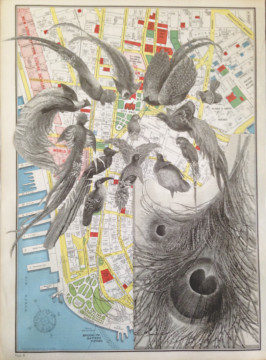 IN 1998, Lucy Sante published The Factory of Facts, a memoir of her childhood in Belgium and the Sante family’s stuttering moves back and forth (and finally forth) to the States—ultimately, to Summit, New Jersey—when she was eight, in 1962. Toward the end of the memoir, she marks her story as a displacement, “as if I were writing about someone else.” Sante is talking, here, about the French of her youth contrasted with the English of America, and how “languages are not equivalent one to another.” Something else is in play, though. The eight-year-old boy that Sante speaks for would need to translate her English words, written much later in America, “and that would mean engaging an electrical circuit in his brain, bypassing his heart.”
 I
I 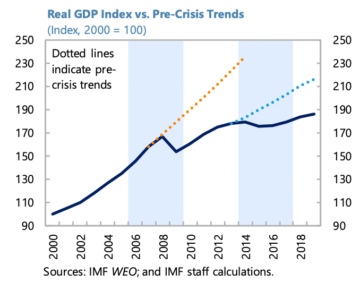 Adam Tooze over at his substack:
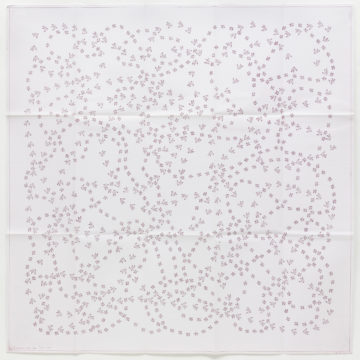 Maya Adereth and Neil Warner interview Michael Mann in Phenomenal World (image León Ferrari,
  Francis Fukuyama in the Financial Times (photo by Harry Mitchell):
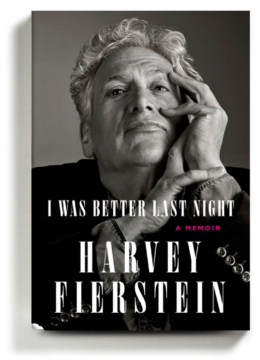 The actor, writer and consummate New Yawker Harvey Fierstein is assuredly a man of many talents. Who knew needlework was one of them?
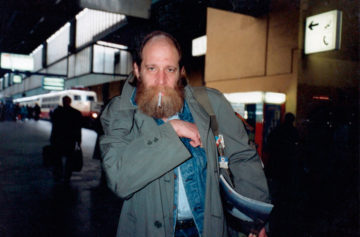 FEATURING HIS SELF MADE SAILOR’S HAT until his last days, Lawrence Weiner never tired of reminding us that WE ARE SHIPS AT SEA NOT DUCKS ON A POND, apparently sharing Otto Neurath’s moral imperative. The necessity of citing Weiner verbatim in the very first sentence (and in nearly every paragraph) of this homage already signals the extent to which his work contested—if not disqualified—the legitimacy of critical and historical ekphrasis. Every single one of his statements aimed at dismantling linguistic conventions (of plasticity, of poetry, of metaphor, of metaphysical thinking) and disputed the conciliatory potential of cultural practices. In a 1969 interview, Leo Castelli, an early admirer of Weiner who became his dealer after the artist parted ways with Seth Siegelaub, presciently identified the work—both literally and figuratively—as “the writing on the wall,” rightfully sensing the terminal radicality of its innate anti-aesthetic.
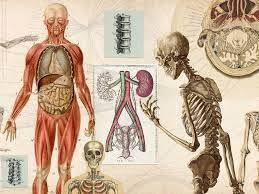 Bones: They hold us upright, protect our innards, allow us to move our limbs and generally keep us from collapsing into a fleshy puddle on the floor. When we’re young, they grow with us and easily heal from playground fractures. When we’re old, they tend to weaken, and may break after a fall or even require mechanical replacement. If that structural role was all that bones did for us, it would be plenty.
 It’s a rare Washington memoir that makes you gasp in the very second sentence. Here’s the first sentence from