
Matthew Yglesias in The Guardian:
 Many known unknowns remain in the US congressional elections, including the critical question of who will hold the majority in the Senate.
But it’s already clear that Republicans are going to perform far worse than the typical out-party in a midterm election. Democrats appear to be on track for a result that, while certainly not spectacular if viewed in isolation, is the best midterm performance for any incumbent party since 2002. There’s nothing like the massive “wave” elections of 1994, 2006, 2010 or 2018 here, or the steady opposition gains of 2014. In 1998, Democrats did break with precedent and actually gain seats in the House and Senate, despite holding the White House. But that was a question of shrinking existing Republican majorities.
…But outside of the Sunshine State, Republicans have mostly been less cautious, and it has generated results for Democrats that are almost shockingly good given the state of the economy. That’s a testament to Democrats’ tactical savvy, and also a reminder of the huge political risks Republicans are running if inflation subsides over the next couple of years.
More here.
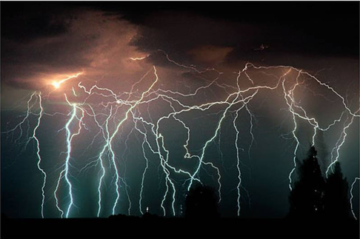 It’s more colorful on the high desert plains of western New Mexico’s remote Catron County than most Americans probably think: a rainbow of gold, sanguine, and umber, blotted with shocks of assertive teals and jades, and accents of muted violet. A dozen miles east of the Continental Divide, at an elevation of 7,200 feet, the sky is inescapable, glowing so blue that it borders on the psychedelic. Here, in 1977,
  One Monday evening some five years ago, I walked into my first Spiritualist service. In those days, the New York Spiritualist Church held services roughly once a month in a broad-minded white-marble Methodist structure designed to hold some thousand parishioners. But the Spiritualists only filled the first few rows. It was dim, churchy-smelling, and vast.
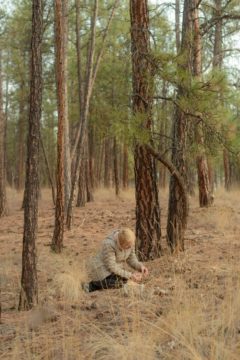 Justine Karst, a mycologist at the University of Alberta, feared things had gone too far when her son got home from eighth grade and told her he had learned that trees could talk to each other through underground networks. Her colleague, Jason Hoeksema of the University of Mississippi, had a similar feeling when watching an episode of “Ted Lasso” in which one soccer coach told another that trees in a forest cooperated rather than competed for resources.
 The philosopher Stanley Cavell, who was the author of some 19 books, passed away in 2018. Fifteen years earlier, he had turned his attention to his death in Little Did I Know, a memoir occasioned by the discovery of his own declining health. There, as in much of his work, he was comfortable writing in the retrospective mode, reflecting again and again on his most famous collection of essays, Must We Mean What We Say? (1969), and the arguments, ideas, and distinctive style he developed there. The latter would be described by his critics as self-indulgent and by his defenders as profound. The reality was somewhere between these judgments, although often closer to the former than the latter.
 As an evolutionary biologist, I am quite used to attempts to censor research and suppress knowledge. But for most of my career, that kind of behavior came from the right. In the old days, most students and administrators were actually on our side; we were aligned against creationists. Now, the threat comes mainly from the left.
 It isn’t just pundits and commentators who are annoyed with the state of macro; economists in other fields often join in the criticism. For example, here’s
 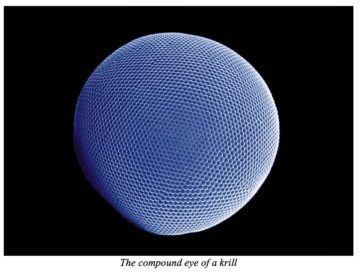 One of the last flashes of creativity I saw before I deactivated my Twitter account (more on that below, and on its significance for this Substack project), was a question launched by another user (whom I can’t locate now, without Twitter, but to whom I say “thanks”). “Are there,” this user asked, “more eyes or legs in the world?”
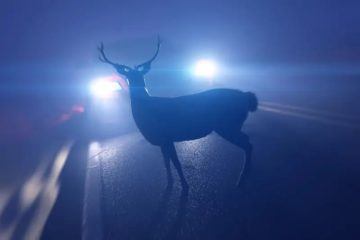 Moving to daylight saving time permanently could prevent 36,550 deer deaths, 33 human deaths and $1.19 billion in costs annually in the US.
 People have a complicated relationship to mathematics. We all use it in our everyday lives, from calculating a tip at a restaurant to estimating the probability of some future event. But many people find the subject intimidating, if not off-putting. John Allen Paulos has long been working to make mathematics more approachable and encourage people to become more numerate. We talk about how people think about math, what kinds of math they should know, and the role of stories and narrative to make math come alive.
 So can we find final value in the world? I believe that we can, so long as we are attuned to aesthetic value. Aesthetic value is a catch-all term that encompasses the beautiful, the ugly, the sublime, the dramatic, the comic, the cute, the kitsch, the uncanny, and many other related concepts. It is a well-worn cliché that the practical person scorns aesthetic value. But there’s reason to think that it is the only way in which we can draw final positive value from the entire world. Thus, to the extent that we care whether or not we live in a good world, we must be aesthetically sensitive.
 BEING A TRUTH-TELLING
 “Undine Spragg—how can you?” her mother wailed, raising a prematurely-wrinkled hand heavy with rings to defend the note which a languid “bell-boy” had just brought in.