
Shelly Fan in Singularity Hub:
 If you’ve ever vented to ChatGPT about troubles in life, the responses can sound empathetic. The chatbot delivers affirming support, and—when prompted—even gives advice like a best friend. Unlike older chatbots, the seemingly “empathic” nature of the latest AI models has already galvanized the psychotherapy community, with many wondering if they can assist therapy. The ability to infer other people’s mental states is a core aspect of everyday interaction. Called “theory of mind,” it lets us guess what’s going on in someone else’s mind, often by interpreting speech. Are they being sarcastic? Are they lying? Are they implying something that’s not overtly said?
“People care about what other people think and expend a lot of effort thinking about what is going on in other minds,” wrote Dr. Cristina Becchio and colleagues at the University Medical Center Hanburg-Eppendorf in a new study in Nature Human Behavior.”
In the study, the scientists asked if ChatGPT and other similar chatbots—which are based on machine learning algorithms called large language models—can also guess other people’s mindsets. Using a series of psychology tests tailored for certain aspects of theory of mind, they pitted two families of large language models, including OpenAI’s GPT series and Meta’s LLaMA 2, against over 1,900 human participants. GPT-4, the algorithm behind ChatGPT, performed at, or even above, human levels in some tasks, such as identifying irony. Meanwhile, LLaMA 2 beat both humans and GPT at detecting faux pas—when someone says something they’re not meant to say but don’t realize it. To be clear, the results don’t confirm LLMs have theory of mind. Rather, they show these algorithms can mimic certain aspects of this core concept that “defines us as humans,” wrote the authors.
More here.
 My own tutee students, whom I met on a regular basis, were reporting poor mental health or asking for extensions because they were unable to meet deadlines that were stressing them out. They were overly obsessed with marks and other performance outcomes, and this impacted not only on them, but also on the teaching and support staff who were increasingly dealing with alleviating student anxiety. Students wanted more support that most felt was lacking and, in an effort to deal with the issue, the university had invested heavily, making more provision for mental health services. The problem with this strategy, however, is that by the time someone seeks out professional services, they are already at a crisis point. I felt compelled to do something.
 For months, OpenAI has been losing employees who care deeply about making sure
  Today, Amit Shah isn’t home minister for Gujarat, but all of India. From the heart of power in Delhi, he is in charge of domestic policy, commands the capital city’s police force, and oversees the Indian state’s intelligence apparatus. He is, simply put, the second-most powerful man in the country. With the BJP poised to win the current general election, he is all but certain to remain so for at least the next five years. For Modi, he is what Dick Cheney and Karl Rove were for George W Bush – the muscle as well as the brain – rolled into one. Over the past decade, he has been the key architect in remaking India according to the BJP’s Hindu nationalist ideology.
 S
S William Ewart Gladstone was Britain’s prime minister four times between 1868 and 1894, a member of Parliament for more than sixty years, a brilliant and passionate orator, an accomplished writer, and an indefatigable social reformer. Lord Kilbracken, his private secretary, estimated that if a figure of 100 could represent the energy of an ordinary man and 200 that of an exceptional one, Gladstone’s energy would be represented by a figure of at least 1,000.
 The day when
 ‘C
‘C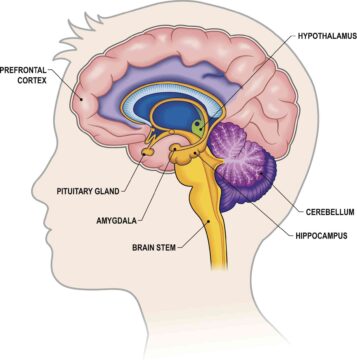 I am a neurobiologist focused on understanding the chemicals and brain regions that
  Donald Trump is incapable of meaningful participation in such an event. Only in the sense that “match” can apply to both chess and mud wrestling could the word “debate” apply both to the Kennedy-Nixon event and to Trump’s on-stage behavior. Trump cannot help but distort a debate into a cage-fight. He will, again, shamelessly lie and endlessly interrupt.
 Earlier this year, the singer and songwriter Billie Eilish, who is twenty-two, became the youngest two-time Oscar winner in history, collecting the Best Original Song award for “What Was I Made For?,” a delicate existential ballad that she co-wrote for the film “
 On the edge of the Alameda, practically bumping up against the old Church of Saint Francis, the gay club flashes a fuchsia neon sign that sparks the sinful festivities. An invitation to go down the steps and enter the colorful furnace of music-fever sweating on the dance floor. The fairy parade descends the uneven staircase like goddesses of a Mapuche Olympus. High and mighty, their stride gliding right over the threadbare carpet. Magnificent and exacting as they adjust the safety pins in their freshly ironed pants. Practically queens, if not for the loose red stitches of a quickie fix. Practically stars, except for the fake jeans logo tattooed on one of the asscheeks.
 Francis Ford Coppola’s Megalopolis took 41 years to make. It might take as long to understand. Coppola’s magnum opus, which premiered in competition at the Cannes Film Festival last night, is a movie of extraordinary highs and baffling lows, alternately dazzling and confounding. Sometimes, in the same moment, it’s both. When I asked colleagues who’d seen it—at a remote early-morning screening, added at the last minute to accommodate Coppola’s preference for IMAX—they looked at me like the mute humans in the