by Leanne Ogasawara
1.
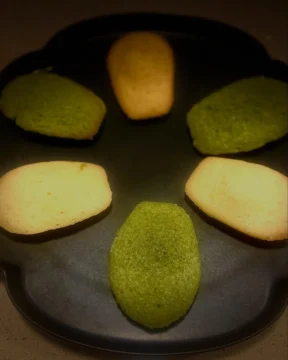
A man sits unsettled on a wintry Paris afternoon, when his mother offers him some tea—along with a small little cake, shaped like a shell.
Perhaps it is the most famous cake in literary history, for the moment he tastes the madeleine, softened in the tea, he is, in that instant, transported across time and space, as the world of his childhood rises before him, whole and luminous.
What begins as a simple sensation becomes a revelation: the past, long buried, is not gone at all, but waiting in the body, ready to return.
Philosopher Paul Ricoeur might have said this was the perfect example of the way literature illuminates how human beings experience time. In his three-volume series, Time and Narrative, Ricœur suggests that time becomes human only when it is articulated through narrative, because this is when lived duration is gathered and configured into meaning.
A philosophy student undergraduate, I am now married to an astrophysicist so I guess it was no surprise that time was something I became completely obsessed with when I began studying the craft of fiction. Just think of how Proust’s madeleine moment captures the way we really do experience time. Like a palimpsest, where one sensation can trigger an entire buried world, and we feel ourselves transported through a temporal aperture, like a worm hole, through the story of our lives.
In a class on time and fiction I took several years ago, we looked at a story in The New Yorker by Weike Wang called Omakase. A kind of frame story, it begins when a couple goes out to dinner, and in almost every moment that happens in chronological time, a sip of tea or when the woman finds herself observing the man chat with the waitress, there is a shift of thought, an interior unfolding. It’s like the multi-dimensional unfolding of a Sophon in the Three-Body Problem, her inner world unfolds in multi-dimensions.
 2.
2.
Recently, in a workshop, a fellow writer was sharing her ambitious and wonderful manuscript, a story which took place over the course of the protagonist’s entire life, from childhood into old age. I don’t read a lot of books like that anymore, as most of the literary fiction I come across covers little slips of time, sometimes a few years, but more often, just a few months or even weeks. It made me wonder whether contemporary American literary fiction prefers intensity over expanse, compression over sweep.
There’s something so ambitious about writing a book that stretches through time like that. I am thinking of David Szalay’s Booker prize-winning book Flesh, which I absolutely loved and recommend to everyone. Starting when the protagonist is a high school student, it makes great jumps forward through time and space to pick up with the character again down the line in several pivotal scenes from the character’s life. Time is not shown continuously but in selected flashes, as though the narrative were assembling a constellation of heightened choices and experiences rather than a straight line. But it is also a straight arrow of time too, since we do not move around randomly but chronologically.
In another favorite novel, Bangkok Wakes to Rain, by Pitchaya Sudbanthad, we really do jump around in time –not along an arrow, but more randomly—returning over and over again to a certain house where people have come and gone over a century or more. Time flickers in and out. And isn’t that what might happen when we are on our deathbeds, as our lives come rushing back to us? When a person looks back and takes stock. They might linger, out of order, on the big moments that heralded change.
Well, maybe for some people it’s the big events but for others maybe meaning is found in the quiet moments. In Claire Messud‘s fantastic new novel, This Strange Eventful History, we follow a pied-noir man couple in colonial Algeria. The story is framed by their grand love. What is so unique about the novel is that rather than telling it as the drama unfolds during the war and then more significantly when the revolution occurs and the French leave North Africa—instead, Messud chooses to focus on those times in-between, creating these wonderful leaps, where a chapter will abruptly end before the “real” drama takes place. So, we start new chapters finding the family again, a decade or so later, after the world has moved on and the world events are told in retrospect. I really enjoyed this a lot, because it suggests that the drama of history is often absorbed quietly into the texture of ordinary life, and that narrative time does not need spectacle to carry weight.
 3.
3.
But then, this leads to Ricœur’s point about plot.
Our lived time is uneven, he writes. Privately, we experience our lives as irregular and layered. Communally, we experienced time in rhythms—high and low tides, feasts and ordinary time, sacred versus clock time. We don’t experience our lives as neat chronology. We experience interruptions, returns, repetitions, gaps. And we remember our lives and understand time by making meaning through story. We do this privately and we do this communally.
Ricœur calls this plot “configuration” …in French: mise en intrigue.
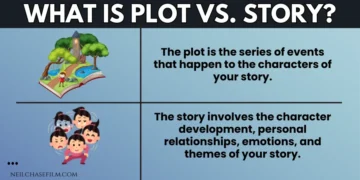
E.M. Forster famously defined it like this: “The king died and then the queen died” is a story. “The king died, and then the queen died of grief” is a plot.
My question has always been to wonder: is that true in all cultures? Is it true for all people, that plot needs causality?
Here is a long quote from my another of my favorite novels, An Unnecessary Woman, by Rabih Alameddine:
Alain Robbe-Grillet once wrote that the worst thing to happen to the novel was the arrival of psychology. You can assume he meant that now we all expect to understand the motivation behind each character’s actions, as if that’s possible, as if life works that way. I’ve read so many recent novels, particularly those published in the Anglo world, that are dull and trite because I’m always supposed to infer causality. For example, the reason a protagonist can’t experience love is that she was physically abused, or the hero constantly searches for validation because his father paid little attention to him as a child. This, of course, ignores the fact that many others have experienced the same things but do not behave in the same manner, though that’s a minor point compared to the real loss in fulfilling the desire for explanation: the loss of mystery. Causation extraction makes Jack a dull reader.
Isn’t that a great point? How many times have I experienced in a workshop someone saying that something my character did or said was “completely unbelievable.” I always want to point out that it might be unbelievable to them but it isn’t to me since I actually did or said that!
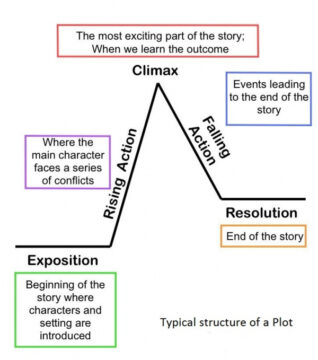
But something very interesting (and possibly scary) is that in the Western tradition, plot has always been viewed like this, as a dramatic arc. That’s what we’re taught. There’s a situation, and then it grows tense. It reaches a peak and subsides into a resolution. There are stakes, and if the propulsion is not good, authors are supposed to throw rocks at their characters. We need a ticking clock and conflict. In any workshop you will hear this again and again, whether time stretches for generations or the story takes place over the course of a few hours, motivation and conflict are what drives story.
I think because we are so accustomed to reading literature through the lens of the three-act plot and the Freytag’s Pyramid –and now by TV–that when we experience a story where conflict is not fueling plot, not pushing the character through time and space, we feel like the book is not propulsive.
Alameddine’s novel, by the way has been described as being “plot-less,” which says it all, really.
 3.
3.
Another recent novel I fell in love with has also been called plotless: Mai Ishizawa’s The Place of Shells, winner of the Akutagawa Prize and translated by Polly Barton. In the story, which I recommend to everyone!, a young Japanese woman is completing her PhD in medieval art history at a university in Göttingen, Germany.
It is the summer of 2020. Europe is tentatively reopening after the first wave of the pandemic. She goes to the train station to meet an old friend from graduate school — Nomiya, who died nine years earlier in the 2011 Tohoku earthquake and tsunami, and who has, inexplicably, returned.
What happens next defies the logic of Western plot. There is no confrontation, no revelation, no catharsis. Instead, the narrator walks with Nomiya through Göttingen’s Planetenweg — which is a scale model of the solar system mapped across the city, each planet marked at its proportional distance from the sun. And it is here, in this strange, quiet promenade, that the novel’s true structure reveals itself.
I walked a Planetenweg once, in Aspen. I moved from Mercury to Mars in minutes, but to reach Jupiter I needed a bicycle, and out to Pluto? I had no idea Germany had more than fifty of these. I had no idea that Germany had more than fifty of these. In the novel, like in Aspen, each planet is marked with a plaque and an explanation, which breaks up the journey the way a chapter break does in a novel. What struck me was the way the walk made me feel the solar system in my body in a way no diagram ever had. The distances became real. The emptiness between planets became real.
This, I think, is exactly what Ishizawa is doing with time and grief. The dead friend is close. The earthquake is further. The pandemic is further still. And somewhere out at the edge, almost unreachably distant, is the ordinary life that existed before any of it. In this novel, time is not a dramatic arc — it is proportion, distance, the long dark between one world and the next.
Pluto, in the novel, keeps disappearing and reappearing. Of course it does. That is how grief works.
That is how the dead return.
The Place of Shells reminded me so much of László Krasznahorkai’s A Mountain to the North, a Lake to the South, Paths to the West, a River to the East in the way cartography quietly replaces plot as the structuring principle of time. Krasznahorkai’s title reads like a compass rose, orienting the reader through landscape rather than action; direction itself becomes destiny, not the character’s personal psychology.
I love Krasznahorkai’s book so much because I am walking through Kyoto in a novel that unfolds not in dramatic sequence but in spatial relation—north of this, east of that—so that geography performs the work that emplotment traditionally would. Similarly, Ishizawa’s Göttingen, layered with the Planetenweg’s planetary scale, becomes a temporal map one can walk. And there is this dog that keeps digging stuff up along the path—like peeling back the layers of time, seeing the way our lives leave deposits.
 4.
4.
For me, time has never felt like a straight arrow with a clear beginning, middle, and end. My life feels more like a map of forking paths where no single choice was ever fully made, where every direction remains faintly visible. A life not plotted so much as wandered.
This may be why I am drawn to repetition in fiction, to long digressions, to novels that pause and circle back instead of racing forward. I distrust the neatness of climax. I prefer the unpredictable, the side road that refuses to resolve. I really do like to meander.
But more importantly, I love when fiction is unpredictable because that is how I process my life. I love characters, like in a Rabih Alameddine’s novel, who reject psychological causation and action, instead the characters in his books, prefer reading. As do I.
Did you notice that the authors I mentioned were born in countries with different storytelling traditions to our own? I haven’t made my way through Ricœur’s trilogy and I wonder how he handles what is not universal in storytelling.
One last example. In W. G. Sebald’s The Rings of Saturn, the narrator walks through East Anglia, but the walk becomes an atlas of memory, exile, silk production, colonial trade, personal melancholy. A coastline opens into centuries. A digression becomes the main road. Photographs interrupt the text like archival coordinates. The journey is nominally linear, but temporally it radiates outward. Reading Sebald, one never feels that one is progressing toward an ending; one feels instead that one is moving through layers—like sediment exposed by erosion. Time is not plotted; it is excavated. The recurrence of things, the endless return of the world?
And maybe that is why I return again and again to fiction: not to find out what happens next, but to feel the strange, exhilarating sense that the path could turn anywhere.
Notes:
- More about the title of Ishizawa’s novel here.
- My Substack post: Magellan and Tableau Vivant—Because it also resists Hollywood plot arcs and also because a dream of mine is to create my own tableau vivant, both in a picture as well as in a story.
- Many people are sharing this on Substack: The Day NY Publishing Lost Its Soul –and I definitely think that, just like in Academics, having finance strangle intellectual and artistic curiosity is depressing. Art requires risk. And in this case, it accounts why so much we read and watch seems so predictable. I know some people love predictability but for me it kills it. Anyway, interesting post.