By Maniza Naqvi
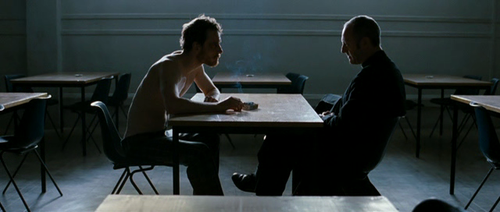
I focus hard on being polite to him. I don’t want to give myself away.
I ingratiate myself with every sentence and every gesture. I reach out and touch his arm, replenish the wine in his glass. He is visiting from Belgrade.
I gush about how wonderful this town is. How friendly and warm everyone is in Sarajevo, how kind and welcoming they are to strangers.
He smiles and asks me, 'Could you please tell me where is that place in the world where you have been and people are not friendly? Is there such a place where people are not nice to foreigners?
I keep my voice friendly. I could tell him of a few places he knows well. But I don’t say that. I keep smiling and talking.
I make sure that I'm smiling and so I send a mental message to my eyes to make sure they are complying and smiling too. I must appear easy, someone he can trust.
I look for points of commonality
I want to show him how a Pakistani and a Muslim is completely sympathetic, friendly, likable.
And I notice that as I listen to him—I believe him—I see his narrative as worthy of sympathy and plausibility.
He is showing me how a Serb, a Christian, is completely friendly, likable.
He is trying so hard—I can see through his smoothness.
I seize on the opportunity when he speaks nostalgically about the wonderfulness of Yugoslavia and how the Serbians miss the good times.
I tell him that the Bosnians feel the same way about Tito and Yugoslavia.
His eyes flash, 'I don't need to be told that,' he says. 'We know that—us—we Yugoslavians know how each other feels.'
It's as though he is saying to me, the foreigner, that he is so done with this, our outsiders interpretations, our interlocutions on his peoples’ behalf—and our narratives of them and on their behalf. He is done with the foreigners’ narratives of the people of Yugoslavia as though these were the truth itself.
His anger touches me. I feel the same way when 'foreigners' speak and write about Pakistan, India and Islam.
I am determined to ignore his constant need to counter each praise or nice word said about Sarajevo or Bosnians. And the constant undermining of what happened in the war. What happened in the war? I suddenly realize that my understanding is based on what has been told to me by Bosnians in the Federation and in the RS who are Muslims, Orthodox Christians and Catholic. I don't have any understanding of how things are understood in Serbia. How they view the world. It seems as though he sees Serbia as a place that is pristine and its people innocent of any crime at all. If there are any crimes, in his view, then they have been committed as crimes that any oppressed group is likely to commit. And have been committed by a lesser quality of Serb—the ones that reside in Bosnia.
Read more »