By Aditya Dev Sood
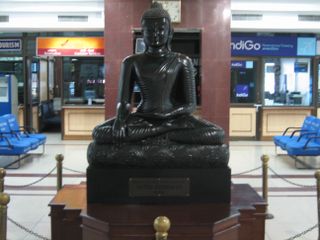
I get into the white Ambassador that has been assigned to me. The driver heats his engine for a bit, before coaxing it fully to life. kaun hotal chalaile? who hotel I get-go ya, he asks me, as we turn out of the airport parking lot. The language seems sweet, pleasing to my ears and easily disarms the gruff and combative khadi-boli attitude that I bring with me from Delhi. As we pull up to the ITDC hotel, my driver gestures to me to be careful in opening my door, lest I disturb the several women in their finery, who are even now getting out of a Maruti van and making their entrance into the hotel. The moment is striking for the sublime attunement that many Biharis seem to exhibit, towards one another’s consocial wellbeing. It is as if they have all known one another in generations past, which, in fact is true, given the long and continuous record of civilization in this region.
The word Bihar derives from vihara, monastery, truncated from brahmavihara, literally ‘an abode for the righteous, the benevolent, the kind.’ Bihar was the first monastic state, of which the Buddhist polities of Tibet, Sri Lanka and Thailand are contemporary, perhaps vestigial, examples. The region was once crosscut by a network of vihara-s, which provided religious, educational, health, and other social services to the laity around them. They served as an essential social and institutional infrastructure for the region’s ancient empires, the least of their functions having been the provision of hospitality for pilgrims, traders and visitors on official business to any local region.
My own hotel looks a mausoleum dating from the only India that existed in my childhood: white marble floors, shahi korma, and behind the reception, the time in New York, London and Osaka. If all this looks like the past to me, here in Bihar these State-run hotels might represent something like order and stability. Later in the night there are people whistling and chatting up and down the hallways and then, more ominously, people yelling incessantly, for over an hour, as if at a construction site. Sir, ve bhi guest hain, aap samajh lijiye hamari position. That the management cannot maintain decorum among its guests seems part of a larger problem abroad in the land.