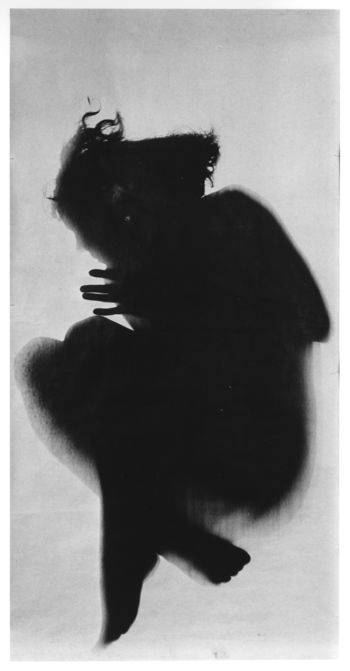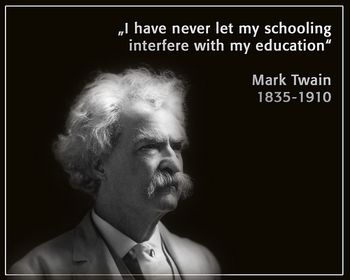
Wakening
Jim Culleny1 Facing Goliath
Like wound springs we wait inside a medic’s room
my dearest friend and lover sits upon the table.We do the ritual things we do
we laugh against doom.Like David with his stone
we do the tiny things we’re able.2 The Surgeon Said
Some days I think
lies would serve us best
but this is my delusionHow could I choose
to ditch what’s real
for a figment of my imagination,
isn’t that the definition of a fool?Whatever it is it’s here so deal with it.
So sorry, the surgeon said,
about the biopsy.3 The Cardelaveo Abyss
Without you would be the
Cardelaveo Abyss
which is no place I know
or which even exists
unless by coincidence
because I just made it up
to convey the vast emptiness
I would know without you.4 Wakening
— On being up in a 2:00 am funkWhat I was doing up
was being down
not in a dreadful sense
but in the way of anyone
suddenly too tuned to everyday events
once hidden in convenient clouds
but now laid bare
as an avocado pit
exposed in half a fruit
staring at the heart if it
and first time seeing it
from head to boot...
Monday, March 10, 2008
Monday Poem
Back on the night 1999 arbitrarily became the year 2000 I stood in the middle of an intersection in Northampton, Massachusetts with friends. Some in the crowd were wearing absurd 2000 eyeglasses, those with horns blew them, others yelled and stomped, confetti exploded from hidden places, and hugs and kisses w
ere exchanged as the ball of light atop the Hotel Northampton negotiated its pole signaling the start of a new millennium. Times Square it was not, but everyone’s entitled to small facsimiles in the land of opportunity.
After the gas had gone out of the celebration’s balloon we all walked off in pre-9/11 and pre-Bushian innocence with our own thoughts of time passing. Typically self-absorbed, we left the street to the internal combustion engine and the night.
A few days later I wrote something that I recalled when I posted W.H. Auden’s Musee des Beaux Arts a short time ago. Auden’s poem is a reflection on a painting by Pieter Brueghel (not the one here), which is itself a depiction of the fall of Icarus.
Auden’s poem reminded me of what I’d written earlier (in subject if not excellence). Though revisited and tinkered with it’s essentially unchanged, and is still a take on swift time and big falls. Considering the eight years since, it might also have been a political premonition.
–Jim C.
…
Ask Icarus
–eyeballing a new centuryLike the rest of us
I had a birthday last year.
I won’t say which, but
when I told a young colleague
I can remember the last day
of World War II
–the car horns and sirens and church bells
and my mother kneeling in the yard sobbing–
when I mentioned this
my co-worker’s jaw dropped
as if the world had been invented
on her birthday.
But to be fair, this is a common misconception.
It takes shape in many philosophies.Still, I can relate to that
–to being amazed by age,
especially my own.I can sympathize as one who imagines
that only yesterday he dug Link Wray live
in a metallic gold blazer
sending three-chord riffs through a maxed-out amp
looking cool behind wrap-around shades.It’s beyond belief, but
that was a half century ago.
I think old Link
is not even around anymore.
So, being easily spooked,
when I walk past a mirror,
my jaw drops too.
Look what you’ve become,
I mutter.My wife’s comment
when I whine like this is:
Think how your mother feels. So,
at birthday time, when as usual
I’m stuck with my own thoughts
(who else’s could I have),
it’s easy to become annually
funked.But why go there?
Take a positive stance.
Forget the inevitable,
take a chance!
There are more important things to worry about
than time and death.
Today offers the only happiness
and hassles now available, so
it’s a good idea to keep your eyes peeled,
your nose to the wind, and do what you can
while you’re here. After that
it may be too late.
Mosquito Nets, Malaria, and Getting the World Healthy
Michael Blim
Sometimes saving lives can be as simple as a six-dollar mosquito net, or a three-dollar drug treatment.
Malaria infects between 350 and 400 million people a year. It kills a million people a year, most of whom are children.
Studies in Africa are showing that protection from mosquito nets and from inexpensive drugs administered at the outset of infection are cutting deaths from malaria in half.
Richard Feachem, director of the Global Health Group, told the Washington Post (February 1, 2008): “This is not theoretical. We do not have to wait for a vaccine or new drugs.” Nets and inexpensive drugs can reduce malaria infections and deaths at a remarkable rate, more effectively than any single intervention since the advent of DDT spraying after World War II.
Other global initiatives against AIDS and tuberculosis are having less remarkable success, but they are underway. Medical support for the 33 million people living with HIV infections is scanty. As of two years ago, only 1.3 million persons with HIV in low and middle-income countries were receiving antiretroviral therapy, according to the United Nations. Despite effective and inexpensive drug therapies and a worldwide campaign, 8 million persons become ill and 2 million die of tuberculosis this year.
Nonetheless, tremendous efforts are being made to replicate as much as possible the successful world campaign to eliminate polio. They have world-historical significance. They give one hope.
But these diseases are also symptoms of an unwell world. Today half of the world’s population lives on less than two dollars a day, and their life prospects are slim. Inadequate or inexistent medical care helps create for them a living hell, albeit one shortened by disease. Catastrophic and acute diseases make quick work of children. Chronic diseases join to move the adults out speedily too. Little or no medical care is no help in stopping their deathly slide.
The global initiatives to wipe out specific diseases will add years to the lives of hundreds of millions, and lessen their sufferings in measurable ways. Yet, the grand global battles to defeat the historic scourges of humankind reveal how feeble are our everyday defenses. While we create a Maginot line against malaria and other big killers, little murders take place behind the lines in the world’s hamlets and slums. There children die of dysentery and pneumonia, women die in child birth, and everyone faces lives limited by lack of nutrition, decent housing, as well as by the lack of access to clean water and sanitation. Children all over the world, 32% of the total under five years of age, are “stunted,” meaning that they are significantly below minimum standards of height and weight for their age. Another 10 million children are suffering the effects of body wasting, the most severe among signs of chronic malnutrition.
Economic inequality is the biggest killer of them all. It is the Pied Piper of disease and early death. The slums, the fetid drinking water, the open sewers, the malnutrition – inequality visits all of this on the world’s poor. They have serious medical needs. Their countries have anemic economies and little wealth. They can afford to spend only small amounts on medical care.
Consequently, the 30 rich countries that compose the Organization for Economic Cooperation and Development (OECD) account for 90% of the planet’s health spending, even though they comprise only 20% of the world population. The rich countries on average spend $3170 per capita on medical care, while poor countries spend $36 a year. Considering the abysmal health status of the poor (both inside and outside of the rich countries), one might expect in a fair world that expenditures might be reversed, with the lion’s share going to those in more dire medical need.
But the global flows of health finance are no different than those for other basic goods and wealth. They flow to the figurative north, as does medical manpower. Only one in four African-trained medical doctors still practices in Africa. As Miriam Were, head of the Africa Medical and Research Foundation put it: “There are more Ethiopian doctors on the East coast of America than there are in Ethiopia.” (Minnesota Daily, March 7, 2008) Four million new medical workers are needed to provide basic medical care to the world’s poor. A new generation of health providers must be recruited and trained from among the hundreds of millions of educated young people in poor countries with no money, no jobs, and no prospects. This costs money that poor countries don’t typically have, but training and employing their bright young people creates value for them and the society.
The solution then lies with reversing the flows, and putting money into medical care for the world’s poor, at home and abroad. Let’s set aside the question of universal health care in the US, as our politics is being re-directed to find a solution.
Looking abroad, there is a solution too. Wealthy countries can provide the funds and expertise to construct basic national systems of health care in poor countries. An international commission of the World Health Organization reported in 2001 that if you doubled the money per capita poor and middle-income countries spent on their citizens’ health care, you could quite successfully improve the health of their citizens. The commission recommended that funds be channeled into community-based health centers staffed largely by para-professional health workers. With the supervision of nurse practitioners and doctors, the health workers could successfully treat the simple but deadly infections that plague us all while delivering the supportive therapies for malaria, HIV, tuberculosis, and other killer infectious diseases.
The cost is surprisingly modest considering the magnitude of good the program would do. The WHO estimates that wealthy countries would have to double their current foreign aid contributions to poor countries. This would mean distributing $120 billion annually to support basic health care for the poor worldwide.
This is not a lot of money. There are so many comparisons I could offer, but consider just one. The United States is now spending $12.5 billion a month on the Iraq war. Ten months of the US Iraq war bill would pay for the whole world annual cost. In real terms, our share would surely be no more than our proportion of 22% of the total funding of the United Nations. We would be way ahead in so many ways.
Building national health systems, linking care through networks of local health centers, providing training and organizational development are things that all wealthy countries know how to do. Our hospitals and care facilities are our cathedrals, and well they should be. We can pass on these skills as well as money.
So fight malaria with nets and drugs. Provide basic health care for the poor worldwide. And destroy the economic inequality that puts the world’s poor on death row.
Maybe then one piece of a better world can be put in place.
Tosca’s Birthday
Elatia Harris
I’m due for a significant birthday this week, the one that most women associate with the butt-end of their child-bearing potential. But I shall observe it in the same way I have observed all my birthdays back to the age of 18: I shall spend the day naked in front of a full-length mirror, drawing myself. I plan to do this every year for as long as I live, and I welcome even the most grotesque changes in my appearance for the interest they add to the birthday portraits. It is for these inquiries into the action of time and character on form that my biographers will especially thank me.
Oh, not that they’re at my heels yet, those biographers. I’m too far ahead of them, and in my lifetime shall remain so. I can just about prove it, too. Get this. Every year, there’s a big drawing show in my city, curated by someone fancy. It overlaps my birthday, and I always enter the self-portraits from the year before. Not once have I been juried into this show, or into any show, anywhere, that would establish me as an artist of merit. Since my eyes are trained on the future, this doesn’t bother me like you’d think. I even attend the drawing show openings to find out what’s working for the current darlings, safe as I am from imitating them.
I run into quite a few people I know by sight at these events, though I can’t imagine who they think I am. I don’t carry on like an artist. If there’s such a thing as a proofreader personality, then I must have a touch of it. That’s what I do all night – proofread for a law firm downtown, purging significant errors. When the lawyers return to their desks in the morning, they’ve got all this creamy copy. You can’t really have a conversation about it. Nevertheless, by now I’m a fixture at the big annual opening, where I’m usually thrown a few crumbs.
You’re looking at that awfully hard, you know.
That’s the basic remark that gets made to me. Yes, I know – I’m feeding my hungry eyes, I don’t say. I never know what to say. That used to be all right when I was younger – no one finds fault with slender, speechless girls. In those days I could think my own thoughts with people chatting around me, and it was almost like being among friends. It’s harder now. I’m old enough that I should be asking others about themselves, drawing out younger people and fostering their well-being – and I don’t know how to do any of that. Nor do I care to. I live for art.
So did Tosca, of course. And I get lonely, so I talk to her sometimes. You’ve heard the aria – I have lived for art, I have lived for love… Sure, Tosca feels cosmically shafted because she’s put all her eggs in one basket. But that’s not it at all, I keep telling her. To have lived for art and love both – it’s too much to do, not too little. You can’t live for love if you live for art, because you can’t mess up your life that way. If you live for art, you must sedulously avoid the whole ghastly dance of family and love. It’s a very good idea not even to have had a mother.
And, children? Now there’s a giant schuck. Who says they have to be good, beautiful, smart, healthy and self-supporting?
You think it won’t happen, but they could even be developmentally delayed – nice way to put it. A few years back, I lived across the street from a big, ugly house with a cyclone-fenced yard where they ran a program for young adults with developmental delays. An absolute torment to me! How could I know for certain that one of those kids was not the child I gave birth to twenty-odd years ago? I know nothing of it, I wouldn’t even look at it before they took it away, but there I was, possibly domiciled not a stone’s throw from it.
Worse, the inmates were no end of friendly. They’d wave and smile and try to start conversations with me when I was on my way to the market. They’d poke two or three digits through the diamonds in the cyclone fencing, fingering my air supply. It was just too much, whoever gave birth to them. And I had an almost ideal space on that street – big windows, no cockroaches, and a corner under the eaves for my futon – with hopes of hanging in for years and years. It was so cheap! But my sensitivities were such that I had to move as soon as I could save enough money to rent a truck.
Tosca is very far from a bad person to run these thoughts by. As an artist, she understands sacrifice. But Tosca, I tell her, I am talking about tremendous sacrifices. Would you have been up to them had they not brought you fame? If they had brought you – instead of fame – simplicity?
I have always felt favored by fortune that that my body of work evolves independently of such questions as money, the approval rating of others and trendiness. I don’t ask that anyone buy it, like it, or even acknowledge it. And I require just about as little in the way of an audience as a person practicing meditation. Oh, not to suggest that drawing is for me entirely experiential. If it were, I’d be happy to destroy my work at the end of a studio day; instead, I catalog and store everything like a conservator. I’ve got a little museum of myself – a futon, a big mirror, and a little museum. A life of devastating simplicity.
Tosca knows I was not always so wise. In art school, one had to submit to critiques, and relying on others for a sense of reality was a hard habit to shake. Art students who don’t imagine they’re in the fast lane to fame suppose instead that the world will be hostile to their art, glamorously reviling it. That people who matter will get worked up enough to hate it. As if. I, no more than any student, figured on a world with an endless capacity to be underwhelmed by the very best I knew how to do. But I soon discovered powerful knowledge – that indifference is only killing if it’s what you get while seeking something else. Don’t seek that other thing, and an Everest of indifference cannot bury you.
Still, I do seek entrance to that big drawing show every year. But only because my biographers will turn up my more than twenty rejection letters from its discerning curators, interleaved with acid-free papers, so they’ll jump out at them, fresh and bright and stinging. They will never infer from the extraordinary care with which my work has been preserved how overlooked it shall have been. Oh, the linen-lined portfolios, the fitted boxes, the meticulously cross-referenced inventories… It’s as if each drawing had a genealogy, a christening dress and a cradle.
Tosca, I’ll be happy to take a hard look at my naked self later this week, in the unsparing light of my day-long annual ritual. Radiant to record whatever I see, hanging like a lover over every little difference for the worse. Rembrandt knew better than to give himself the aging diva treatment, with every passing year a more elaborate headdress, increased gaudiness, cagier fat-concealment – and I know better too. Rembrandt and I are not mocked by corsetry or jewelry, and nobody pays us to make ourselves appear grander or younger or better pleased than we are. It’s just our mirrors, our materials, time and the truth – if we can catch it.
Could you live this way, Tosca? Could you labor all night at a job so self-effacing that ideally no one even knows you’ve done it? Could you sing all day in the shower, taking care to do those exercises that will allow your voice to grow both richer and more shimmering, so that you could go on to sing even better – in the shower? And what about singing in front of a big mirror in your birthday suit? Good way to lose your audience, huh? Good way to get indisposed!
Well, a birthday is a natural opportunity to wonder why you have such a low-impact life. For this reason, it’s key to be doing something you can’t dispute the significance of on that day. I’ve read that getting your hair done and dressing with extra care in a new garment can be good for birthday morale, but that translates directly into less money for premium art supplies and conservation materials. You want to know how I visualize morale? It looks a lot like a six-foot stack of hand-torn Fabbriano drawing paper. That’s what security would look like too. And probably even love. Yes, I would rather have a six-foot stack of Fabbriano paper in my life than anything else Italian of that height. Tosca, you would not be able to approach that purity of vision – not with a tenor like a puppy and the Roman Chief of Police hot on your tail. How much finer to revel in personal simplicity, aspiring to an ever more transparent life. A life like a pane of glass. Look at me, Tosca – I shed personal belongings as naturally as others acquire them, I spurn the entanglements they seek, would quickly be surfeited by the sensations they crave. I keep going week after week on apples and mashed chick-peas, and this is no austerity but alchemy resulting in that which is most precious – daylight, and time.
Without fanfare, Tosca, I roam the city, without having lingered to make sure that my diva-cloak and my genius-hat are fetchingly adjusted. And look at you – you fight it so, with your retinue, your feathers and your long winding train. Why not go about in public as naked as the cold allows, accepting that you are but the custodian of your gift, that it is your gift that matters and not your high-waisted, low-necked gowns. And certainly not your crimes. Yes, go about naked, and see what happens. I can tell you, no one will be making up to you then.
Do you think, Tosca, that you are the only woman ever to have to dispatch the heavy in her life? Well, you carry on like you thought so. Ooh, the candelabra, the crucifix! I came relatively late to proofreading, little suspecting till recently that I had a natural affinity for tweaking the kind of unclear sentences that give rise to legal misunderstandings. An enlightened lawyer, whom I’ve since retained for other reasons, saw that it would be the perfect gig for me, but for many years I did the kind of odd jobs that cause one to rub shoulders with the public, including of course the police. I was a hostess at De Medici’s down on Ninth Avenue, and that’s a cop joint – oh, you know how turfy they are, especially when they’re obsessed. Like you, I was stalked by a crafty cop whose head was full of ideas, intent on following me from that life into my real life in art. I did what I had to do – my art gave me the strength for it. But you? You did what you had to do, and then you leapt off the Castel Sant’Angelo. Sheer grandiosity, Tosca – you needed only the right lawyer.
But you will say you died for love. Aww! Love, men and babies! You can’t go near any of it if you want a proper studio day and the materials and peace of mind to care for your work, to kit it out for the Silent Land like a Middle Kingdom princeling guiding his gorgeous barque through the Sea of Reeds. Yes, my work is headed for the future, cunningly wrapped and accurately aimed. Oh, look, they’ll say in the future, she didn’t use a camera for that, she just…did it! Oh, man – no one even knows how to draw like that anymore. Nunh-uh, I don’t need to be there to know what they’ll be saying when the lid of the sarcophagus comes off.
I intend to keep on drawing throughout my brief incarceration. And my lawyer – also my employer – has promised that the rent on my studio shall be paid, my archives untouched, my job restored to me. I’ll be no trouble to the criminal justice system, which will hardly know I’ve passed through it, since a simpler, clearer offender would be impossible to find. Why, I’m virtually invisible: a guitar string for a digestive tract, a thickening of the air at the cortex, vertebrae like motel ice, and sinews but the shimmer off hot pavements. I don’t know, exactly, how this has come to be, but you can follow its evolution in the birthday drawings, where there’s no escaping the truth. For the last several years, really, I’ve just been drawing the mirror, because that’s exactly what I see.
This is what happens, Tosca, when you have truly lived for art.
Monday, March 3, 2008
The Uninsured Patient
Shiban Ganju
My pager beeped while I was standing in line in Starbucks. I checked the message – it was the telephone number of the ICU. I ordered my coffee and stepped aside to call. The nurse informed me, that I was asked to consult on a 33-year-old patient who had been admitted the night before. He had uncontrolled diabetes and had vomited blood.
What is the hemoglobin?
Thirteen.
Not bad. Is he on any anticoagulants?
No.
Any history of alcohol?
No.
Any aspirin or ibuprofen?
No.
I grabbed my grande and rushed to the hospital. In my mind, I rearranged my schedule for the day and decided to start with this patient in the ICU. I figured it will take me a few minutes, but I was not prepared for what I saw.
An oversize man lay sprawled on the bed from one side-rail to the other. He looked bigger than his stated weight of 367 Lbs. His gullet rattled behind the oxygen mask, as it croaked with each breath; beads of sweat glistened on his balding scalp; his huge flaccid limbs lay motionless. His pale face announced impending death. I glanced at the monitor: his heart galloped at 120 beats and his blood oxygen level touched a critically low number.
“Get me a blood gas and call respiratory.”
I sensed the danger. In a few minutes, the blood gas result showed that his oxygen level and pH (blood acid level) were incompatible with life. The respiratory team showed up and we inserted a tube into his trachea and connected him to a ventilator.
We injected sodium bicarbonate to neutralize excess acid in the blood and rushed in more intravenous fluids. The numbers on the monitor showed improvement. We sighed relief.
Now we had a small hiatus to recapitulate. JD was a truck driver on a long haul and had become nauseous and dizzy driving on the highway, six hundred miles away from his home. On seeing a hospital sign, he had got off the highway and staggered into the emergency room. JD’s life was succumbing to diabetic keto-acidosis, also called diabetic coma. An untreated bronchitis had progressed to pneumonia, which had triggered this disaster.
He was now temporarily stable for me to inspect his stomach for bleeding. I slipped a fiber-optic endoscope into his esophagus and advanced it into his stomach and duodenum. Flecks of blackish curdled blood covered the stomach lining. I searched every corner but could not find any fresh bleeding, which was good news, but it also made me uncomfortable because I did not know why he had bled. I had expected to see small ulcers, but he had none. I stopped the procedure and pulled out the ensdoscope.
I called the primary physician and updated her about JD and advised her to request pulmonary, endocrine and infectious disease specialists to see this patient. We needed more help.
Before leaving, I enquired if JD had is family around.
I walked up to the waiting room. Two ladies, with fear on their faces, approached me and introduced themselves as the mother and wife. I explained to them in simple language about his serious condition. This was the time to know his story.
How long did he have diabetes?
Two years.
What medicines was he on?
He was trying to control it by diet.
Is that what his family doctor had recommended?
No, he had prescribed some pills but he never followed up.
Why not?
He had no insurance – we have no insurance.
JD was a hard working honest man who was teetering at the edge of life because he could not afford health care insurance. About eighty percent of all uninsured people belong to such working families. Even middle class families find health insurance beyond their reach; about 40 percent of uninsured have a household income of $50,00 or more.
His employer had dropped health insurance because he could not afford exorbitant insurance premiums.
I looked at my watch: we had been there for two hours, which meant I would spend rest of the day trying to catch up. The accusative looks of the patients waiting in my office haunted me especially. I decided to go to my outpatient office first and postpone my hospital rounds for the evening and I would just apologize for being tardy.
Close to the end of my office hours, I received a call from JD’s nurse. JD had again vomited blood and he had produced no urine since the morning; his hemoglobin had dropped to 8 grams suggesting serious blood loss and his kidneys were failing. I asked the nurse to transfuse two units of blood, get a kidney specialist to see JD and get ready for a repeat endoscopy. I hurried my last patients out of the office and rushed back to the ICU.
I reinserted the endoscope into JD’s stomach. It looked completely different. Dark red blood had filled the stomach. Again, I searched for the bleeding spot and could not find it. In frustration, I decided to pull the endoscope out, when a slightly brighter shade of red caught my eye; the blood in the upper part of the stomach looked fresher than the rest of the stomach. This was my last chance. I pumped in more air to distend the stomach and we tilted JD to move the blood out of the upper stomach. And there it was: a miniscule of a nipple, one millimeter of a blood vessel squirting fresh blood with each heart beat. I had to stop the bleeder or JD would bleed to death.
Give me epinephrine.
I injected epinephrine into the bleeder. It still squirted.
Give me a clip.
I attempted to staple the bleeder with a metal clip but my clip missed the constantly moving target. Give me one more clip.
Second try failed.
Give me one more.
Bingo! I got it! The clip strangled the nipple in its jaws. The bleeding halted instantly.
I checked his chart; all the consultants had seen JD and initiated intensive management. I talked to the family again and finally went to complete my hospital rounds, about ten hours late. I would again be apologetic to the waiting patients.
If JD could have afforded it, he would have seen a primary care doctor and controlled his diabetes. If JD had cared, he would have not grown to a mammoth size; his callous eating behavior and the inefficient health system had landed him in this intensive expensive care, which could have been avoided by spending much less on prevention.
Between 2000 and 2005 the average annual increase in insurance premiums for small companies was 12 percent compared to 2.5 percent inflation rate. About 266,000 companies, mostly with less than 25 employees, cancelled their health insurance between 2000-2005. Even when employers offer insurance, high deductible and co-payments become prohibitive for some employees. The percentage of employed people with insurance has decreased from 70 percent in 1987to 59.5 percent in 2005.
JD and unfortunate people like him cost $100 billon annually to the health care system, out of which hospitals provide $34 billon worth in inpatient care for which they are not compensated. They shift the costs to paying patients to stay solvent.
Uninsured people spend about $ 26 billion out of pocket and rely on emergency departments. The uninsured have up to 50% more chance of being hospitalized and have higher chances of dying early. Experts have estimated that the number of excess deaths among uninsured between the ages of 25-64 is about 18,000 a year.
Unfortunately, the political debate in health care hovers around one question: how do we provide health insurance to all? This politically popular question misses the point. The correct question should be: how can we make health care affordable? Unless we ask the right question we will not get the right answer. As long as health care is expensive, health insurance will be unaffordable. Various studies tell us that 164,000 to 300,000 people loose employer paid health insurance if the premium increases just by 1%. The right reform will have to answer the question of cost or the reform is unlikely to succeed.
Spending more money is not the answer. Health care expenditure increased from $ 1.4 trillion in 2000 to $ 2.1 trillion dollars in 2007, yet in the same time about 8 million more people lost their health insurance. A universal health care coverage without cost control is unlikely to succeed. Recent failure to provide universal coverage in California proves this point. We are in a crisis, but we do not want to debate the costs because the answers will be unpopular.
Yet, amidst all its inefficiency the American health system does succeed. JD recovered almost completely in three weeks and went home – exhausted and a few pounds less. Studies have shown that among the industrialized nations, the US health care is the most expensive but also most likely to deliver the ‘right care’. The US health care triumphs, when it delivers.
Epilogue: About six months later I received a card from JD and his wife. The hand written cursive note in blue ink thanked me for my services. JD was unable to work for five months but had been rehired a month back. His wife had picked a second job in housekeeping in an office building. They had applied for Medicaid but the state had rejected the application; they were not poor enough.
Judith Warner Is in My Head
Justin E. H. Smith
Judith Warner is in my head, and she won’t leave. She’s been in there for three weeks. Now I don’t mean I’ve been thinking intensely about Judith Warner for three weeks. I mean she is actually in there, perceiving the world through my eyes, seeing everything I see, peeing standing up when I pee standing up. Seeing it all.
Let me explain. This is not like Being John Malkovich, where the parasitic consciousness takes over control of the host body. I need to make this clear: Judith Warner has no control whatsoever over my sensorimotor system. She has to sense whatever I sense, and do whatever I do, whether she wants to or not. She doesn’t like Ravioli-O’s? Tough.
How did this come to pass? Those who know me will know that I suffer from obsessive-compulsive symptoms, including the irrepressible desire to swallow whenever I see the letter ‘A’ and to feign a sort of half-spitting, half-vomiting motion whenever I spot an ‘F’. I’m out of my gourd, but we knew that already. The question now is: How did Judith Warner get into my gourd?
One obsession I seldom discuss is this game I’ve played with myself for as long as I can remember, wherein I envision someone –someone famous or familiar, someone I admire or despise, a man or a woman, but usually a woman– seeing the world through my eyes, and I pass my time imagining what that person would think about the situation they find me in. Thus for example when I am in an airplane I might imagine Leonardo da Vinci or Benjamin Franklin suddenly popping into my head and thinking to themselves: Why, ’tis a carriage that flies through the air!
I think I do this to compensate for the absence of religion in my life. There’s no God, sure, but that doesn’t mean I don’t get lonely. So I summon up former middle-school teachers, or Roxie Roker or Enver Hoxha, and they concentrate intensely on the world as I am experiencing it, and this accompanying psychical investment in my world is something I find very comforting.
They generally stay anywhere between 10 seconds and 5 minutes. Usually, if something else requires my concentration, as when I enter into conversation with a real, physical person, the spirit of Nia Peeples or the evil Dr. Goebbels will quickly exit my body, leaving me free to take care of my real-world affairs. If I find myself doing or seeing something that I wouldn’t want my guest consciousness to do or see –when I lived in New York the sight of a New Jersey license plate was enough to spoil everything–, then I quickly annul the visitation, and Imelda Marcos or Paul Harvey or whoever it happens to be obligingly floats right out through my ear.
Somehow, Judith Warner just got stuck.
It all started when I was reading her “Domestic Disturbances” column in the New York Times of February 7. Now it can at least be said that the column has an apt title. Warner tells of disturbance, but the disturbance never proves to be untamable. Nothing entirely savage and foreign and incomprehensible in the terms of familiar domestic order may be mentioned. Things get a little crazy, but not too crazy. Thus she describes the seemingly anarchic gesture of throwing away the New Age coffee-cessation kit that had been given to her by some well-meaning sap, before informing us that in any case the “coffee” she drinks is decaf. She tells us that husband Max used to smoke, but of course no longer does. And she recounts the time she accidentally threw daughter Emilie’s favorite chocolates from Paris in the trash, an apparent confession of weakness in which all that really comes across is that the girl’s name is not Emily but “Emilie,” and my, what cultivated taste the little one has.
Warner doses out morsels of disturbance, but will never let more than a sentence or two go by before restoring the perfect domesticity for which she is no doubt the envy of countless American women who still drink real coffee, whose husbands still smoke or have already died of lung cancer, whose daughters would prefer a wholesaler’s crate full of Little Debbies. If I may be permitted to sound like Perry Anderson, hers are disturbances that leave the underlying structure rigidly in place. This structure is the bourgeois family, whose ideology would have it not just that those who manage to arrive at such a level of comfort and security as she boasts are fortunate, but that they are better, morally better.
This conviction came out all too clearly in the column that set in motion the chain of events I’ve been describing, where she writes of the disappointment she feels upon learning that her middle-aged “guy friends,” just like any common proles, have sexual fantasies about nubile young women: “I spent the following days nursing a sputtering sort of rage,” she confides. “The conversation marked the end of an illusion, you see. I’d thought that in our little bubble, a bubble, it should be said, that was defined not by class or money or education, but rather by goodness and decency and values and realness (even I am laughing now), the men were somehow different from the men Out There who dated women multiple decades younger than themselves, prized them for their looks and their fecundity and fell in love with the magical rejuvenating mirrors they found in the women’s adoring young eyes.”
I take this as a rare moment in Judith Warner’s oeuvre, in which she gains a modicum of class consciousness, and recoils in horror. Of course her social bubble had always been constituted not on the basis of moral excellence, but on the basis of shared class identity, and of course all of the members of her class are also, simultaneously, homo sapiens. Now I am not an evolutionary reductionist, but it seems fair enough to say that when Judith Warner’s friends violated her sense of propriety by simply speaking honestly, millions of years of evolutionary pressure –pressure to spread your seed as far and wide as possible, in the most fertile vessels to be found– came weighing down in favor of their desire, and the fragile niceties of that class that she had previously mistaken for the eternal moral order of things could simply constitute no argument in response. Judith Warner’s bubble got pricked.
But none of this helps us to answer the question urgently at hand: What is Judith Warner doing in my head? I can recall the exact moment it happened. There I was on February 7, reading her column, and I was so annoyed, and I wanted so much for her to see how annoyed I was, to know how strongly I disapprove of her entire Weltbild. And all of a sudden, pop, there she was, looking at her own “Domestic Disturbances” column on my computer screen and shaking her head. Well, she was not shaking her head exactly. I was shaking my head, and she was now being shaken along with it. It must be understood that, unlike all the countless thousands of visitations I’d experienced before Judith Warner, this time I had no choice in the matter. I did not will her to appear; she just appeared.
In the beginning, I resented this uninvited visit tremendously. I wanted to let her know that she was not welcome, not in my head. Whereas with earlier visitors I had always tried to put my best foot forward, with Judith Warner my initial instinct was to do precisely what I imagined she would find most unappealing: eating over the sink, drinking cheap wine out of my favorite coffee mug as I watched other people’s pets doing the silliest things on YouTube, listening to Spank Rock as I did the dishes, instead of, say, Vivaldi.
Oh, to recall those early days of futile resistance! Around the beginning of week 2, something started to shift in me. I can’t say what it was exactly; it came through in my behavior even before I became conscious of it. For instance, I had known that Judith Warner spoke French, as she had been a special correspondent for Newsweek in Paris. That after all is how Emilie came to love her chocolates. One morning –it must have been day 9 or so– I was searching for something really vulgar and juvenile on the iPod, something to flush out that squatter once and for all, that damned Ms. Bartleby of my brain, and my thumb just happened to stop on an album from the one-named chanteuse Barbara, whom I hate, and whom I had only downloaded in the first place because someone unreliable told me she was “like a female Jacques Brel.” I pressed play.
Soon enough, I was missing no opportunity to sing c’est une chanson/ qui nous ressemble… as I rode my bike along the canal, or to casually slide a volume of Mallarmé off the shelf of an evening, and to thumb through the pages, mouthing the lines of verse in what I took to be a fairly good accent. At the end of week 2 I even took her out to dinner, which is to say I took myself out to dinner, ordering dishes I thought she would appreciate, like shrimp scampi, and all sorts of bitter greens. By the middle of week 3 I was downloading Nana Mouskouri.
You must understand I had every intention of keeping up my resistance right through to the bitter end. But as I said my behavior changed quite apart from any decisions I’d made, just as Judith Warner appeared in the first place quite apart from my will. No, this is no game I’m playing with myself, not this time. And perhaps I was being dishonest when I claimed complete control of my body. Every day, it grows harder to say who’s calling the shots.
I don’t know how she got there, or why she didn’t float out like Lance Bass and Ralph Cudworth and all the others after just a few minutes. Maybe she just likes it in there. Maybe it’s not that she’s trapped, but that she actually decided to stay of her own free will. Perhaps the domestic disturbances she’s fleeing are greater than she lets on in that anodyne column of hers.
What’s clear is that, as time goes by, the host and the parasite are beginning to work out the terms of a peaceful co-existence. Sure I hate her Weltbild, but how much do Weltbilder really matter at the human level? She makes me want to be a better man, and I like to think I’m showing her things she never would have stopped to notice on her own. Would she ever have chosen to read Witold Gombrowicz? I doubt it. I’m still calling some of the shots. It’s all about balance, you see, her needs and my needs. It’s all about taking the time to spend time together, just Judith Warner and me. And Ferdydurke, and “The Four Seasons,” and a nice hot cup of decaf.
*
(NOTE: Fearing a libel suit, my lawyers have advised me to reveal to you that Judith Warner is not, in fact, in my head. I made it all up. It’s nothing but a satire, you see. A send-up. A canard. Judith Warner is safe at home with Max and the girls, and will be returning to her regular column at the New York Times after a two-month book leave. Now, if I could just get Joyce Maynard dislodged from my colon…)
—
For an extensive archive of Justin Smith’s writing, please visit www.jehsmith.com.
PERCEPTIONS: painting shadows
Fireworks Display Exhaustion Syndrome
Australian poet and author Peter Nicholson writes 3QD’s Poetry and Culture column (see other columns here). There is an introduction to his work at peternicholson.com.au and at the NLA.
Once upon a time Sydneysiders were content with a modest fireworks display which, it was agreed, enhanced the beautiful environs of Sydney Harbour, ushering in the new year with suitable éclat. Then two fireworks displays were thought more generous, one for the kids earlier in the evening and one for the kidults at midnight. The Harbour Bridge was discovered to be the perfect setting for all manner of fireographics. These displays began to be broadcast overseas whereupon fascinated backpackers from all over the world, and fleeing the northern winter tempests, disported themselves under the Southern Cross along with several hundreds of thousands of locals. Next it was decided that just two fireworks extravaganzas were just too ho-hum. Why not have, for the midnight show, three concurrent fireworks displays at different points along the harbour. This would be the spectacle to outdo them all and make, say, the tepid fireworks in To Catch A Thief as Grant and Kelly smooched, look truly pitiful (sexual metaphor or not). Now these events have further catapulted themselves into a ginormous extravaganza wherein, it seems, millions of people formicate along the shoreline and one wouldn’t be surprised if Juvenal put in an appearance to tell everyone they didn’t need their bread and circuses. Not that he would be heard above the din. The fruit bats might scatter, dogs whimper and cats lose some of their nine lives: Sydney’s citizens are getting what they have come to expect. But this year I was in no mood for this visual delight and had to be pushed into taking the usual spellbound visitors to a suitable vantage point. I was suffering from a previously undiagnosed psychiatric condition—fireworks display exhaustion syndrome.
Which I think might just stand as an image for a cultural malaise at the present moment. Excess is all. One cannot look carefully at a few paintings or prints by the artist. You have to have the entire oeuvre thrust upon you—the blockbuster. What happened to the good old Ken Rosewall and Rod Laver tennis matches, a glass of lemonade to hand. Now the poor things often sound like they are being tortured on court as the 200 kph balls whizz towards them (‘bruised ribs’, ‘withdrew with a groin injury’, ‘knee surgery needed’) and gross advertising gets in the way of everything. I was pleasantly surprised recently when I saw No Country For Old Men and was able to listen to quiet on the screen for considerable stretches of time, not have my ears assailed by some caterwauling sound track. The psychopath Anton Chigurh does his killing in relative silence.
But wherever you turn these days there is an unconvincing oversupply of product, whether from various ‘experts’ with their prognostications, who all seem close friends of Megal O’Mania, from politicians who have learned the art of spin, saying at length what they think a majority of the public want to hear, or by the omnivorous eye of the television screen with its teeming banalities. Then there’s Blogolopolis with its strange combinations of the gladsome and the hamstrung.
Perhaps I’m wrong and we have never had it so good. After all, this is democracy in full swing. Do all eras have similar excesses—Victoriana, Baroque church decorations? Maybe this abundance is beneficial, and the sick feeling in my stomach is just sour grapes. It could be that capitalism needs to recycle money to get the engines of increase well oiled, and that the excess of cultural product of all kinds about now is just an efficient way of doing just that. Or it could be that we have reached a decadent phase from which the only way out is a certain steadfastness and modesty. Sobriety. Self-criticism. A renewal of thought and feeling, purged of the garish cyclorama we have taken to be our present due, an abandonment of the idea that we can know everything, or even anything, in comprehensive detail.
‘A major, unmissable theatrical event’; ‘Nothing short of miraculous’; ‘Should be required viewing’. Well, maybe. And then again, maybe not. It always sounds try-hard to me, and the moment I read such over-the-top blurbs my antennae bristle. God knows, I’ve seen the canoes filled with oil, the woeful video installations, the theatre written up that made the thighs ache with boredom, begun the books spruiked, then abandoned them. We all have.
Books I should not have written. Music I should not have composed (I’m not Bach). Paintings I should have put in the compactor. I am not a fount of universal wisdom on culture even though I often imply I am. Director’s cut of favourite film is shorter than the original!
That might seem a fantasy of fulfilment in our present era of hypedom, but how much better would culture be with some rigorous self-appraisal, some denial. Henri Duparc composed a handful of songs. Ravel and Debussy were fastidious composers, not a note too many between them. As paintings grow ever larger, think of Goyas’s etchings. If you’re Tolstoy, OK, write War and Peace, but if you’re not, slash your ‘masterpiece’ to ribbons. Blue pencil those adjectives. Does your article need those extra paragraphs? What is the point (a cheque?) of having millions of people reading your work or listening to your songs if what you have done is sell the human condition short or put out content that is not equal to my depth or to your depth?
Bilious from overexposure, the mind reels with surfeit, febrile, then cloying, finally clotted. Release your own inner Anton Chigurh. Purge yourself of overwriting, overpainting, overproduction. No more three hour plus films. No more compositions for string quartet and helicopters. No more reinforced floors needed to support your towering sculptures.
You may yet realise that you are causing the equivalent of fireworks display exhaustion syndrome and do something to atone for your sinfulness.
Monday Poem
Rags to Richness
Jim CullenySitting with a coffee in the morning sun
seeing the high ledges a mile offWe go up there to perch on edges
and peer down into the bowl
that cups our town’s tiny sprawl
into the creases and pleats between
the treed knobs of old mountains
—a serene sprawl
except when cars come full of pilgrims
with a taste for the quaint.
Then I can’t find a place to park.
Then there goes quaint.
Then it’s more like New York.I glance down into my coffee’s dark-browness
into it’s french-roastedness, and think of Maxwell House.How far I’ve come from
my mother’s ordinary
perked Maxwell’s
to free-market gourmet,
dark-roasted Dean’s Beans,
expressed, french-pressed,
or dripped.How far up the food chain
from being the son
of a honey-dipper’s son
and bluecollar squirt, to being one
within easy reach of lattes
and cappucinos fizzed from pots
in our town’s surfeit of java huts.Lattes and cappucino for the world of one,
cake and Maxwell House for the rest...
Sandlines: Franco, King of African Rumba
Edward B. Rackley
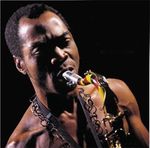
Africa has produced many musical giants. Some, like Fela Kuti and Cesaria Evora, achieve international renown; others influence a wide swathe of musicians but remain relatively unknown to a wider public. François Luambo Makiadi (6 July 1938 – 12 Oct. 1989), the Congolese bandleader and guitarist, is definitely in the latter category. Considered the father of the modern Congolese sound, he is a towering figure even in death, and certainly the greatest the DR Congo (formerly Zaire) has ever produced.
Nicknamed “the Sorcerer ” for his fluid, seemingly effortless guitar playing, François or ‘Franco’ founded the seminal group Orchestre Kinshasa Jazz, shortened to ‘O.K. Jazz’, in 1955. Franco led O.K. Jazz—later dubbed ‘T.P.’ or ‘Tout Puissant (almighty) O.K. Jazz’ by his fans—until his death, a total of 33 years.
In 1989 after his premature passing to AIDS at 51, the Zairian government declared four days of national mourning. The national radio service, Voix du Zaire, played only Franco songs, twenty-four hours a day. In the countryside where I was living at the time, daily life stopped entirely, out of solidarity and respect for a man many felt they knew personally. Neighbors sat under palm trees listening to radios, farmers and schoolchildren stayed home, the palm wine flowed. Although I didn’t know Franco’s music well at the time, I recall noticing an absence of repetition in the DJ’s playlist. No wonder—with over 100 albums in thirty years, the O.K. Jazz discography far exceeds that of Elvis and the Beatles combined.
Franco achieved iconic status not for his guitar wizardry, his talents as a composer or vocalist. His greatness lay with his abilities as a bandleader, organizer and recruiter of new talent. In O.K. Jazz Franco offered a launching pad for many artists, including Sam Mangwana, Verckys Kiamuangana, Mose Fan Fan, Youlou Mabiala, Papa Noel, Dizzy Mandjeku, Josky Kiambukuta and Madilu ‘Système’ Bialu. All of these and more floated in and out of O.K. Jazz, many with important international careers of their own. Ultimately, though, Franco had the vision to push the music forward, to form line-ups that could master develop the rumba style with it various offshoots, including the speedy Soukous, which blossomed in the late 1960s.
Here’s an early 1960s rendition of ‘Toyeba Yo’ (‘We know you’), with a young but already large Franco in the back:
Roots of African Rumba and Soukous
Franco’s family moved to Congo’s capital as a Belgian colony, Leopoldville, when he was a child. By the age of ten he had mastered his homemade guitar, listening to European music via colonials and missionaries, and to Cuban ballads playing on local radio. After his recording debut as a studio musician, he formed a band at 15, which debuted at the OK Bar in 1955. He took this name a year later for the new band, calling it ‘O.K. Jazz’. Within a year they were challenging the established stars, Dr. Nico’s ‘African Jazz’, as Congo’s top group.
Like African Jazz, O.K. Jazz started out playing their versions of Cuban music, whose rhythms had bounced from West Africa across the Atlantic and back. But while African Jazz continued to look to outside influences, Franco and O.K. Jazz turned to Congolese traditions. He shaped the Cuban rumba into the ‘rumba odemba’, named after an aphrodisiac tree bark still popular in bars and nightclubs today. As guitarist, singer, songwriter and showman, the Franco stage persona seemed to draw as much from rock ‘n’ roll as from rumba, while remaining firmly grounded in local tradition.
Congolese independence in 1960 was followed by instability and violence. Franco and O.K. Jazz, with its constantly changing personnel, headed off to Belgium to record. By 1965, with President Mobutu Sese Seko firmly in power, the band returned and began its climb to the heights of national popularity, headlining the Festival of African Arts in Kinshasa the following year.
Here, Franco and Sam Mangwana collaborate again on Cooperation. No video, alas.
From the sixties forward, Franco began to replace Cuban-style melodies with longer, curvier vocal lines closer to the speech-melodies of Lingala. Drumming patterns progressed into greater complexity while achieving a hypnotic, background effect. Guitar lines multiplied, evolving into the “limpid, gleaming tone” (Jon Pareles) that went on to cover West Africa and the French-speaking Caribbean. By the mid-1960’s, a new name has arise for Zairian pop—Soukous, a hybrid of the French ‘secouer’ and Lingala ‘sukisa’, both meaning ‘to shake’.
As African Jazz fell apart and other bands emerged, O.K. Jazz expanded to a dozen members or more. Its audience grew exponentially, transcending national and regional borders. In that period when African countries were all gaining independence, new relations were forged with neighboring countries. Records, radios and tours were spreading Congolese music throughout the continent, O.K. Jazz quickly came to embody the modern African band, and Franco one of the first pan-African stars.
Throughout the 1960s and 70s, Franco and the band toured and recorded constantly. O.K. Jazz played three-chord dance music that gently carried listeners into motion—a glistening web of guitar lines, horn-section riffs, vocal harmonies and drumming, complex but transparent and irresistibly lilting. Initiated with ten members in the mid-1950s, its size had tripled by the time Franco first played in the United States in 1983.
By the late 1970s the line-up on stage and in the studio included at least two drummers, a bass player, four guitarists, four trumpeters, four saxophonists, and as many as six singers switching between the chorus and the lead. Franco stood in the center or towards the rear of the stage, guitar slung across his wide girth, holding the sprawling ensemble together. He sang solos and duets in a husky baritone, but more often would feature other singers, sometimes confining his vocals to commentary or narrative spoken in the margins of the music. Above all he played his guitar, starting most numbers with a rumba flourish or odemba riff and leading the band from one section to the next and finally into an instrumental climax, weaving his signature fretwork among other guitar parts while the drums pounded and the horns wailed away, tout puissant like no other band of its day.
Here’s ‘Bimasha’: very tight, powerful horn section, from the late 70s/early 80s. Worth a look for the period costumes and stage personas alone…
Authenticity’s lapdog?
The rise of O.K. Jazz coincided with the restructuring of an independent Congo by Mobutu Sese Seko. In the early 1970s, besides the disastrous decision to ‘Zairianize’ (nationalize) private businesses held by colonial families, Mobutu also launched a coercive cultural-political reform initiative known as ‘authenticité’. The influences of Senghor, Fanon and Sartre on this program are direct and constitute a fascinating tale in their own right, one too lengthy to recount here. The ostensible aim of authenticité was to reclaim African traditions and to ‘decolonize the mind’ by breaking clean from colonial influences. While Franco’s music was played on Western instruments, by the late 1960s it was already unmistakably African.
In practice, authenticité meant that Congo became Zaire; Leopoldville became Kinshasa. All across the country, the names of towns, rivers, lakes and districts lost their European names for traditional or invented African names. Western suits and ties were banned in favor of the ‘Abacos’, short for ‘A bas les costumes’ (‘no more suits’). Zairians were required to abandon their christened, European names in favor of African ones. In professional settings, the formal address ‘Citoyen/ne’ (‘citizen’) replaced Monsieur/Madame. To comply with the new authenticity laws, Franco became L’Okanga La Ndju Pene Luambo Makiadi. Like the dictator who would become his political patron, President Mobutu, exuberance and immodesty were never in short supply with Franco.
In 1980, the Zairian government bestowed on Franco the title of ‘Grand Maitre’. It was a huge honor, but came with the indelible stain of the country’s ruling kleptocracy. His lyrics changed significantly under the weight of official recognition, switching to patriotic songs of praise and tributes to rich fans—an about-face from the independent profile he had cut as a younger man.
Yet even as Mobutu recognized Franco’s power, he also feared it, trying to control it and use it to his advantage. But Franco was not always the darling of the political establishment, and spent short periods in jail on accusations of ‘immorality’. Like all Congolese, he relished the apt pun and used parables to address controversial subjects. Was the song ‘Liberté’ only about escaping a domineering wife, or about a more fundamental form of liberty? Was ‘Tailleur’ really about a tailor who loses his needle, or was it Mobutu’s bootlicking Prime Minister? Under a repressive single-party regime, Congolese warmed to Franco’s subtle satire.
Faced with the biggest crisis of his life, however, Franco dropped the parodies and puns. The only solo composition he released in 1987 was “Attention na SIDA” (“Beware of AIDS”), whose lyrics presented a somber, plainspoken warning. It was his last big hit. He died two years later, never acknowledging that he may have had the disease. While his life’s work had certain international influence, the fact that so few Westerners know Franco’s music suggests the world is not so small after all.
Given that Franco recorded over 1000 songs with O.K. Jazz, getting an initial grip on the discography can be daunting. Far from mastering the entire Franco repertoire, I tend to cherish albums I’ve stumbled upon over the years, or that Congolese have referred to me. For first-timers, the three albums I always recommend are:
• ‘20e Anniversaire: 6 juin 1956 – 6 juin 1976’: The plaintive, rolling ‘Liberté’, mentioned above, opens the album. It also contains my two all-time favorite ballads, ‘Voyage na Bandundu’ and ‘Kamikaze’.
• ‘Missile’: From the authenticité era, it features the incredibly tight, tempo hopping ‘Adieu je m’en vais’.
• ‘Omona Wapi’, the legendary duet between Franco and Tabu Ley Rochereau, another great ‘sorcerer’ in Congolese music. ‘Lisanga ya Banganga’, the opener, is still heard on Kinshasa streets today.
Acquire these three disks and you’re ready to raise your glass and drink to the memory of these musical legends. The cultural era they created and almost singlehandedly sustained for forty years was destroyed in toto with the eruption of Congo’s tragic civil war in 1996. Congolese music has survived the war but lacks the authority and vision that Franco carried so well, for so long.
Here’s ‘Ngungi’ (‘mosquito’), from ‘Omona Wapi’, a stab at Kinshasa’s idle, gossiping class… some things about Kinshasa haven’t changed!
Monday, February 25, 2008
Temporary Columns: OBAMA, UNGER AND I
by
Ram Manikkalingam
I sat in on a class that Obama also attended at Harvard Law School. I believe it was the Spring or Fall of 1991. The class was called “Re-inventing Democracy”. It was taught by Roberto Unger, who dresses like an undertaker, lectures like a prophet, and thinks like a philosopher in a hurry. At the time, I was doing my doctorate in political science at MIT. Students at MIT and Harvard were permitted to take classes at each other’s institution.
Unger is now the “minister of strategic affairs” in Lula’s government in Brazil. His colleagues call him “the minister of ideas”. Unger belonged to what is known as the critical legal studies movement in law. They are leftish, foucauldian, postmodernish, multiculturalist critics of how law has traditionally been approached in the academic (primarily), professional and political worlds. Critical legal scholars have had more success with changing academia than the “real world”. Still, their views are important to understand the role of power (racial, class, gender, heterosexual, among others) in law. In fact Unger’s first (and I believe his best) book is called Politics and Knowledge.
Roberto Unger’s own work goes beyond critical legal studies. He has been describing a new world full of political possibilities and economic opportunities for quite some time. He described this world then as an alternative to liberalism and Marxism. While the world he describes remains the same, the alternatives he critiques have changed after the collapse of the Soviet Union and communist Eastern Europe. He goes after neo-liberalism on the right, and on the left he attacks what he calls – “the populist authoritative nationalist version of Latin America” associated with Chavez, and the “well behaved version of Western Europe” associated with social democratic parties of the north Atlantic. He criticises both lefts for stifling individual and institutional creativity.
He argues instead for a world of economic and political experimentation, where the state’s function is to first provide the social and political tools (including insurance for individual and collective failures) to encourage innovation, and then to get out of the way. Innovate and experiment, till things get stuck, either because the strategy has failed, or you have come to a fork in the political road. Then let the people decide how to get unstuck through a plebiscite. The heroic class of his theory are the petty bourgeoisie, dismissed by marxists, and disregarded by liberals. He believes they are the wellspring of innovation as the classic boundary crossing group – finding new ways of surviving in an institutional and ideological environment that is inhospitable to them. But their innovations are disregarded, dismissed or suppressed by a combination of ignorance (among those who seek emancipation through Marxism) and enmity (among those who seek wealth through capitalism). The result is a failure to harness and increase innovations that can help society progress. Instead, Unger argues those dissatisfied with the world moving towards a divide between rich, fat and comfortable white people, and poor, hungry and uncomfortable black ones – are left with authoritarian Third Worldism and phlegmatic North Atlantic social democracy as the only available alternatives.
While it is easy to be sceptical about Unger’s capacity to translate his ideas into practical policies, there is no doubt that his work captures the disaffection many of us feel with the failures of the dominant neo-liberal model, and the uninspiring alternatives that have been presented to us. It says something appealing about Obama, that he attended this class, instead of one on say corporate tax law that many other Harvard law students planning to pursue another career route probably did. Dissatisfied with the world we inhabited, he too was struggling with ideas for a better future one.
One day in the midst of all this high minded theorising, students in this class staged a (mini) “revolt” against Unger. I do not recall exactly what sparked it off, but a student (planned or unplanned) took on Unger’s own commitment to democracy. Since this was a class about re-inventing democracy in radically new ways – Unger did not discourage challenges to his ideas and queries about his approach. This attack, however, went beyond the realm of Unger’s ideas, but to his personal commitment to implementing them in the very sphere he had control over – the class room. The attack was that while Unger talked about re-inventing democracy in the world, the class was taught in a hierarchical manner, like any other. In short, his class was run like a Latin American fiefdom, while he posed as a radical democrat.
He behaved like he knew more than we did, so the critique went. He taught by lecturing, and we – the students – learned by trying to digest what he said. The point – at least to the extent I can recall one – was that Unger was not engaging the class in a manner that enabled them to participate more fully. He set the agenda, the content and the tenor of the discussion. And the students had to fall in line. More over, those revolting charged that some students seemed to speak more than others, implying that Unger was permitting a select few to domineer class discussion. And so one student after another piled on repeating variations of the same critical theme and accusing Unger of hypocrisy. The class ended in the middle of the uproar.
I was bemused by the whole incident walking back. And by the time I got to my flat the supercilious attitude I had assumed towards my fellow students – rich and privileged members of the corporate elite-in-waiting who were posing at radicalism – had turned into disdain. What do they expect – they teach and the professor listens? How could these students be so naïve about what a classroom is? Or who a professor is? How else is he to teach other than lecture in a class with seventy odd students? And they are the ultimate hypocrites – taking a class on re-inventing democracy, while interviewing for jobs with corporate law firms.
I had never felt that Unger or for that matter any other professor – however authoritarian and hierarchical in the class room – was necessarily smarter than me – just by being my professor. Certainly, I acknowledged that some were. But the reason they were the professor and I the student, was more pragmatic. They had already struggled with questions I was struggling with. And they (probably) had read far more books than I had, in doing so. So their experience and possibly wisdom might help me navigate a little quicker my own struggle with ideas. Did this mean that they were smarter? I was loathe to admit it of those who were, and happy to deny it of those who weren’t.
The following week, I returned to class expectantly for the second act in the drama. I was not the only one. There were many new faces in class, along side the regulars. Word had spread there was going to be a showdown in Unger’s classroom. So the cheap stalls were full. And Unger began – as he always uncannily did – from the very word where he left off the previous week. He acknowledged the mini revolt and then proceeded to express his disagreement with its rationale.
He said that for him the “form” of the class was dictated by practical aspects. He disagreed that just because a professor lectured and students listened, they ought to feel less smart or agree with his views. In fact, he claimed that he always did think he was smarter than his lecturers even though he had to listen to them. And as a student who never spoke in class, he certainly felt that those who did usually made fools of themselves, rather than actually dominate discussion. He also argued there was nothing about the nature of the classroom that precluded students from disagreeing with his ideas, forming their own, or simply dismissing his altogether. And finally he came up with the most brilliant summary of teaching approaches (in a large lecture classroom) I had heard. Here is what he said:
“There are three forms of pedagogical discourse. The first is the no-holds-barred philosophical discourse. The chief requirements of which are infinite amounts of time and a willingness to waste it. The second is the pseudo socratic method, with the illusion of freedom and the reality of structure. Here the professor asks a question. Joe responds – wrongly in the view of the professor. The professor says that was a very interesting answer Joe – now can we please get on with the discussion. The third is what I do. I present my own ideas. You then develop and sharpen your own, by arguing against and critiquing mine. I do not expect that the outcome of this process will be that you come over to mine.”
Unger then opened up the class for more comments and suggestions about what to do. He had a little trick up his sleeve, but he wanted to first give everyone hankering for a showdown an opportunity to have a say. One supporter piped in from the gallery saying that Unger should not be discouraged (as if he were when he was quite enjoying himself), but that “he should know, in the words of Nixon, that a silent majority was with him”. After the tumult had settled down a bit, Obama took the stage. He captured the mood of the outspoken minority in the class – idealistic (even if naïve) outrage about hierarchy in the university. Without losing the realistic view of why we go there in the first place – there are people who know more than we do about books at a University and spend more time thinking abut them than most others. He was good, really good. Though not succinct, he was eloquent. Students quietened down and listened. So did I. For a moment I even suspended my cynicism about Harvard law students in the class, as corporate elite-in-waiting posing as radical democrats. He finally ended his speech. There were few other comments afterwards. But they seemed superfluous after Obama’s.
Finally Unger came in with his denouement. He invited the students to take over the class. He asked any interested group of students to develop a syllabus, an agenda and a reading list, and visit his office and discuss it with him. He assured them that he would not just consider this input but actually work with it. It may have been this that put students off. But in any case, anyone who has had to teach knows that developing an agenda and content for a class in a coherent, interesting and pedagogically useful way takes time and/or experience. The students had neither. None showed up in his office and we returned the next week to business as usual, much to my relief.
This minor episode (or at least my reaction to it) prefigures my response to Obama as a Presidential candidate sixteen years later. I recall verbatim Unger’s brilliantly succinct summary of pedagogical approaches. While I remember the tenor of, I struggle to recall, a single word in Obama’s eloquent intervention. He is inspiring as a speaker on change. But, however much I would like to, I cannot quite shake off my doubts about him as a maker of it.
monday musing: black history month, nwa
It sounds like it might be a baritone sax. One note repeated over and over underneath the song. Low and nasty. The beat is driving and has a funky edge, set off by the little guitar riff looped over the top. The whole sound is there from the first note. No build. No games. Within the first second you’re hearing the lyrics, which come hard and relentless…
Straight outta Compton, crazy motherfucker named Ice Cube
From the gang called Niggaz With Attitudes
When I’m called off, I got a sawed off
Squeeze the trigger, and bodies are hauled off
It is hard to explain the way that song makes you feel when you first hear it: Los Angeles, 1988, coming out of the giant speakers of a low-slung Oldsmobile rolling down Pico Boulevard just after sunset. Bad Ass. Rock and Roll died that day. Whatever its other virtues, Rock and Roll was driven and sustained by one thing… badassness. But that summer in LA in the late 80s was the final straw. Bad Ass moved to Compton.
The first two songs from the album Straight Outta Compton hit the NWA formula perfectly. The sound and the mix were put together by Dr. Dre. It was mean and gritty but it always managed to stay light. Hip-hop wasn’t plodding anymore, it was leaping around like Bizet, plus a growl. Then you get the lyrical triumvirate: Ice Cube, Ren, Eazy-E. Ice Cube always had the strongest voice and the solid rhymes. You start with Ice Cube. Then Ren comes in and picks up where Ice Cube left off with a slight twist, different emphasis, stranger thoughts. And then, just when it seems that you know what to expect, comes Eazy-E. Eazy-E has a crazy high-pitched voice. It comes out of nowhere. It’s evil and funny at the same time. Plus nobody in NWA was a Bad Ass quite like Eazy-E. His first lines from Straight Outta Compton are legendary…
…straight outta Compton
is a brotha that’ll smother yo’ mother
and make ya sister think I love her
Dangerous motherfucker raises hell
He’s like a maniac from some ghetto nightmare. Unbelievable. Brilliant. He is going to kill your mother and he’s going to treat your sister badly. Bad Ass. Same thing on Fuck Tha Police, the second song off the album. You get excited by Ice Cube and Ren but you’re secretly waiting for Eazy-E. And then, after a slight pause, the Eazy-E madness kicks in.
I’m tired of the muthafuckin jackin
Sweatin my gang while I’m chillin in the shackin
Shining tha light in my face, and for what
Maybe it’s because I kick so much butt
I kick ass, or maybe cuz I blast
On a stupid assed nigga when I’m playin with the trigga
Of an Uzi or an AK
Cuz the police always got somethin stupid to say
He is in extra Eazy-E whine mode for these lines and really works himself into a stunning sing-songy rhythm for the lines “cuz I blast / on a stupid assed nigga when I’m playin with the trigga.” Nobody ever had more fun than Eazy-E being an inexcusably awful person. That’s the nature of a Bad Ass. Done right, there are no excuses. There can’t be. It isn’t a moral position. It isn’t something that can be argued about, for, and against. That was what was so silly about all the debates around gangster rap. The defenses missed the point every bit as much as the denouncements did.
NWA was not great because the music “directed our attention to the real conditions in the inner city” or any such twaddle. And every attempt to attack NWA for glorifying crime and violence simply added another six figures in the “albums sold” category. You can’t beat Bad Ass with logic or politics or ethics. Bad Ass is an aesthetic category. It’s inimical to discourse. Bad Asses don’t explain themselves because there is nothing to explain.
That begs the question, I guess, as to why we ever cared about Bad Asses in the first place. Why are we thrilled and excited by them, if even despite ourselves. The answer is not a definitive one, I suspect, and the matter can’t be looked at dispassionately. Maybe you’re sitting on a stoop somewhere, any half-assed bungalow in the southland on a dry night with the Santa Ana winds blowing just so. You’re young and the world seems new enough still that something different might just happen. But probably it won’t. There’s the dull ache of empty desire and the vague scent of a wild fire burning itself out in one of the canyons. And then you hear the sound again, from a boom box or a car radio. The bounce of that sound, the drive in it, the thump and the relentless lyrics. Bad Ass.
NWA is satisfying in the same way as a James M. Cain novel or maybe Byron’s Don Juan. It isn’t pretty and isn’t meant to be. It’s something else. But anybody who isn’t drawn to the Bad Ass in some way is missing an essential human bone. You can’t listen to those NWA songs without feeling a moment of thrill, when the beat comes, when the lyrics blast out, whenever. It is Bad Ass pure and simple, stamped and sealed and impossible to ignore. We want the Bad Ass to blast the world apart, if only for a moment, or to deny it just for the sake of denying it. We don’t want to take up the task of being the Bad Ass ourselves, but we want somebody to be it, we want some Bad Ass out there to say fuck it all, every single bit of it.
Monday Poem
Looking for Evidence
Jim CullenyPoor Darwin.
Forever dissed by people-of-the-book,
he rummaged through bins of bones
flinging one after another
over his shoulder
looking for a missing link.Femurs and fibulas went flying.
Knuckles and kneecaps rained.
Disks —the pride of vertebrates—
hit walls and ricocheted like pucks
slap-shot by blood-thirsty Bruins.
The thud of ulnas and clavicles
drummed rhythms on wallboard as they hit.
They landed here and there in the dusty landscape
only to be buried again in the sands of time,
found by future anthropologists,
and dismissed once more (no matter what)
by latter-day people-of-the-book.It’s gotta be here somewhere, murmured
Charles. Everything else so elegantly fits.Meanwhile, at a bin to Darwin’s right
marked “Creation, Myths, and Miracles”
Reverend Pat dug in too.He tossed a leather-bound edition
of the Epic of Gilgamesh
onto a heap in the corner which
nudged a volume of the Enuma Elish
that slid to the floor and settled
beside a story of how a flower
grew from Vishnu’s navel.Junk, grumbled Pat . Absurd junk
that can’t hold a candle to a talking snake.He’d been hoping for a scrap
of Genesis notarized by God
but found only a sheepskin note
inscribed “Adam and Eve
are the apples of the old man’s eye.”
Good enough for me, said Pat
and ducked as the skull of a chimp
sailed by.
The Continuity Wars
by Frans B. M. de Waal
Something curious is underfoot in the science of human vs. ape comparisons.
For a long time, we’ve been used to scientists who believe we’re totally unique. They simply don’t see humans as part of the animal kingdom, are uninterested in evolution, and indeed uninterested in any meaningful cross-species comparison. They just react with horror to any hairy creature that looks like them, the way Queen Victoria declared the apes displayed, in 1835, at the London Zoo “frightful, and painfully and disagreeably human.”
It is different now. We’re dealing with scientists who believe in evolution, claim an interest in it, and sometimes even have great expertise, yet balk at accepting mental continuity between humans and their closest relatives. Admittedly, most of them have a background in the social sciences, such as anthropology or psychology, not biology, which may explain why they argue that Charles Darwin was actually mistaken on this issue and that the cognitive gap between a human and an ape is in fact so wide that it may exceed that between an ape and a beetle.
A beetle? Have they ever seen a beetle brain next to a chimp’s?
Darwin could not have been clearer, saying in The Descent of Man: “… the difference in mind between man and the higher animals, great as it is, certainly is one of degree and not of kind.” The evolutionary framework simply has no room for saltationist arguments. Like Darwin, I am not claiming that humans possess absolutely no unique mental capacities – I am sure they do – but these capacities are merely the tip of the iceberg, and I prefer to look at the whole “berg.”
Except for a few differences at the microscopic level, the human brain is barely distinguishable from the ape brain. Its structure, neurotransmitters, and functional connections are all the same. Even our much-heralded frontal cortex turns out to be about the same size as an ape’s relative to the rest of the brain. Since we don’t assume that the human heart or liver work any differently than those of other animals, why shouldn’t this apply to the stuff between our ears? Yes, the human brain is three times larger, but this only means that it can do more, or do certain things better.
We now seem to have two schools of primate researchers. The “gradualists,” who follow Darwin on both counts (evolution and continuity), and the “exceptionalists,” who follow only half the theory. They propose major mental and behavioral differences, often focusing on just one that they feel explains everything that makes our species unique. Even the major scientific journals are taking sides, with Nature publishing more gradualist papers and Science more exceptionalist ones. Entire research institutes are split, such as two directors at the Leipzig Max-Planck for Evolutionary Anthropology, with one director publicly criticizing another on this issue.
Claims and counter-claims arrive at a pace that must be hard to follow for the outside world. For example, a recent exceptionalist paper on how altruism is sadly absent in the apes, hence must be uniquely human, was soon followed by a gradualist correction about how altruism is alive and well in chimpanzees (see my commentary on both). Or a recent prominent paper about highly developed social learning in chimpanzees was forgotten, and in fact unmentioned, when Science published a report about the limits of chimpanzee social cognition. This prompted our recent commentary in Science – which the journal published four months later – about the best way to compare human and ape cognition.
Our main critique was that if both children and apes are tested by human experimenters, this is unfair to the apes. On the surface, the procedures look identical, but the apes are the only ones facing a species barrier. They obviously don’t relate as well to adult humans as children do. Another difference is that children often sit on or next to their parent during testing, meaning that the parent can give all sort of unintentional clues that assist performance, whereas the apes lack this advantage. In fact, apes have been tested for decades in ways that almost guarantee underperformance.
We do have solutions to this problem. A recent study on dog cognition was conducted in the pet owner’s presence, but with the owner blindfolded. This way, they excluded unwanted influences known as “Clever Hans” effects. Shouldn’t children, too, be tested in a way that cancels parental influence?
I do think there is room for careful human/ape comparisons, and that most of the time (but not always) these will come out in favor of the primate with the larger brain. Humans are different, but not as drastically as claimed. The bigger task that we face is not to assign the gold, silver, and bronze medals of smartness in the animal kingdom, but to see what kind of processes underlie all cognition, both human and animal. Evolutionarily speaking, the more parsimonious assumption is that related species will handle similar problems in similar ways, using the same brain areas, (mirror) neurons, and connectivity.
This is something to keep in mind when the next paper comes along postulating a huge human vs. ape difference. My bet is always on the similarities, and indeed over my lifetime I have seen tons of claimed differences fall by the wayside, but rarely a claimed similarity.
A nice illustration is the work on imitation by Vicky Horner and others. Even though everyone uses the word “aping” for imitation, it was until recently held that apes are actually not good at it. Apes were said to lack “true” imitation based on the fact that, most of the time, they refuse to follow the human example. When we removed the human experimenter from the picture, however, and looked at imitation from ape to ape, all of a sudden they turned out to be excellent, faithful copiers of behavior. So, apes actually do ape!
This won’t deter the exceptionalists, however. They have already begun to turn their attention to the next major difference.
The most amusing one I have ever seen occurred in a Dutch newspaper by a serious philosopher writing about man’s place in nature. He proposed that humans differ from all other animals in that only we go on vacation. A sea lion may lie on the beach, he wrote, but not with the purpose of relaxation. Only we set aside time for this.
Perhaps we should just grant him his little distinction, and not fight it, so that we can finally close this line of argument and move on to more important matters.
Trained as an ethologist and biologist, the Dutch-born Frans B. M. de Waal is C. H. Candler Professor in Psychology and Director of the Living Links Center at Emory University, in Atlanta, Georgia, USA.
Monday, February 18, 2008
MONDAY POEM
..
Heaven conforms to the Way (Tao). The Tao conforms to its own nature.
—Lao Tzu, Poet; 6th century BC
Something unknown is doing we don’t know what.
–Sir Arthur Eddington, Astrophysicist; 26 centuries laterTao Meets (E = mc²)
Jim CullenyI’m as left as I am right
as up as I am down
as in as I am out
as far as I am nearI’m loud as pianissimo
I’m bright as I am blind
as cool as caliente
as body as I am mindI’m dark as I am light
as here as I am there
as seen as out of sight
depending upon your whereLong story short
I’m nuanced and mirrored
as (E = mc²)..
Dispatches: Porochista Khakpour
My most valuable contribution to literature is probably this: a couple years back, I used the NYU English Department copier to run off some manuscripts for an impoverished friend. I had read her book in email attachment (subject line: “the nov-hell”) and thought it was great. At the time, Porochista Khakpour was freelancing for various magazines and websites and appearing at parties in cool t-shirts. Flash forward to the present: Sons and Other Flammable Objects has been well received almost everywhere (here’s the New York Times’ review), and I’m proud to have been one of the little people who helped along the way. I urge you to read it! Or to attend her reading this Thursday, February 21st, 7:30pm, at Pete’s Candy Store in Williamsburg, Brooklyn.
This past week, Porochista and I conducted the following email interview, in which she is characteristically astute, honest, funny and indefatigable:
Asad Raza: One of the most remarkable traits of Sons and Other Flammable Objects is its tonal assurance, especially for a first novel. From the first pages, it’s just so evident that your writerly voice is confident, stylistically developed, and unique. It hooked me immediately; I remember that first night, thinking, “wow, here’s a real writer.” But it also made me wonder: how long did it take to evolve your narrative style, and how self-conscious a project was that? Or do you believe it was somehow, mysteriously, there all along?
Porochista Khakpour: I think I have been inconsistent with my answer to this question, so I feel a little nervous. It’s a very good question but the answer could be black or navy–depends on distance, light, eyes, etc, you know? So I have two answers that are close, but just off: on the one hand, anyone who has spoken to me for a while can attest to the fact that the “voice” is actually my voice, really. I am breathless, excursive, complicated, full of twists and turns. I am not just a literary maximalist but a conversational one, and probably one just in general. On the other hand, when I wrote the novel I was very frustrated with “immigrant fiction” and “multicultural lit” and even specifically the prose of Iranians of the diaspora. I felt very alienated from the literature that I was supposed to be close to. I had no patience for all the lazy stereotypical stories and these stock characters and these very familiar and generic themes… with little attention, whether in the composing or editing, to the actual art of fiction. It was almost as if publishers were thinking, well, this is literature for people with accents, who must not speak good English… therefore it will be written by people who don’t write good English! Do you know what I mean? So when I began writing Sons and Other Flammable Objects, I made “style” a priority. Some of the book is quite stylized, in fact, and occasionally experimental. This is the type of writing I like and the sound of the voices in my head as well–I don’t think in conventional linear narrative, so how could I create it authentically? So I wanted to write a book I would want to read, I guess–written by someone who was from my part of the world, but yet pushed the prose beyond the limits of what “my people” had done in this country yet. The truth is, they could have done it and could be doing it, who knows, but the publishers may have dumbed them down or picked the easier outs–the more clean, simple, pedestrian road–and all we have is this chick lit for the ethnic set, essentially. I wanted someone who was not even interested in Iran or 9/11 or Middle Eastern men to be able to read the novel and just enjoy the actual writing. And I guess I was lucky to not have to actually invent some new style to embark on for that mission–I kept it true to the same voice I used in writing crazy stories about chaos theory (in grad school, I was a writer of painfully pretentious metafictional sci-fi-math lit), the same voice I speak in, email in, text in… I am a one-trick pony, in some ways, but luckily my trick is kinda unique!
Monday Musing: The Greatest of All Time
I HAVE WRESTLED WITH AN ALLIGATOR, I HAVE TUSSLED WITH A WHALE
If I could meet one person in the world, it would without question be Muhammad Ali, and I would probably collapse in a pool of blubbering tears at his feet, such is my worshipful admiration of the man. The first time I remember hearing about Ali is when I was ten. The “Rumble in the Jungle” fight against the reigning heavyweight champion of the world, George Foreman, was coming up, and the whole third world rallied behind Ali. He was our champion, our symbol of hope. A few years ago I wrote about that fight at 3QD, and this is what I had to say:
Mohammad Ali’s most famous fight of all, the Rumble-in-the-Jungle against George Foreman in 1974 in Zaire, is the athletic world’s most powerful instantiation of the David versus Goliath story. It speaks to our dream of the triumph of cunning and skill over brute strength. And this is what Ali’s life has been about, inside and outside of the ring. He is not a big boxer, as heavyweights go, but he more than makes up in speed and nimbleness what he lacks in size. Ali’s hold on our psyches is such that I can remember my mother, who knew and cared nothing about sports, not only getting up in the middle of the night to watch the Rumble-in-the-Jungle live via-satellite, but very earnestly saying a prayer for Muhammad Ali to win. If you have not seen the documentary When We Were Kings, please do yourself a favor: buy the DVD and watch it every Sunday as I used to do until I practically had it memorized. [I just bought it again, here in the Sudtirol, and have been showing it to people on Sundays!] Norman Mailer and George Plimpton were at the fight covering it as journalists, and comment on the fight looking back. There is music by James Brown and B.B. King, and there is the fight itself, along with delightful footage of Ali from before and after the fight, including his reciting some of his poetry, such as this bit to describe what he has been doing to train for the fight:
I have wrestled with an alligator,
I have tussled with a whale,
I have handcuffed lighting,
Thrown thunder in jail.
Yesterday, I murdered a rock, injured a stone, hospitalized a brick.
I’m so mean I make medicine sick!
The movie, and Ali’s story, is so moving that several of the people I have shown the film to have wept at the end, out of sheer joy and admiration for the man. At the time, Ali was a bit of a has-been fighter in his 30s while George Foreman was the new, young, invincible, 22-year-old heavyweight champion of the world. Foreman was built like a bull with the personality of a pitbull. He was taller, heavier, and had much greater reach than Ali. He was nothing like the amiable teddy bear of a guy-next-door we know so well now from commercials for his electric grill and Midas mufflers.
And the sheer force of his punches had already become mythic. The bookmakers gave him 7-to-1 odds againts Ali. Ali didn’t care. Muhammad Ali crushed him in an 8th round knockout in a blindingly fast flurry of punches (see picture), having tired him out earlier in the fight by inventing what we now know as the rope-a-dope trick (leaning back against the ropes in a defensive stance and letting your opponent pound you until he or she gets exhausted). Ali became world champ for the third time that day.
But Ali is such a colossus that his herculean boxing accomplishments can only explain a small part of his appeal. I cannot think of another human being as physically beautiful, as talented, as intelligent, as charming, as articulate, as funny, vivacious, and brave, and as morally principled, as Muhammad Ali. Muhammad Ali has been the greatest international symbol of standing up to overwhelming might that the sports world has ever produced. He is the modern-day David that took on the Goliaths of racism, the U.S. government, even the Nation of Islam–after he broke with it. He gave hope and strength to those who opposed the Vietnam war and American imperialism, not only within America, but everywhere. He refused to run away to Canada to avoid the draft and faced the prospect of jail instead. He was stripped of his title and was not allowed to box for years. He suffered and sacrificed for his beliefs, and he never gave in. Ali is the only sports figure ever with Nelson Mandela-like dignity. As George Plimpton puts it toward the end of When We Were Kings: “What a fighter. And what a man.”
I AM THE GREATEST OF ALL TIME. I SAID THAT EVEN BEFORE I KNEW I WAS.
Do yourself a favor: watch ’em all!
I SHOOK UP THE WORLD.
FLOAT LIKE A BUTTERFLY, STING LIKE A BEE. MUHAMMAD, MUHAMMAD ALI.
“What a fighter. And what a man.” Indeed.
This post is dedicated to my sister Azra, one of the most passionate defenders of African-American rights that I know; my brother Tasnim, whose stubborn integrity, among other things, reminds me of Ali; and also to my friend Husain Naqvi, a fellow Ali admirer.
All my previous Monday Musings can be seen here.
Have a good week!
Monday, February 11, 2008
My Hope for Obama
By Jesse Last
Sunday afternoon, I found myself inspired by Hillary Clinton. It was not what she said in her speech – as usual, her mastery of policy impressed me – but rather how she connected with me. She explained that making change in this country is a task that no single person, even the President, can accomplish alone. Instead, she argued, it will demand the hard work of individual citizens. She stated that while she would promote clean energy, she would also ask us to conserve. While she would work to improve our schools, we as parents would need to read to our children and support their study. And while she would push for Universal Healthcare, she would want us to take more responsibility for keeping healthy. I felt respected, challenged and above all involved.
In short, Hillary took Obama’s message of change and emphasized the small, but hugely important, individual contributions we must make in transforming America. This co-opting of his rhetoric is serious business, at least for me as an Obama supporter. When I consider what initially drew me to Obama, it was his proposed *process* of change as well as the change itself. He seemed ready to set aside partisanship in serving the greater good, and he asked that I and all other Americans regardless of race, gender, and political affiliation join one another in doing the same.
Recently, he seems to have turned up the “change” volume but neglected the “individual contribution” sound, and now his message feels slightly out of tune. When I watch him speak on television, I see the crowd cheer with an incredible fervor. And there is nothing inherently wrong with such passion – friends who have heard him speak attest to the enthusiasm he generates. I just wish I did not feel as though I were watching a rally bordering on a revival. We need soaring rhetoric in a world of depressed resignation, but such rhetoric should be filled with content. I want to hear more about his proposals (I know he has them, I’ve checked!) Even more than policy, I want to hear more of his original humility, more of his reaching out to me, asking me to not only support him but to support the incredible work that is confronting global warming, restoring the country’s security and standing in the world, and improving our economy.
I’m pretty young – sadly, I never got to see John F. Kennedy speak. But I have read his quotes and even watched recordings of several of his speeches. And no matter how many times I hear it repeated, Kennedy’s appeal to my better self still gives me shivers: “And so, my fellow Americans: ask not what your country can do for you—ask what you can do for your country. My fellow citizens of the world: ask not what America will do for you, but what together we can do for the freedom of man. Finally, whether you are citizens of America or citizens of the world, ask of us the same high standards of strength and sacrifice which we ask of you. With a good conscience our only sure reward, with history the final judge of our deeds, let us go forth to lead the land we love, asking His blessing and His help, but knowing that here on earth God’s work must truly be our own.”
I think our country is ready for this message of strength and sacrifice again. During the last eight years, very little has been asked of many of us, while too much has been asked of a few. While our soldiers have died or returned scarred by war, the President has encouraged those at home to continue in self-indulgent spending. And I think we have; I think I have. We have consumed more than we can afford and now find ourselves in debt. We have let the terrorists terrify us and our government take away fundamental freedoms and civil liberties. Above all, we have allowed ourselves to believe that we are helpless – that it is the role of the President to make our most important decisions for us.
Obama has challenged the idea that we as a nation are somehow too weak or too unwilling to think for ourselves and to sacrifice for the larger good. He has showed us the respect borne of high expectations. He has inspired us with his hope and his faith in a better America, and asked that we as citizens work to make it a reality. We have responded. Record numbers have turned out to cast their votes, including many groups traditionally skeptical of the political process. As of the most recent primaries, we continue to do so, and Obama continues to win States.
Now, I am concerned that he is losing the core of his message – the one that Hillary appropriated so well on Sunday. My hope for Obama is that he will return to expressing the principles that gave him his initial momentum. I want to be invited back into our project of renewing America – only not through giving money or cheering madly at rallies. I want to be invited back by his telling me, honestly, what he sees as the central problems in our country today, and what, precisely, he plans to do about them. And I want him to let me know that his vision includes a role for me, one of service as well as privilege, in making it a reality.
Jesse Last grew up in Massachusetts, attended Pomona College in California, and lives and works in Santa Fe, New Mexico. As a Truman Scholar, he is passionate about public service and interested in energy, sustainability and finance.
MONDAY POEM
..
“Faith is a window or a mirror, you never know which. But every once in a while they both could use a little Windex” –Clara LichtnerDim Bulb on Watch —North Atlantic
Jim Culleny
At sea in a cork![]()
on the back of a frothing bull
grey to infinite horizon
smack in the middle of it
stupid in adventure
bullspit flying everywhere
lurching twenty, thirty feet per leap
pitching, yawing, rolling, falling
it never occurred to me
that I might drownAnd so, the dim bulb
of the boy I was
lit my way. And what
dim bulb still does?..
Senator Clinton and the ABCs (Anybody but Clinton)
Michael Blim
As I was entering my Massachusetts polling place on February 5, I encountered a Clinton supporter yelling out to prospective voters about how Senator Clinton was “the real liberal,” and how Mr. Clinton had brought the country eight years of economic growt and well being. I couldn’t hold my tongue. I responded that it was after all Alan Greenspan and Silicon Valley that accounted for the good times; that they were only really enjoyed by some; and that it was Bill Clinton’s good fortune to be in the White House at the time. Senator Clinton’s poll watcher responded chanting over and over again as I walked into the polling place: “You’re wrong. Clinton did it, Clinton did it, Clinton did it…” So much for dialogue, but here in Jamaica Plain, people spit up their politics like they spit up like curdled milk. Even at 6:30 in the morning.
Chalk it up to misguided enthusiasm, wishful thinking, or just ignorance. Take your pick. Senator Clinton cannot be held to account for one over-zealous poll watcher.
But in a way, Senator Clinton and Ex-President Clinton “did do it,” or are doing it.
And to Senator Clinton and her consort, I say: Beware the ABCs — “Anybody But Clinton.” I have never sat out an election in my life, and never voted for anyone but a Democrat for president. Even if my own politics stand considerably to the left of the party, I come from a yellow dog family, and have never strayed in the voting booth. In American politics, there is no other option, and I accept this as an “inconvenient truth.”
Well, God help me, as my Irish grandmother used to say.
“Anybody but Clinton” has crept into my thoughts. It was a shock – a kind of Pauline horse fall – that I experienced last Tuesday at the polling place. In my family, sitting out an election was a sin of omission. Despite all of the doozies that the Democratic Party has passed off on voters from time in memoriam, they still have to thank Franklin Roosevelt, my grandmother and her undying love for “that man” as the local reactionaries used to call him for my life as a, ahem, “block voter.”
It used to be so automatic. “Just pull the big red lever,” the committeeperson would say. Doing poll work and getting voters out for about forty years of election days, I would say the same thing too, and I even served some time as a committeeperson in the black and liberal remnants of the Philadelphia Democratic organization. Palm cards, election courts, running the voter lists around five in the afternoon were as natural to me as watching water run downhill. Not going out to work an election seemed a sin, let alone sitting one out. For all of the insurgents I worked for – and yes for the party hacks who at least voted the right way — there was always a reason. Spring or fall, fellow workers and I were like the postal carriers of politics. I guess the apple didn’t fall far from the machine. Da Mayor and his crowd in Chicago taught me a lot.
So I say to Senator Clinton and her supporters: Beware the ABCs. There have been many elections about passion since World War II. People were passionate – I was passionate – about John Kennedy and Lyndon Johnson until the latter really dug us into the Vietnam War. I was for Gene McCarthy in the worst way, but I felt bad about Hubert’s Humphrey’s 1968 loss. Though a red-baiter historically and a little too friendly with his patron Dwayne Andreas, the Archer Daniels agro-business boss (Wonder why we have ethanol now so conveniently at our disposal? Your tax dollars at work for almost half a century), Humphrey fought for causes in the Senate nobody else would touch. Lyndon Johnson’s by then deadly embrace effectively ended the career of a now-forgotten man. Then when George McGovern’s running mate reported that he truly had lost his head in bouts of depression, George lost his. And as they used to say in my house, for McGovern that was all she wrote.
Reagan and a roll-over Democratic Congress pretty much finished the passionate politics of the Democratic Party, save Teddy Kennedy’s run in 1980 and the good works of fringe candidates like Fred Harris and maybe Mo Udall. Mike Dukakis is a very intelligent and decent human being, but didn’t inspire passion. There were other worthies, but I hope you get the picture. The passion that make movements and effective political majorities has passed from the Democrats to the Republicans.
Senator Clinton and her consort had better watch out. Barack Obama inspires a passion I have not seen abroad in the land since the Teddy Kennedy 1980 run, and that was nothing in size and scope to the feelings that Obama is inspiring. Perhaps Bobby Kennedy’s 1968 campaign came close, but many like me chose McCarthy, or mind over matter. With the assassination, the passion dissipated.
Kennedy’s capacity to inspire passion was palpable. In 1966, Bobby Kennedy stumped for Senator Paul Douglas, perhaps the last truly gifted intellectual Illinois sent to the Senate until it elected Obama. He and Senator Douglas spoke to about 50 people on the lawn of a shopping mall about a mile from my house. Bobby radiated heat. Trying with all my might to resist him, to channel thoughts for instance of his despicable performance as an aide to Senator Joe McCarthy in the fifties, it was impossible. He inspired passion.
So it goes with Obama. Pick your side, but he radiates that heat.
Obama is the “Hail Mary” pass of American politics.
Passion and desperation run together today: everyone except the rich has the sinking feeling or experiences the brutal truth that the United States itself is sinking into a cesspool, using the hiking boots of empire to drag itself out of a 25-year morass of a politics as destructive of American life as any since the age of the Roosevelt rescue.
By the way, talk about heat. Listen to any of FDR’s fireside chats and try not to feel the warmth of voice and feeling that when all else failed, actually talked my grandmother’s generation through the Depression. He was “that man” for a reason.
Obama is the “Hail Mary” pass of American politics because our political system has no game plan, no plays to move the country toward mending its ways and sorting out how to become a decent society of equal opportunity and a good neighbor abroad. Its elite of which the Clinton are proud members has little intention of pulling American ambitions and power back from their world struggle for resources and military dominance. Americans, one senses, are finally tired of fighting for Standard Oil (we call it Exxon now) and fighting daily struggles for affordable medical care and education for their kids. They want a Social Security retirement they can count on, and would I think be interested in stopping the spending of its blood and treasure for imperialism and repression abroad.
Obama brings no guarantee: when did you ever see a “Hail Mary” pass that did? He has joined America’s political elite, no doubt about it. The risks of betrayal are always there. But have you ever been to the South and “East” Sides of Chicago where Obama worked as a community organizer? I have. I worked there too, almost a generation before Obama. That counts for me as at least a forward pass.
Beware, Senator Clinton, of the passions Senator Obama is stirring up. Heart is winning over head – not yours, Senator Clinton, but the hearts winning over the heads of tens of millions placing whatever hopes they can conjure or hold on into Obama’s candidacy. Don’t expect those voters to come home to you if your campaign goes the way of your Massachusetts poll watche — and worse with each triumph. Democrats don’t always reunite for Election Day. Remember Hubert Humphrey. He lost because people stayed home, their passions spent and their hearts unwilling.
I was appalled by the 2000 “Vote for Nader where you can, and Gore where you must.” The narcissism was breathtaking. I recall so many West Side liberal New Yorkers I knew believing they could vote for Nader and leave the rest of the city, black, brown, working class, or whoever was not them, to get Gore New York’s electoral votes. Don’t you wonder where those Florida Nader voters got some of their gumption? From just the arrogance that the politically safe expressed Election Day 2000? And those assurances that Nader would be there for “us” afterwards: that was some whopper.
But as I write, I wonder: Perhaps Gore was the Nader voters’ bridge too far. By my reading, Gore despite efforts on behalf of Big Pharma and his deadly participation in the protection of the patents of multinationals, was surely decent enough to deserve election. His subsequent record speaks for itself. Did he deserve to lose because of Nader Know-nothingism?
Voting or not voting for Gore rested with the head, not with passion. It was a duty. It was pulling the big red lever. You did it out of habit, or out of rational belief. Save billionaire Bloomberg, he who proves what all that money can do to you and do for you, no third party prospects are stalking the horizon. So Democrats may have a decent chance this time.
Millions are leading with their hearts. Passion can be unreason, but it can also trigger the stuff of which major social changes are made. Step on that, Senator Clinton, and bring on the ABCs.
When people are passionate, and feeling that their candidate was ill-used or cheated by a well-oiled, client-driven political machine (The Clintons have been running for the presidency for a quarter century, and with those eight years of patronage from the White House, likely can call up favors in every election precinct in America), reason can take a holiday.
Beware the ABCs. Anybody but Clinton? If you are the candidate in November, Senator Clinton, it could happen to you.
Regrettably, given a desire for a rational world, I could happen sense a case of the ABCs coming on. Even possessing what Max Weber called the ethics of responsibility is not helping this time.
When the air leaves the balloon, it falls. Obama is part of the air in our political balloon. Puncture it, and the energy for reform dissipates, as does the majority to do it.
Ask Hubert Humphrey, who loved not wisely but too well. He was the happy warrior of his time and was defeated by disillusion and withdrawal. His combination of reason and passion didn’t prevail. The passions were too strong, and the disillusion too great.
Mark Twain said that history doesn’t repeat itself, but it rhymes. Against all hope, I have begun to hear the world in couplets.