By Maniza Naqvi 
A time arrives when circumstances dictate that there is no choice.
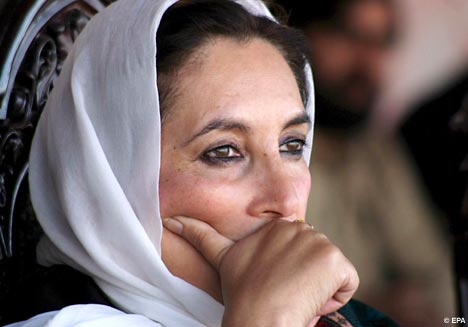
“Of course the choice is yours”— said the nonchalant and gentle voice—typically urbane, typically sophisticated— of a seasoned diplomat in the Embassy of Pakistan. His thinning hair jet black and a sliver of mustache equally gleaming above his lips curled into a smile. His eyes shone as he leaned back in his chair behind his desk—amused. A shrug of his shoulders as he contemplated me—his finger tips delicately brought together as his index fingers touched his lips and his thumbs held up his chin. As though, he were contemplating an experiment, or a work in progress. He had dealt with me before, at an embassy reception when we had gotten into an argument about Bhutto and Benazir— Bhutto had been hanged by then and she was in jail. General Zia-ul-Haq’s era was at its zenith. I had exchanged heated words with the embassy man. Now here I was sitting before him in his office at the Pakistan embassy, there to have my passport renewed. And here I was refusing to sign a clause in the application form.
“I won’t sign this” I repeated.
“Fine,” he said, “It is entirely up to you. Then I guess we are done here.”
I sat facing him in silence. He fingered the edge of the application form that I had tossed in his direction. Then without needing to push it back towards me—there was no need, he must have known, he must have done this before—he waited for the moment when I rose from my chair, as I did and watched as I leaned over his desk and retrieved the form. I signed. I needed the passport.
He grinned. “Good girl. Your hero had the Ahmedis declared as non-Muslim through an amendment in 1974 in his newly minted 1973 constitution of the Islamic Republic of Pakistan. Remember?”
“He had no choice! He was forced to!”——“Like I was today.”
“Forced, really? Who forced you? Said the embassy man, his eyebrows raised in mock surprise “No one forced anyone. You weren’t forced—the choice is always yours”.
The section I signed demands that I declare, attest to the fact that I am Muslim. Muslim in a manner that the Pakistan State defines as being Muslim. This section is called: Declaration In Case of Muslim.
It reads thus:
The above heading announces a section on page two of the Pakistan Passport Application. I ______s/d/w/of—–aged——–adult Muslim, resident of__________________ hereby solemnly declare that:
a. I am Muslim and believe in the absolute and unqualified finality of the Prophethood of Muhammad (peace be upon him) the last of the prophets.
b. I do not recognize any persons who claim to be a prophet in any sense of the word or any description whatsoever after Muhummad (peace be upon him) or recognize such a claimant as prophet or a religious reformer as a Muslim.
c. I consider Mirza Ghulam Qadiani to be an imposter nabi and also consider his followers whether belonging to the Lahore or Qadiani group to be Non-Muslim.
The section demands that you sign your name, the date and attest with your thumb print agreement with the three statements above. This section demands that you sign on to State sponsored cessation of thought and rationality. It demands that you consider Islam as only being something defined by the State of Pakistan—and as being only predicated on the negation of all others. Ordinance XX of the Government of Pakistan promulgated under General Zia ul Haq and still on the books forbids Ahmedis to call themselves Muslim or refer to their mosques as mosques or to recite the Kalima or greet using the Muslim salutation. The law of the land forbids Ahmedis to protest or take to court any injustice done to them in the name of religion including the destruction of their mosques.
The same type of clause is present in the National Identification Card's form.
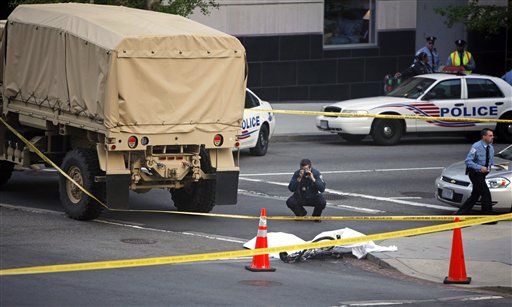
There is silence about taking any real meaningful action against the violence and injustice wreaked upon the Ahmedi community. Witness the murderous events that unfolded at two mosques in Lahore, Pakistan on Friday May 28, 2010.