Historians are generally quick and correct to insist that we jump to easy political analogies at our peril. One of the first lessons of historiography is that grand generalizations are more apt to flatter an author’s own sympathies than to capture a disinterested abstraction of events. Did Tunisia, Wikileaks, Facebook, or Twitter contribute to the Egyptian uprising? Possibly, but who would have the hubris to argue that any of these mattered more than local conditions: the rigged elections in December that gave the ruling National Democratic Party 93 percent of parliamentary seats, the bombings in Alexandria that left twenty-one Coptic Christians dead, the thirty years of daily personalized humiliation at the hands of a brutal police state.
And yet it seems possible to respect the importance of historical specificity while also acknowledging that popular energies can, and do, spread. Not for nothing is the rhetoric of revolution and counter-revolution shot through with the metaphors of fever, contagion, and conflagration. When yesterday’s unthinkable prospect becomes today’s historical fact, we are reminded that possibility can be more than a speculative concept. The events in Tunisia or Egypt make us feel political possibility, they make us experience it as an emotion, a passion no less infectious than anger or joy.
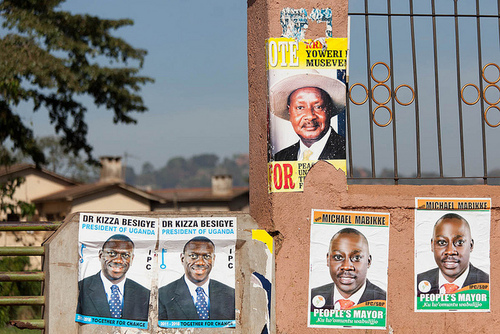
That feeling of possibility has already raised new questions for Uganda’s president Yoweri Museveni, who celebrated 25 years of continuous rule last Wednesday and is widely expected to claim victory in the presidential elections scheduled for February 18. When the question of Tunisia’s relevance for Uganda was put to him directly, Museveni shocked no one by arguing that Uganda’s situation is entirely different than the one that led to the ouster of Zine El Abidine Ben Ali: “I would not want you to confuse longevity with performance…social conditions in Tunisia are different to those in Uganda which are improving.”