by Jen Paton
There is a scene in David Mitchell’s novel The Thousand Autumns of Jacob De Zoet where a British captain addresses his crew, men from all over the world. The Captain pauses “to let words trickle into other languages.”
In the book’s Reader’s Guide, there is a short essay on historical fiction (don’t be embarrassed to read Reader’s Guides, they are often good), where Mitchell writes of the difficulties of putting words in the mouths of past people: to avoid “smacking of Blackadder” one “must create a sort of dialect – I call it Bygonese – which is inaccurate but plausible.”
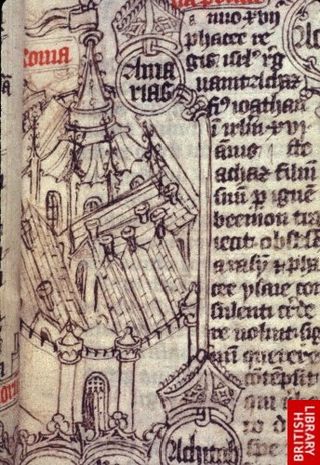
One of the hardest things about studying history, and especially the distant past, is trying to understand not just the speech, but also the mindset of the people one reads, and reads about. The people of the past are just as foreign to us in history as in historical fiction. What did it feel like to enter Justinian’s Hagia Sophia? What beliefs, and how true to him, made a man carry a Saint’s bones, or a piece of wood from the ‘True Cross,’ thousands of miles? What made a noblewoman wear a hair shirt underneath her fine gowns? My favorite history book, Peter Brown’s The Rise of Western Christendom, is about these questions. It is satisfying for many reasons, but perhaps most of all because it makes Other the people of the past in a way that, to me, is more honest than is usual.