by Hartosh Singh Bal
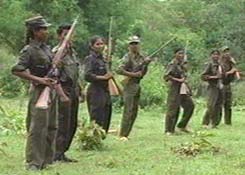
Till recently the outside world had paid little attention to this conflict which stretches through a large part of the forested belt of central India, a belt also occupied by forest-dwelling tribes subsumed under the label `tribals’. As narratives of an emerging, liberalizing India have lost their novelty, correspondents both foreign and Indian have suddenly discovered a counter-narrative in the Maoists. Unfortunately though, the tribals already badly done in by the Indian state and the Maoists are being used again, as props in stories that show them as noble savages rescued from exploitation by gun-wielding Marxists.
The problem with such a description is not what it says about the Indian state. An incompetent and arrogant minister in-charge of internal security P. Chidambaram, who enjoys the confidence of the Indian Prime Minister Manmohan Singh and more importantly the leader of the Congress party Sonia Gandhi, has over the past year planned and implemented a campaign against the Maoists. While the Army has been kept out, paramilitary troops, ill-trained and ill-equipped for jungle combat, have been thrown against the Maoists. Easy targets for the guerilla fighters, they have vented fury against local tribals who they believe may be helping the Maoists.