by Omar Ali
The Ahmediya movement was started in Punjab in 19th century British India, by Mirza Ghulam Ahmed of Qadiyan. He seems to have been a somewhat stereotypical prophet; a quiet, religious loner who brooded 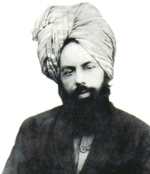

by Omar Ali
The Ahmediya movement was started in Punjab in 19th century British India, by Mirza Ghulam Ahmed of Qadiyan. He seems to have been a somewhat stereotypical prophet; a quiet, religious loner who brooded
by Mara Jebson
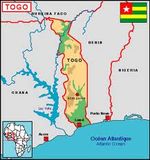
My stepfather had always wanted twins. In his culture, having twins was lucky, and a sign of more luck to come. In parts of Togo it is customary to give both twins names beginning with the same letter. One would hear about Afi and Abla, Joseph and Jonathan, or Elise and Esmee.
Although my stepfather never did have twins, he gave the three children he had with my mother names beginning with the letter “V”. He never explained about the “V”. A disciplined man, rigid in his habits, he was weird about names. Family lore holds that he was once charged with taking his baby brother’s birth certificate to the official bureau for naming. Along the dusty road he must have gotten inspired. In any case, most people in Togo have French or Togolese names, but his youngest brother would go through life as Martino, the O courtesy of his brother.
His own name, Kodjo, was really quite boring. In the years after Colonialism, there were a few Africanist measures taken to try to revolt against the pervasive French influence. Togolese citizens christened with European names were required to go re-name themselves with African names. These names were easy to choose, as all Ewe also have the name that is determined by the weekday of their birth. Kodjo merely means, “born on a Monday.”
When my mother met Kodjo in graduate school in America, he used this official name, and it was his American name. When we three, along with my new sister, left Philadelphia to move to Togo in the early nineties, among the many astonishments we had in store was the fact that no one else called him Kodjo. In Togo he went by “Johnny.”
by Randolyn Zinn
Last week on a cold afternoon in New York City, Helen Schulman and I met at a café for a bracing talk about her new book. You may have seen that The New York Times chose This Beautiful Life as one of their Notable Books of 2011 or perhaps you've read her other novels, which include A Day at the Beach, P. S., The Revisionist, and Out of Time, as well as the short story collection Not a Free Show. Her fiction and nonfiction have appeared in Vanity Fair, Time, Vogue, GQ, the Paris Review, and the New York Times Book Review. She is also an associate professor of writing at The New School.
RZ: Could you give 3QD readers a brief summary of This Beautiful Life?

RZ: It’s a gutsy story lyrically told. I couldn’t put it down.
Here’s actor Allen McCullough reading a passage from Richard’s point of view.
HS: I didn’t want to write a story about a scandal. And I know there are people who take it that way and buy the book for this reason and are disappointed sometimes. I was trying to capture a moment in history. With my last couple of books, I looked at a large societal shift or cultural moment through the lens of an individual or a couple or a family in order to take in something very big in the world through a very small prism. In The Revisionist, it was the Holocaust and Holocaust denial. In A Day At the Beach, it was 9/11 and the hinge moment in the culture between then and now; what we could do and what we didn’t do.
With This Beautiful Life, it’s the Internet, which is changing everything about the way we live. When I was in grad school, I supported myself working as a neurological research assistant at Bellevue for a family friend, who was writing about brain death and brain birth. So I spent two years learning about neurology, and what’s so interesting is that the way we use computers is literally reshaping the structure of our brains: how we surf the net and shift attention constantly actually changes the physical structure of the brain. For good or for ill, I don’t know, but it’s an evolutionary shift that’s taking place about how we think and how we study and how we use time. It’s changing everything.
by Jen Paton
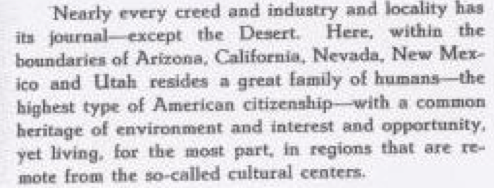
There are, according to Randall Henderson, founding editor of Desert Magazine (1937-1985), two deserts in the American imagination. One is full of “venomous reptiles and unbearable heat…it is the desert visualized by those children of luxury to whom any environment is unbearable which does not provide all of the comforts and services of a pampering civilization.” This is “fostered by fiction writers who dramatize the tragedies of the Desert for [their own] profit.” By contrast, the real desert, as Henderson saw it, “offers rare gifts: health giving sunshine — a sky studded by diamonds — a breeze that bears no poison” to those who come “in friendliness and understanding.”
There is, of course, only one desert, equally full of comfort and danger, plenty and lack. Its gifts – that diamond sky is real – are for everyone, but its history shows all America's small scars.
Back in 1936, Henderson saw an opportunity to serve the culturally under-served citizens of the American Southwest. The people of the desert deserved a magazine of their own, he wrote in his first editor’s note – a note that reflects the cultural nervousness and occasional defensiveness that infects the Western mind:
Henderson hoped his magazine would “preserve a culture of arid…but virile…America.” An ad from the December 1964 issue describes the ways to enjoy the desert: as collector, traveller, adventurer, history buff, or nature lover.
As dust and gas swirls around the black hole
matter compresses causing it to glow.
Scientists can only see the outline of the black
hole, also called its shadow. –Physorg.com
.
Seeing a Black Hole or Bouquet of Altroemeria
First you must know
that shadows glow
Circling the shade of nada
(the thing that can’t be seen)
the stuff of anything will gleam
incandescent as a candle
round the outline
of a vase upon a table
whose cache of blossoms tantalize
every eye that grasps:
these things of brilliant burgundy
are shades of shadows cast
which cast of blossoms tantalize
every eye that grasps:
these things of brilliant burgundy
are not the stuff that lasts
which passing blossoms tantalize
every eye that grasps:
these things of brilliant burgundy
will not be fastened fast
.
by Jim Culleny
1/17/12
by James McGirk

The Maine Coon is fast approaching the status of charismatic megafauna like orcas and eagles and howling white wolves. No other breed of cat has starred in so many viral videos, has inspired so many airbrushed t-shirts or so many wretched – and even a few not-so-wretched – tchotchkes as the Maine Coon. A search for “Maine Coon” returns 56.4 million search results, while its longhaired cousin the Persian returns only 8.1 million and the Abyssinian returns a mere 3.4 million. The Coon’s combination of rugged looks and an undeniably goofy disposition seem thoroughly plugged into that folksy vein of Americana that generated Paul Bunyan and his Blue Ox Babe. There is also an almost mystical air to the cat’s provenance.
by Hasan Altaf

El pasado, which I saw at the Public Theater in New York, focuses on the lives of four young Argentinians from 1999 to 2009, as they move from their twenties into their thirties, from being very young to less so – in the playwright's words, El pasado depicts “the moment one stops being who one thinks one is to become the person one is.” The rotating platform is an obvious metaphor for time passing, both personally and globally: With each revolution, the characters move forward into the future, away from what they used to be and towards what they will become, and the world moves forward, too, away from the past and into the unknown. The partitions of the wheel also suggest a clock, the quarters of an hour, which works will with the format of the play – each scene, prefaced by the date, presents a discrete moment in the life of one of the characters. Credit for making this device work so smoothly belongs both to Pensotti, who wrote and directed the play, and particularly the actors, who seem completely at ease, as if the ground were not quite literally shifting beneath their feet.
by Kevin Baldwin
About a year ago I began thinking about a host-parasite system that I could set up in a lab, that would be inexpensive to maintain and would provide opportunities for undergrads to get their fingernails dirty. I consider myself to be more of a field biologist, but with family obligations and the long winters and unpredictable weather in the midwest, I needed a lab system that would be available year round. After mucking about in the literature for a while, I decided to look at a group of parasites called gregarines that typically parasitize insects.
Gregarines belong to a group called the Apicomplexa that includes parasites of medical and veterinary importance like Plasmodium, the causative agent of malaria; coccidia, a cause of nasty diarrhea in vertebrates, and Toxoplasma, a mind-altering organism that can also have dire effects on fetal development. By virtue of relatedness, better understanding gregarines might give us insight into some of the greatest scourges of mankind.
Gregarines also infect worms, crustaceans (e.g., shrimp, crabs, barnacles, and krill) and molluscs. Their epidemiology could be important for aquaculture and mariculture of these organisms). Given the success of arthropods (which include insects and crustaceans) and mollusks as groups, it is probably worth understanding as much as possible about organisms that parasitize them. You could make a case for gregarines being the most successful group of organisms known. Of course this kind of success attracts attention and gregarines can in turn be hyper-parasitized by another group, the microsporidia (but that's another story,…).
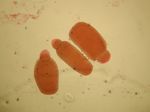
As single-celled animals go, insect gregarines can be huge and are frequently visible to the naked eye. The first time I opened the gut of a roach, the gregarines spilled out like bowling pins (Strike!,… A good omen to find them on the first try. Talk about reading the entrails,..). The parasite's life stage in the host's upper gut is called the trophozoite or “troph” for short. They feed and grow here. When they mature, the trophs mate and produce an (American) football-shaped gametocyst, which is shed in the insect's feces. Additional rounds of reproduction occur inside the gametocyst and the results is that hundreds of spore-like oocysts are extruded into the environment (like beads on a string), that can in turn infect new hosts. The strands are barely visible to the naked eye, resembling very fine lint.
by Maniza Naqvi
(This is the Majlis I prepared and read last week for my mother, Narjis Khatoon Rizvi-Naqvi, who died on January 17, 2011).
In this past one year I have sat in this living room in our apartment for long periods of time. In the evenings, this room with the candles lit next to my mother’s photograph and all the lamps ablaze—glows—the windows darkened by the night—this room is radiant with a warmth and grace. I like to sit here and read here and in this past year I’ve read the Koran for Ami and also read a lot more of Tolstoy, Greene, Zizek and Nabokov and I’ve watched a few movies.
The opening sentence of the movie, The Apartment, starring Jack Lemon and Shirley Maclean which was made in 1960 goes like this: “If you laid all these people end to end, figuring an average height of five feet six and a half inches, they would reach from Times Square to the outskirts of Karachi, Pakistan. On November 1st, 1959, the population of New York City was 8,042,783.” (watch here)
Isn’t that the same number now? I thought to myself. Doesn’t this city grow? Where do the new people go? I think Ami would have said, “They go Home.”
The day we buried Ami, Ali, said to the mourners at her funeral, that Ami came to here to New York, reluctantly, following her children, then became an immigrant only for her children: He said: Today I am about to consecrate this land with my mother. Today I understand what motherland means.”
by Julia Galef

But you might be surprised to learn that My Little Pony: Friendship is Magic’s biggest accolades have come not from its target audience of little girls and their families, but from a fervent adult fanbase. I first heard of My Little Pony: Friendship is Magic from one of my favorite sources of intelligent pop culture criticism, The Onion's AV Club, which gave the show an enthusiastic review last year. (I had my suspicions at first that the AV Club’s enthusiasm was meant to be ironic, but they insisted the show wore down their defenses and that it was “legitimately entertaining and lots of fun.” So either their appreciation of My Little Pony: Friendship is Magic is genuine, or irony has gotten way more poker-faced than I realized.)
And you might be even more taken aback to learn that many, if not most, of those adult My Little Pony: Friendship is Magic fans are men and that they've even coined a name for themselves: “Bronies.” At least, I was taken aback. In fact, my curiosity was sufficiently piqued that I contacted Purple Tinker, the person in charge of organizing the bronies’ seasonal convention in New York City. Purple Tinker was friendly and helpful, saying that he had read about my work in the skeptic/rationalist communities, and commended me as only a brony could: “Bravo – that’s very Twilight Sparkle of you!”

Role playing is something we do from a very early age. Pretending to be someone else, particularly an archetypal grown-up, is a staple of childhood play. Two common examples of childhood role playing show how it can be both innocent and highly loaded, even (or perhaps especially) among children too young to really understand what they are doing.
The first example is the classic kids’ game of Cops and Robbers. To me, this seems an obvious case of innocent role play. Has a parent ever worried that by playing the role of a criminal, their small child is prepping for a future as a career felon? There is an obvious social subtext to the game, ostensibly teaching children that crime is wrong, but only the squarest of nosey sticklers would become alarmed if the extemporaneous script developing in the backyard occasionally ends with the bandits getting away with it once in a while? After all, it’s just play.
But then there is the other classic role play game of American children: Cowboys and Indians. This one is much more problematic. Well, not for the kids, of course. To them this is no different than Cops and Robbers. It’s just two groups, one them highly favored, the other one an underdog and a bit of a scoundrel, and off they go to horse around in the summer sun. But the subtext of this game is far more insidious. It serves to reinforce the imperial mythologies that have dominated American culture since its inception. Regardless of which team wins one improvised fracas or another, this role play is reinforcing ideals just as much as Cops and Robbers. But instead of the innocuous lesson of “criminals are the bad guys,” Cowboys and Indians teaches children too young to really understand that America’s Indigenous peoples were supposed to “lose” to Europeans and their descendants.
by Evert Cilliers aka Adam Ash

Why? Because even though South Africa stunk headier than an elephant's poo after a rainy day, its black majority knew what they wanted and knew the country would be theirs one day. In America, it's by no means certain that the country will ever belong to its majority (or that its majority even knows what it wants).
We're not a country anymore, we're a racket run by the likes of a corrupt and immoral Wall Street. We have miserably failed at the single most basic organizing principle of any civilized society: how do you prevent the elite from stealing everything?
We haven't. They've done it. They've stolen everything. Our elite have stolen our money, our government, our legal system and our power from we, the people.
They've got it all, and we've got crumbs.
The difference between the 1% and the 99% is not simply economic. Not simply, for example, that we pay 35% taxes and big corporations either pay nothing — GE — or less than 2% — Goldman Sachs. The difference is moral and legal: folks at the top can torture and cheat and steal and lie and endanger the livelihoods of everyone else around them, and get away with it.
Our American elite is now as shitty as the Gaddafis and the Mubaraks and the Mugabes, and just about as crazy in their entitled bubble of runaway greed. Worst of all, they operate beyond the reach of the law. Too big to fail and too big to jail.
So we're two GOP primaries down
But don't worry, don't pout, snarl or frown
The fun won't end soon
Still so much to lampoon
South Carolina, the circus' in town!

For today we bid Huntsman adieu
Who does God love more?
Well clearly no one who's poor
At least that's the creed of this crew
If God's summoned each one to this calling
Did he just want to laugh at their brawling?
I may doubt that he's real
But this atheist can feel
That if not, he'd find these guys appalling
Which one is the worst hypocrite?
Is it wetback-hiring Mitt?
Or thrice married Newt
Who really should have stayed mute
When Bill Clinton's infidelity hit
I confess that I do miss Herman Cain
That was sure just a wacky campaign
But I don't need to fret
Now it's Mitt's turn to sweat
As he tries to back pedal from Bain
So South Carolina as you go into vote
And decide on which of these fools to dote
Just remember this thought
Your vote's really for naught
“Big Money”, that's all she wrote!
by Sarah Firisen
by Gautam Pemmaraju
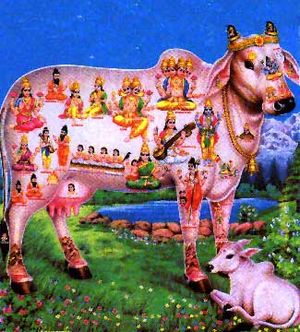
On January 7th news publications ran reports of a young Muslim cattle trader being harassed by members of the Hindu right-wing Bajrang Dal in Madhya Pradesh. A group stopped 25-year-old Anish Aslam Kureishi, son of a cattle trader of Chhindwara district, on December 31st, who was ferrying cattle. The men demanded money from him and on his refusal, they damaged his pick-up truck, dragged him to a village close by, beat him up, shaved part of his head off, as well as one eyebrow and half his moustache, and left him there tied to a pole. While the group claimed that the cattle were headed to an illegal slaughterhouse, the father of the waylaid man stated that they were meant for sale at a nearby market, and his younger brother said that they often paid off the Bajrang Dal to escape harassment. There have been subsequent reports quoting the police and administration that the entire family has been involved in illegal cattle transport.
This incident followed a widely reported amendment to the state’s cow protection laws that received presidential sanction on December 22nd. The amendment, as several commentators have pointed out, extends the scope of the already stringent anti-cow slaughter laws, which expressly prohibits the killing of cows, by increasing the jail term for those caught killing cows, transporting or selling beef, to up to 7 years. In addition, the BJP led government, by way of this amendment, also invests public officials with extraordinary powers to enter, search premises on suspicion of cow slaughter and beef storage, as well as to make arrests. The burden of proof is also transferred to the accused, making this law not only dangerously harsh, but also of dubious constitutional character. The Chief Minister Shivraj Singh Chouhan’s ‘dream’ has come true, according to the state’s Culture & PR Minister, who further added that the administration was keen to enforce the provisions of the Act ‘in letter and spirit’.
Several commentators have been quick to attack the draconian provisions of this already pernicious Act, pointing out that they mimic those of anti-terror laws. The BJP led central government has in the past also attempted ‘more robust application’ (read here and here) by attempting to amend law to bring detention under the ambit of the Prevention of Terrorism Act (POTA), which was repealed by the Congress led UPA government in 2004.
by Tauriq Moosa
As per various stories emerging concerning censorship, I thought it a good time to consider one of the greatest documents defending free speech.
Arrests, search and seizure of books, book burnings and all other classical depictions of authoritarian hatred were the outcome of this Order. The Stationer’s Company, a guild of booksellers, printers and so on, and established by Queen Mary in 1557, was put in charge of dealing out this Order. Hindsight makes those fires brighter and stupidity greater and fear lesser; curled pages to us invite anger at oppression, but in the eyes of the moralisers, it meant something called order.
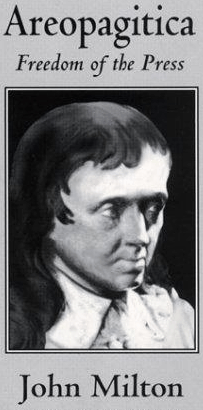
The great poet, John Milton, delivered a speech in 1644, called Areopagitica (or, its full title Areopagitica: A speech of Mr. John Milton for the liberty of unlicensed printing to the Parliament of England). In it, he made an impassioned plea that rings out today, calling for free thought, speech and reason, for “when complaints are freely heard, deeply considered and speedily reformed, then is the utmost bound of civil liberty attained, that wise men look for.”
His most powerful argument is encapsulated in what is surely one of the most beautiful sentences ever written:
A man may be a heretic in the truth, and if he believe things only because his pastor says so, or the assembly so determines, without knowing other reason, though his belief be true, yet the very truth he holds becomes his heresy.
Here, Milton cut to the heart of the problem.
by Joy Icayan
“You have the advantage of youth, use it to win.”
An old remembered advice from an old job. That was years back, just post college and unsure of what we were doing, trying to sell products whose own reasons for existing eluded us. Someone was always trying to do something else—trying to rekindle a band or the armed revolution. I was trying to write stories and poetry. But one writes what one knows, so in one of my stories a man is trying to save his brand image. I tried to make sci-fi, George Saunders like, but I’m no George Saunders. In my stories the characters are always speaking in corporate jargon—your rebranding is not working, our consumers relate our fast food label to pictures of dead cows! Or resorting to suicide or murder, which was often the easiest thing to do in case of non-functional characters. In the mornings, my boss gently told me I didn’t understand how desire led to action and to revise the slides.
The truth is, we were massively bored, bored in the manner of the ill fit young, middle class in a developing country—educated, earning enough for rent and expensive coffee and independence—when our idea of revolt was attacking the human resources office for imposing stupid regulations like Skirt Mondays. We revolted against Skirt Mondays, and we revolted when they prohibited miniskirts. We were always finding something to fight for or against. It felt good to be fighting against something.
There’s a game children play when they’re bored in traffic—make words out of license plates. At some point you do enough of these and you develop a talent for finding words where there are none. So the man who comes on Wednesday nights in a motel near my apartment, the man who drives an SUV is RAFT (Plate Number RFT). I’ve become his personal documentor; no one has documented his comings and goings as I have and I feel we’ve formed some sort of connection, as one way as it is. When he doesn’t come, or I’ve missed him, I feel a bit unaccomplished.
In my head, he has a wife somewhere who has a conventional name like Sara or Lisa. This isn’t the same woman who rides in the passenger seat, window always open, arm perched on the door. I’ve caught sight of her more than the man; she looks bored all the time.
I don’t know what their deal is or what it is with Wednesdays. I imagine the mirrors, wall and ceiling of the rooms they’ve gone in. They touch the rooms where a hundred others have come in, and leave traces others would soon erase.
by Rishidev Chaudhuri
Monsters lurk in the artificial paradises that mathematicians construct for themselves, swimming, slouching and fluttering into view from the corners of the imagination. These strange beasts – odd constructions or unexpected consequences of axioms – trouble the mathematical mind and threaten to expel the mathematician into chaos. By embodying the limits and the peculiarities of the concepts we use they force us to clarify, to draw distinctions where none had been drawn before, and to interrogate which objects we may meaningfully speak of and which properties we can assume. They also serve as a fascinating and wondrous gallery of the oddities of the mathematical universe, reflecting elegant and treacherous subtleties in their construction. Many mathematicians collect menageries of counterexamples and unusual cases, much as a naturalist might display upon returning from some distant continent.
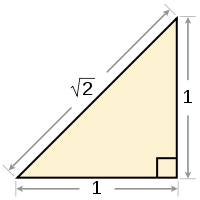
In fact, the situation is much worse. Not just most, but effectively all of the real numbers (the numbers on the number line; the numbers that can be written with possibly infinite decimal expansions) cannot be written as fractions. The numbers that we deal with everyday, numbers like ½, ¼, 5 and so on, are an infinitely small proportion of the total, lost in a host of numbers that we never dream of. This realization is the entry into the strangeness that is the real number line, and is a glimpse at the long attempt to grapple with and understand infinity and continuity.
Expect nothing and nothing
will come bearing something
—sure thing
Sure Thing
This is how the world began:
expecting nothing
but see how something
(a blazing ball
caroming off the tip of Kepler’s cue)
breaks the horizon
trailing a passionate veil of crimson light
which sets the sea afire with fierce luminescence
and me with fierce delight
this is how it is:
the earth, without expectation,
became a seething knot of azurite,
its nourishing greens and blues
spun from the cornucopia of nada
as if nothing’s empty store
were a well of even more
this is how it was:
I sat upon a diner stool
elbows on the countertop
forearms straddling my book
like the legs of that Colossus
astride the harbor door of Rhodes
scanning the sea for future ghosts
and you came with carafe and side of toast
and nothing—
nothing expected could compare
with your unanticipated eyes
and chestnut hair
by Jim Culleny,
12/31/11
A short note in which I conjecture on a potentially vast local extinction event of Midwestern soil organisms especially of those inhabiting the leaf litter of woodlands.
In our evolutionary progression humans scrambled from the leafy treetops about half way down the length of the trunk. We now live perched between treetop and root ball on that convenient platform we call the soil. If physicists can give themselves vertiginous shivers by imagining those 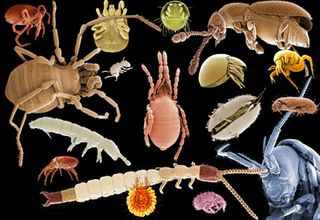
Ours is the exceptional ecological enterprise since more organisms live in the soil in those porous and interstitial lodgings than on the soil. We are not directly equipped for flight, we rarely burrow, we are condemned to walk upon the dirt until at last we may complete our descent into the ground, toppling into that large furrow excavated for our remains. A soil pore will have us after all.
If we had been just a little smaller and had migrated just a little further down the length of that primordial tree we’d be living in one of the most biologically diverse and ecologically active compartments of the biosphere. The upper ten centimeters or so of soil teems with living things. The organisms living in Earth’s thin and hyperactive rind are phylogenetically diverse, trophically heterogeneous, functionally assorted, highly variable in size, dissimilar in longevity, variegated in morphology, behaviorally divergent, adapted to different soil horizons, disparately pigmented, but are united in their reliance on death. Specifically, soil organisms are all similar in that they feed on detritus (i.e., dead organic matter). As I discussed in a recent column, collectively the action of these organisms within detrital-based food webs results in the breakdown of dead organic matter and the mineralization of organic compounds that makes key nutrient available to the living.
by Scott F. Aikin and Robert B. Talisse
The commentary stimulated by our November post helps to confirm our view that pluralism is a paradigmatic halo term. Many of the respondents clearly want to claim the term for their favored purposes; but the details concerning the term’s meaning are as yet uncertain. Of course, most philosophical terms admit of multiple interpretations; looseness is inevitable, as often the issues are the meanings of the terms in use. Yet we should aspire to as much precision as is possible. Resting with multiple well-defined yet conflicting conceptions of pluralism is preferable to the current state of affairs, which is less loose than mushy. Our aim is to suggest at a very general level what pluralism is by articulating some simple prerequisites for clarifying the term.
There are two criteria that can be employed in our task. The first would be applicable to any proposed philosophical term. It has two components. First, if pluralism is the name of any view at all, it had better be possible to identify some definite philosophical claims that are distinctive of the view. This is not to say that pluralism must be understood to name some single, monolithic position. Pluralism can be a philosophically distinctive position, and yet be a view which admits of different varieties.
Sometimes it is helpful when characterizing a philosophical position to identify what those who adopt it are united in rejecting. So we may state the first component of the first criterion in the following way. Whatever pluralism is, it had better be a view that is opposed to some other identifiable philosophical position. To put the point slightly more strongly, whatever pluralism is, it had better be a position that thoughtful people could reject. A view that only the insane, thoughtless, deluded, and incompetent could reject is of little philosophical significance. If pluralism is a view worth talking about, it is a view that both says something distinctive and is philosophically debatable.