by Namit Arora
Some travel impressions prompted by the living and the dead of Varanasi, India.
The reality of the event sunk in further when an NDTV reporter and her camera crew got on the train. With time to kill, she began quizzing tired and bemused passengers about their take on the news. And she did so in an overexcited style that seemed to dominate live reporting in India. When she thrust the mic at me, I could only mutter something about my worry for my companions.
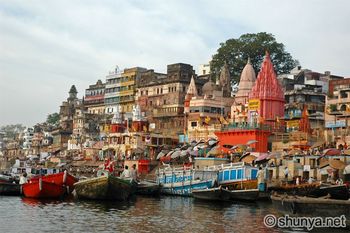
I persuaded my fellow travelers to continue. The terrorists had already done their deed; Varanasi was likely the safest place to visit now. Worst case, we could stay holed up in our hotel. Truth be told, I was also drawn to this unbidden frisson of travel. When we arrived in the morning, we found a part of the train station cordoned off by the police. I could see blotches of red on the ground. The driver of the taxi we took into town had witnessed the explosions: flying body parts, screams, the ensuing melee. He had helped take the injured to the hospital. But our decision to not abort our journey turned out to be a good one—the city remained calm and we moved around freely. I felt proud of my fellow citizens for being so mature about the situation. It was my first time in Varanasi as an adult, and the place did not disappoint.