by Shadab Zeest Hashmi
Over the years, the binding slackened from wear only under the section of children’s poems. When I was older I perused the rest of the book and found the poems complex but I was drawn to the miraculous harmonies formed of Urdu’s polygenetic beauty; its Arabic, Persian, Sanskrit, Turkish diction fitting as if synaptically, only in this poet-philosopher’s hands, to create a unique musical-intellectual whole.
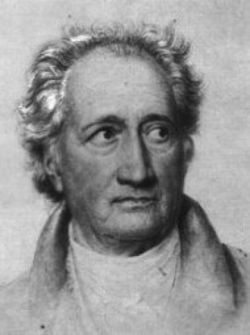
I also found, to my astonishment, Iqbal’s poems addressing the greats belonging to a variety of cultures: Rumi, Shakespeare, Ghalib, Goethe, Hafiz, Ghazali, Blake, Emerson and other influential thinkers and poets. Iqbal’s century was changing the map fast, making his reflections on the learning of the East and West ever urgent. While rejecting the title “Sir” from the Raj, he continued to honor philosophers such as his own mentor (at Government College, Lahore) Dr. Thomas Arnold in his poems. Among great western thinkers, Goethe held a special place for Iqbal: Our soul discovers itself when we come into contact with a great mind. It was not until I had realized the infinitude of Goethe's imagination that I discovered the narrow breadth of my own.
Time and again, Goethe’s name stood out when I approached Iqbal’s poetry— there were many reasons for this, but the most memorable one was a typewritten response from the celebrated German scholar Annemarie Schimmel to my letter about my interest in Sufi poetry. She had read my poems closely and her brief letter was full of light and love. I heard the cosmic yes whispered in it, deep enough to give me a measure of patience, knee-deep as I was in raising my children while struggling to find time to read.