by Jonathan Kujawa
Mathematicians have a soft spot in their hearts for mathematical trifles. These beguiling little puzzles are more amusing than important, and also often devilishly hard. These are the sorts of math problems professional mathematicians are embarrassed to admit they spend time thinking about (but would be the first to tell you if they solved it!). Call them mathematical guilty pleasures.
Fermat's Last Theorem is such a trifle. Those old enough to remember might recall seeing it in the news twenty or so years ago. It's the theorem which says that for any natural number n greater than three, you can't find integers a, b, and c which satisfy the equation:


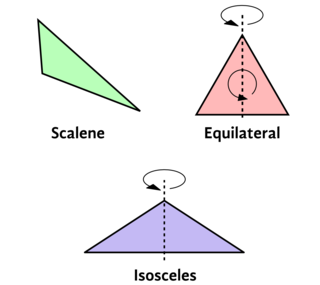
But what fun would life be if you're always serious? Let's be unserious for a moment. Fermat's Last Theorem is tantalizing. It is easy to find a, b, and c which are solutions when the n is equal to two. For example, 3, 4, and 5 work. These solutions are called Pythagorean Triples because they exactly give the three sides to a right triangle and the equation becomes the famous Pythagorean Theorem [1]. There are infinitely many Pythagorean Triples, so shouldn't there also be infinitely many solutions when n is three, four, or five? What makes two so special?
The first person to ask the question was Fermat in 1637. He wrote a note in his copy of Diophantus's Arithmetica that:
It is impossible to separate a cube into two cubes, or a fourth power into two fourth powers, or in general, any power higher than the second, into two like powers. I have discovered a truly marvelous proof of this, which this margin is too narrow to contain.
You would have to have a heart of stone to not be tempted to try a few examples after reading that.
Fermat never wrote down his proof and in all likelihood he was mistaken. Indeed, it took 300+ years for math to develop enough high powered tools to tackle his simple little challenge. It wasn't until the mid 1990s that Andrew Wiles was able to affirmatively prove Fermat's “Theorem”. And while there was a great deal of excitement about Wiles's work, the real benefit Fermat's trifle was all the high powered tools mathematicians developed while wrestling with it. They are now invaluable in number theory, cryptography, and elsewhere [2].
Let me now tell you about another enticing mathematical morsel which is still unsolved: the Square Peg Problem (SPP). The history is a bit murky, but it is generally credited to Otto Toeplitz in 1911. The SPP is the conjecture that if you draw a curve on a sheet of paper without picking up your pencil and which begins and ends at the same place, then you can find four points on the curve which form the corners of a square. Such a square is called an inscribed square.