“If you explain to a musician he'll tell that
he knows it but he just can't do it”
~ Bob Marley
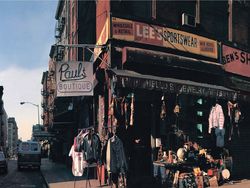
What makes “Paul's Boutique” so extraordinary and enduring? The sophomoric effort by the brash NYC trio debuted in 1989, and was the much-anticipated follow-up to “License To Ill.” But instead of a new set of frat party anthems along the lines of “Fight For Your Right (To Party),” listeners were treated to a continuous magic carpet woven out of a kaleidoscope of samples. Romping over this dense, schizophrenic bricolage, MCA, Ad-Rock and Mike D traded lightning-quick call-and-response rhymes that embraced the usual MC braggadocio but at the same time drew on a vast range of sources and styles. The effect, to this day, is a delirious sort of aural whiplash.
No one is clear on how many songs were actually sampled, although the number is certainly well over a hundred. The exegesis of both samples and lyrical references is a time-honored tradition, too. Around 1995, one of the first sites that ever made me think the World Wide Web might be a good idea was (and continues to be) the Paul's Boutique Samples and References List. When studied, Torah-like, alongside the Beastie Boys Annotated Lyrics and the record itself, one begins to appreciate the catholic taste of both the rappers and their producers, the inimitable Dust Brothers, who would go on to provide much of the genius behind Beck's seminal “Odelay” album a few years later.